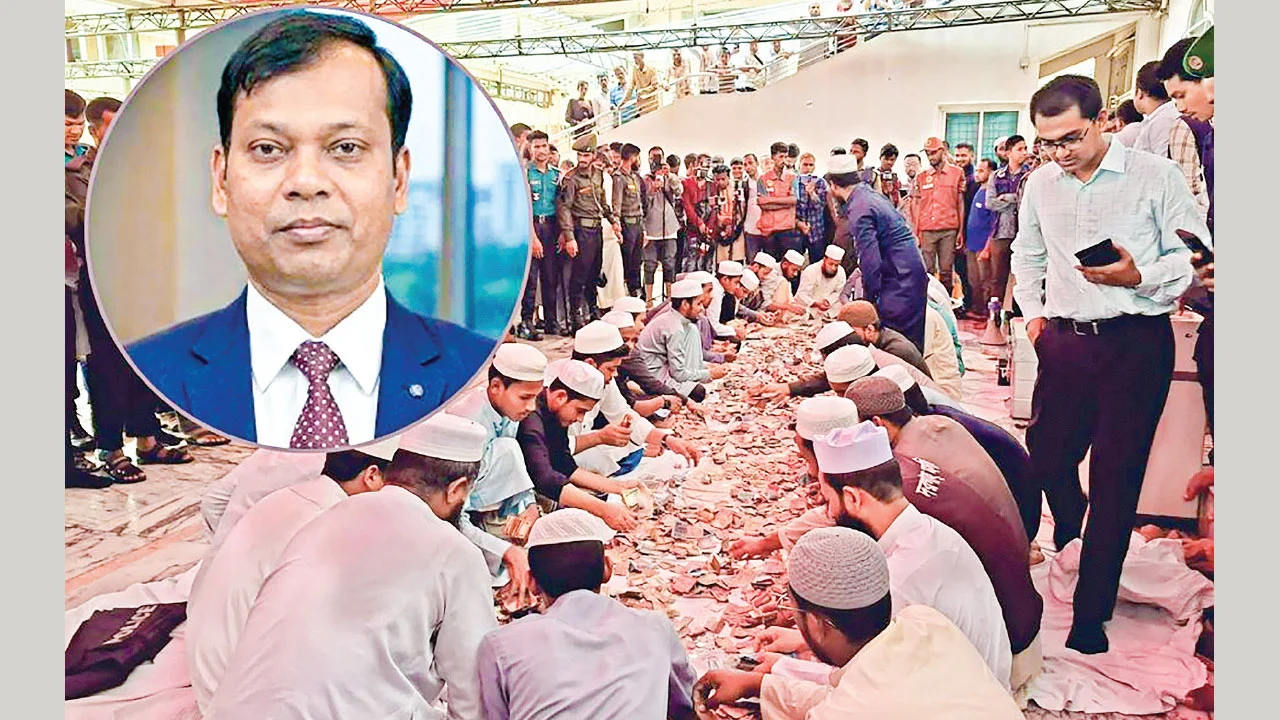
This delta is known as the ‘Land of Twelve Saints.’ Hazrat Shah Jalal, Shah Paran, Khan Jahan Ali, and countless other great saints traveled from distant lands centuries ago to spread the light of Tawhid, to dispel the darkness of polytheism and superstition, and to guide people to the path of the one God. Yet the practices now centered around their graves suggest that those buried within them have become the greatest victims of helplessness. The very things they fought against their entire lives now flourish around their resting places.
Irreligion in the name of religion
What happens at shrines is no secret. Hookah smoke beside graves, marijuana dens, crowds of fake dreadlocked mystics, unchecked mingling of men and women, and illicit activities are common sights at many shrines across the country. Yet Islam categorically prohibits all intoxicants. The Prophet (peace be upon him) said: ‘Every intoxicant is prohibited’ (Muslim: 2003).
Prostrating at graves, clinging to railings in supplication, making vows at graves, touching one’s forehead to tomb cloths, kissing them, or bowing in reverence — all of these are entirely prohibited, and some constitute shirk (polytheism). The Prophet (peace be upon him) said clearly: ‘May Allah destroy the Jews and Christians! They turned the graves of their prophets into places of prostration’ (Muslim: 530).
Seeking help from the dead is shirk. Allah says: ‘The mosques are for Allah alone, so do not invoke anyone alongside Allah’ (Surah Al-Jinn: 18). Extracting money from ordinary people through vows, legitimizing polytheistic rituals under the guise of ‘love’ and ‘devotion’ — all of this is prohibited by the standards of the Quran and Sunnah, and strikes at the very foundation of a believer’s faith in Tawhid.
Financial irregularities and corruption
Hundreds of thousands of taka pour into shrine donation boxes daily, with no transparent accounting. A powerful syndicate of corruption has formed through collusion between shrine caretakers, self-proclaimed spiritual leaders, and influential figures. Ordinary people believe their donations will help the poor, but the money goes into the syndicate’s pockets. This is not merely financial misuse but an exploitation of faith.
A courageous step
A ray of light has recently appeared in this long darkness. Sarwar Alam, the recently transferred deputy commissioner of Sylhet, stood up against a nearly 700-year-old opaque system. For the first time, proper accounting and transparent management of shrine donation funds was undertaken through his initiative. This initiative, though small in appearance, is significant — for the first time, accountability has been demanded in a system no one previously dared to challenge.
Waqf property and the state’s responsibility
The state has a clear responsibility to ensure that waqf properties serve their intended purposes. Islamic scholars agree that the endowment, or waqf, is a sacred trust that must be used for the purposes defined by its founder. Where corruption and un-Islamic practices have taken root, it is the state’s duty to intervene and restore integrity.
The initiatives taken in Sylhet should not remain isolated. Every district administration should implement similar measures at shrines within their jurisdiction. The government should establish a national-level shrine monitoring cell under the Waqf Administration.
Regarding the eradication of un-Islamic practices from shrines, the Quran provides clear guidance: ‘You are the best community raised for humanity — you enjoin what is right and forbid what is wrong’ (Surah Al-Imran: 110). Acting on this principle is a collective responsibility of every Muslim. The future of any nation depends on ensuring that religion is practiced in its true spirit, free from exploitation and corruption.
বাংলায় মূল প্রতিবেদন পড়ুন · Read the original Bengali report