In the post-flood farming season in Gaibandha, char lands across the district have turned lush green. Farmers are busy cultivating crops across 165 char islands in four upazilas. Except for the past three days, favorable weather conditions this year supported sound crop growth. However, farmers cultivating chili have run into deep trouble.
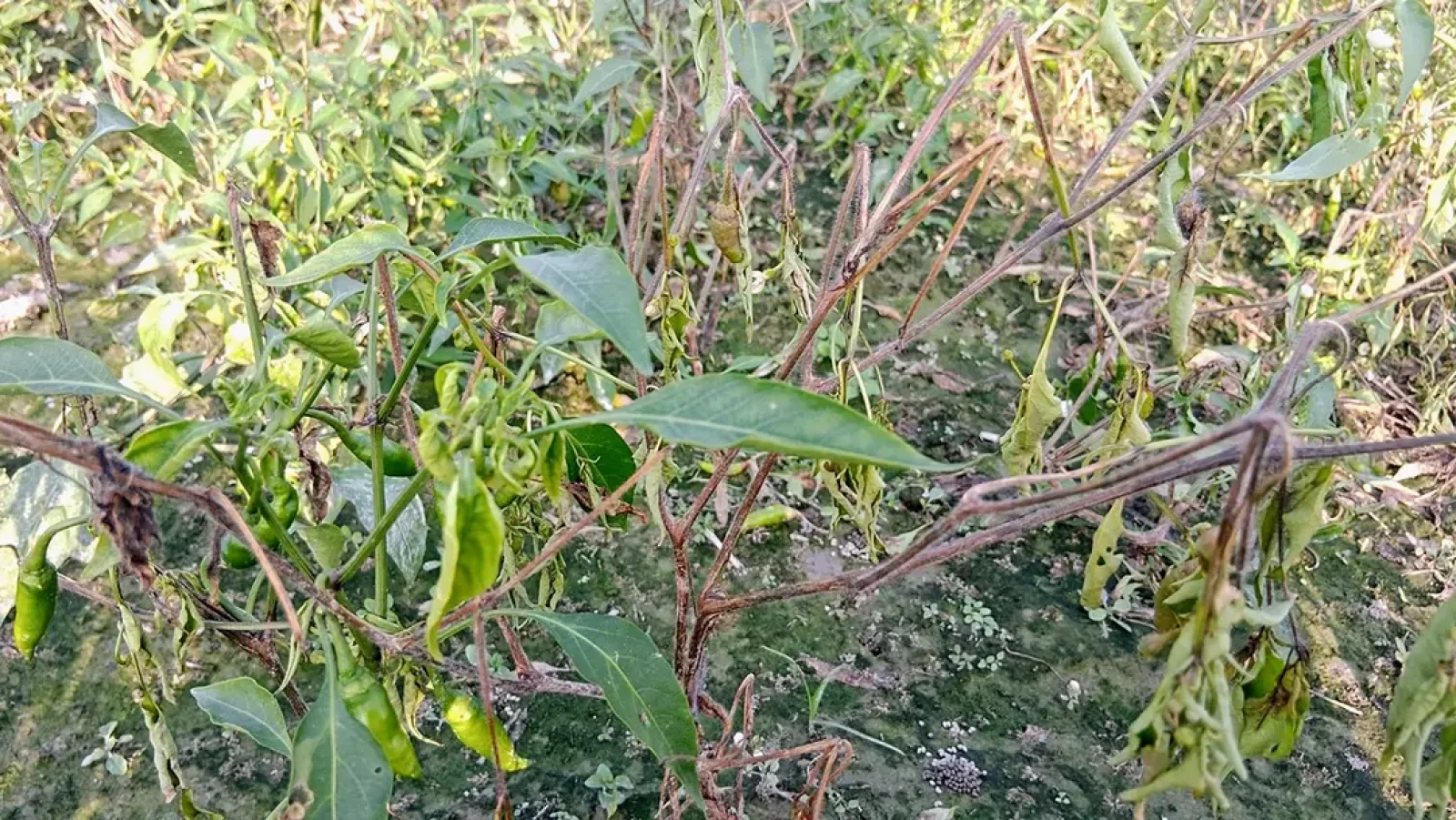
An unknown disease has spread across chili fields. Plants begin by showing rotting chilies, before gradually withering and dying. Repeated pesticide applications have failed to provide any remedy. With production costs soaring, farmers are desperate amid mounting fears of severe financial losses.
Farmers said that initially, a few chilies on a plant begin to rot. The plant then withers, and eventually the entire plant dies. Based on past experience and local advice, many suspected a fungal rot. Although they applied fungicides and various insecticides several times accordingly, they obtained no positive results. Consequently, alongside uncertainty over the actual cause of the disease, fears of financial ruin are escalating.
On Thursday (19 November), visits to several areas including Ratanpur char under Uria union and Kholabari under Kanchipara union in Fulchhari upazila showed farmers busy tending their lands. Some were irrigating, some applying fertiliser, while others weeded and sprayed pesticides. Many worked alongside female family members in the fields. Yet alongside their toil, deep anxiety over the unidentified disease was etched across their faces.
An inspection of the chili fields revealed symptoms of the disease across many plots. Chilies on some plants had rotted away, while leaves on others had dropped off as the plants wilted. Some plants were on the verge of dying entirely. Despite farmers applying diverse treatments based on observed symptoms, little improvement was visible.
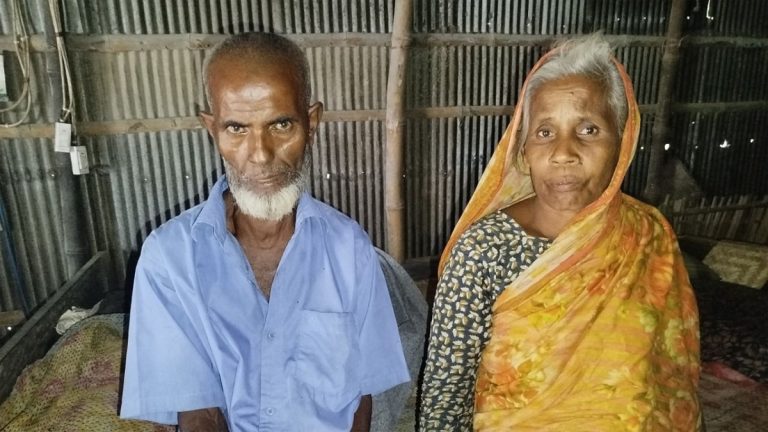
Farmer Habil Mia of Ratanpur in Uria union cultivated chili on five bighas of land this season. Planting began around the Bengali month of Ashwin, with expectations of high yields. However, the mysterious disease has now left crops across two bighas of his land on the brink of complete ruin.
Farmer Habil Mia said he had spent more than Tk 3 lakh on chili cultivation so far. Plants had started bearing fruit, and the weather was favorable. But this unexpected disease threw everything into disarray. The crop on two bighas of land is practically destroyed. Four to five rounds of pesticide spraying yielded no solution. He suffered a loss of over Tk 1.5 lakh on those two bighas alone, while the remaining three bighas are in poor condition. He added that he purchased the medicine on credit from a local agrochemical shop.
In the same area, a farmer named Rashidul Islam cultivated chili on two and a half bighas of leased land. He stated that he leased the land under a potka agreement (two harvests in a single season) at Tk 1 lakh per bigha. Added to that were the costs of tilling, fertiliser, pesticides, and hired labour. Repeated pesticide spraying against this disease has driven up his costs further.
Rashidul said favorable weather had initially resulted in good chili growth. But the disease has plunged everyone into anxiety. Failing to recover production costs will result in massive financial devastation, he said.
Farmer Ishak Ali said they are trying everything to cure their fields. Extra spending on chemicals is mounting, alongside rising fuel oil prices. Under these circumstances, farmers urgently need advice and support. He has cultivated chili on three and a half bighas and maize on 9 bighas.
Rezaul Mia, an elderly and experienced local farmer, said when similar symptoms appeared on chili plants previously, applying rot remedies worked. But this time, repeated chemical treatments have failed, and the plants keep dying. Farmers cannot comprehend what the disease actually is. Local grower Ismail Hossain voiced identical concerns.
Meanwhile, farmer Jahidul Haque of Kholabari in Kanchipara union cultivated chili on 15 decimals of land, spending Tk 15,000 so far. But the plants are dying off due to the blight.
Jahidul Haque alleged that sub-assistant agriculture officers are rarely seen in the field in their area. Consequently, farmers consult pesticide retailers directly and apply chemicals according to shopkeeper recommendations.
Farmers alleged that while government agriculture officials are rarely found in the crop fields, sales representatives of various pesticide and seed companies remain highly active. These representatives advise farmers on crop problems while encouraging the use of products, seeds, and agricultural inputs from their own companies. This frequently puts farmers at risk of applying excessive or inappropriate inputs.
Aminul Islam, a farmer from Ratanpur, said because company representatives are easily accessible in the field, growers seek their advice. If officials from the agriculture department were regularly present, farmers could receive proper guidance from them, reducing the hazard of incorrect chemical usage.
He added that purchasing inputs on credit often leaves farmers dependent on these merchants.
Discussions with farmers and stakeholders revealed that due to financial distress, many char farmers purchase fertiliser, seeds, and pesticides on credit. As they can settle bills after harvesting or at the end of the season, they become beholden to particular shops. Consequently, they lose the freedom to choose inputs based on preference and need, having to buy what shopkeepers recommend, which creates risks of using substandard or unsuitable products.
Omar Faruk, a farmer from Dakshin Rasulpur, said while obtaining inputs on credit offers immediate relief, it leads to problems later. Buying on credit often obliges farmers to use whatever brand of pesticide, seed, or vitamin the shopkeeper pushes. Farmers lack the leeway to buy alternative brands, and retailers frequently push items with higher profit margins, leaving farmers harmed by disappointing yields.
Regarding the situation, Fulchhari Upazila Agriculture Officer Khondokar Firoz Mahmud told reporters that field-level guidance is being provided in Dhaka and local areas. When farmers bring samples of infected crops to the agriculture office, accurate advice is given following testing. The agriculture department always recommends using tested and approved agricultural supplies.
He added that taking advantage of credit facilities sometimes leads farmers to purchase unbranded or low-quality seeds and pesticides, causing damage. He urged farmers to avoid such products and seek advice directly from responsible officials at the agriculture office.
Gaibandha Department of Agricultural Extension (DAE) Acting Deputy Director Md Asaduzzaman said field-level officers are instructed to stand beside farmers and offer advice and assistance whenever needed. He pledged that authorities would look into the issue and take prompt measures.
Notably, chili is being cultivated across 1,956 hectares of land in Gaibandha this season. Among these, chili has been planted on 68 hectares in Sadar upazila, 165 hectares in Sadullapur, 45 hectares in Palashbari, 145 hectares in Gobindaganj, 122 hectares in Sundarganj, 491 hectares in Saghata, and 920 hectares in Fulchhari.