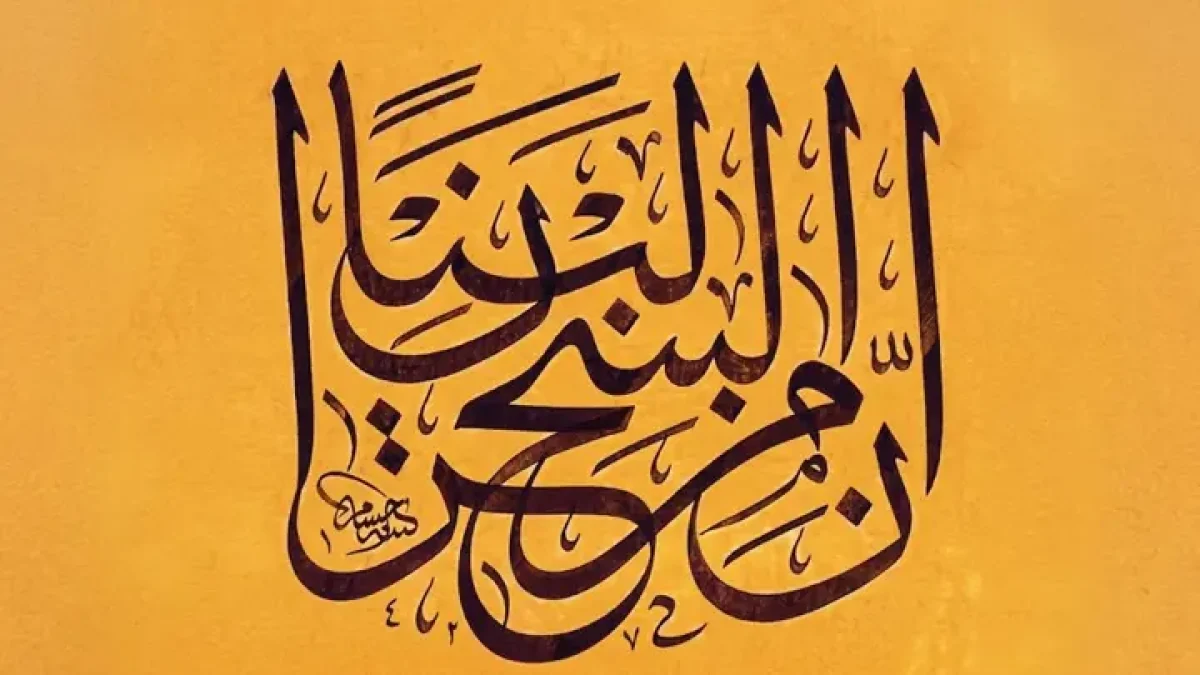
A person’s personality, character and standing are revealed through their speech and manner of speaking. The subject and choice of words, the style of the sentences, the rise and fall of the voice, the manner of delivery and the force of expression show what kind of person the speaker is.
The Messenger of God (peace be upon him) possessed every quality of wisdom in speech. He did not say more than was needed, nor did he stay silent where speech was called for. He was measured in his words. His temperament had gravity and it had humour too. That is why he was honoured with the description jawami al-kalim, because his briefest sentences expressed wide and significant meaning.
Zayd ibn Thabit (may God be pleased with him) said: “When we talked about worldly matters, the Messenger of God would take part. When we talked about the hereafter, he would speak on that too. When we spoke about food and drink, he would join in.” Yet for all this the Prophet said on oath that nothing but the truth and what was just had come from his mouth. The Quran too bears witness: “He does not speak from his own desire.”
After the battle of Hunayn, when he was giving the new Muslims more than their due in the distribution of the spoils, ill feeling arose among the Ansar. Realising this, the Prophet had a separate tent pitched for the Ansar and won them over with the magic of his affectionate words. He said: “After the conquest of Makkah the new Muslims are going home with camels, horses and spoils. And my Ansar companions will go home with God and His Messenger.” At that one remark the whole company of the Ansar broke into weeping. They said with one voice: “O Messenger of God, we are content with your decision.”
When he spoke he pronounced each word clearly and slowly, so that listeners could even count them if they wished. During the migration to Madinah, after he had sheltered at the house of Umm Mabad, she said in praise of him: “His words are like a string of pearls.”
He was in fact the most eloquent man of the Arabs. The literary quality of his language was high and fine, and it was also simple and easy to understand. He never used low or indecent words. Moreover, for the needs of his universal call and his purpose he fashioned a language of his own and a distinct manner of speaking. Of his famous saying “War is stratagem”, it has been explained that this is the Prophet’s own idiom. He coined many such expressions, terms, idioms and similes.
Once some men of the Banu Nahd, after a long conversation with the Prophet, asked in wonder: “O Messenger of God, you and we are children of the same mother and were brought up in the same place. Yet most of our people cannot grasp the meaning of the way you speak.” He said: “God Himself taught me language and letters, so He taught me the best language. Besides, I was brought up among the Banu Sad. That is the secret.”
He did not give long addresses, nor did he speak often. He gave balanced addresses according to the needs of society and its circumstances. When speaking in the mosque he stood leaning on a staff. On the battlefield he spoke seated on his mount. For emphasis he would sometimes swear “by Him in whose hand is my soul” or “by Him in whose hand is Muhammad’s life”.
Eloquence matters greatly in conveying the call of Islam to the community. The manner of speaking can draw people near, and it can drive them away. The best example of what the style, manner and form of speech should be is in the life of the Prophet. We must learn from it and follow him.
বাংলায় মূল প্রতিবেদন পড়ুন · Read the original Bengali report