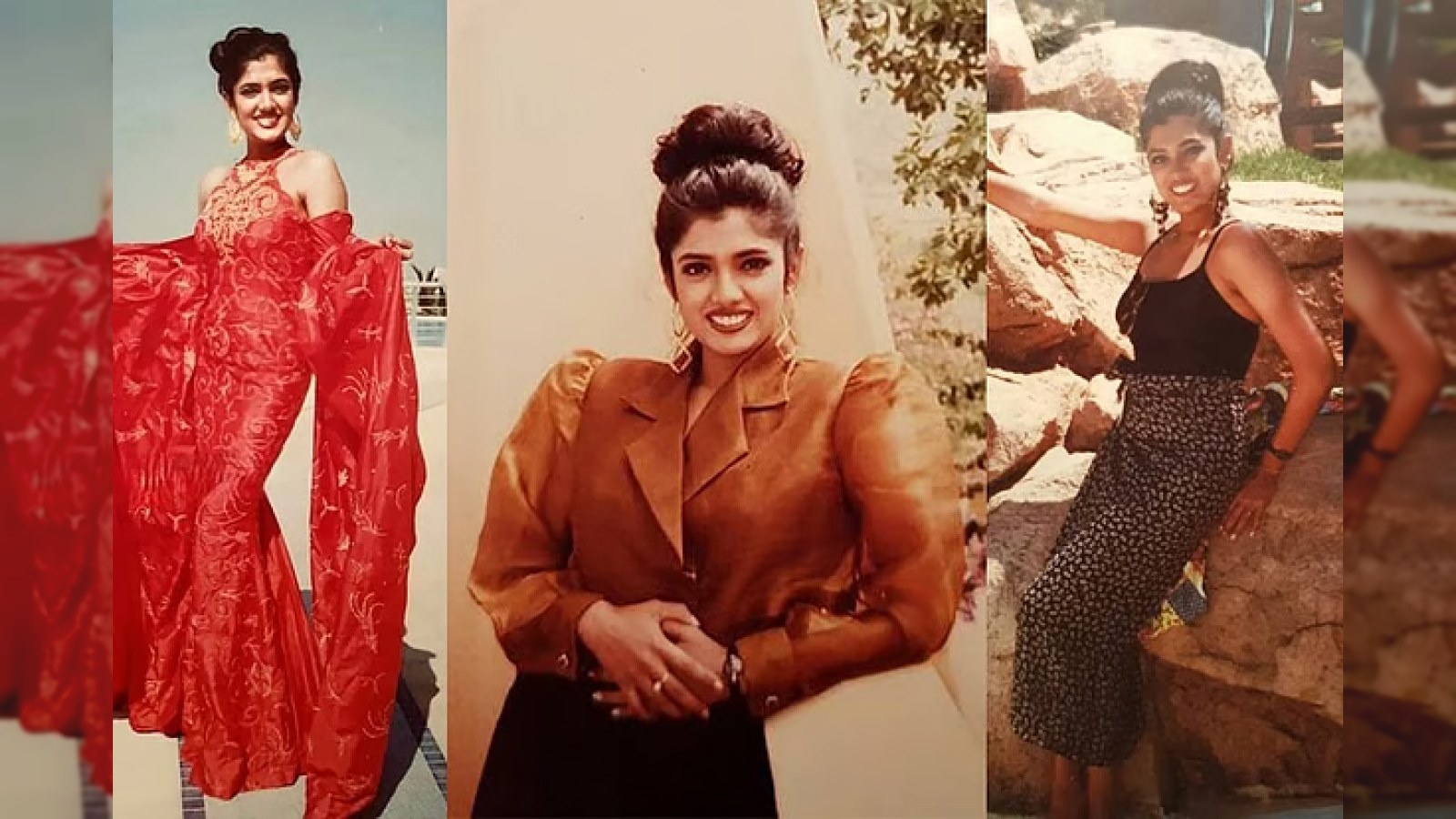
It was 1994. Sitting in her family home in Gulshan, Dhaka, Shathi Bilkis Yasmin was watching the Miss World pageant on television. Her mother scolded her for neglecting her studies, prompting Shathi to joke playfully: "You are not letting me watch TV; one day you will see me up there." It was a lighthearted remark, but by the following year, her mother saw it come true when Shathi represented Bangladesh as its first selected contestant at the Miss World competition.
Shathi Bilkis Yasmin today. Photo: Courtesy of Shathi
Her journey subsequently led to feature film roles, a National Film Award, and appearances at international film festivals. Yet from the screen acting that brought her wide acclaim, Shathi eventually stepped away. Today she works as a corporate professional, serving as managing director of an enterprise. While she no longer attends film industry gatherings, she looks back on those entertainment days as a treasured chapter.
Reflecting on her life with Prothom Alo, Shathi described how she reached the Miss World stage, why she entered cinema, and what prompted her exit, offering insights into her present career and advice for younger generations of women.
From mother's scolding to the Miss World stage
In 1994, having completed her A Levels at an English-medium school in Dhaka, Shathi was attending coaching classes while living in Gulshan. Watching Aishwarya Rai win Miss World on television, Shathi's mother, Yasmin Motin, told her to focus on studying, prompting Shathi's quip about appearing on the stage herself. The next year in 1995, Shathi noticed a newspaper advertisement announcing that an agency based in London was organizing a "Miss Bangladesh" pageant in Dhaka, inviting resumes. When she asked her mother about applying, her mother replied that she had no knowledge of modeling, but Shathi decided to give it a shot.
Shathi Bilkis Yasmin. Photo: Courtesy of Shathi
The eldest of three sisters, Shathi had her younger sister Saba Reza snap photographs at their Gulshan residence without professional styling or preparation, wearing only light lipstick and mascara. Along with the photos, she submitted a short note explaining why she wished to represent Bangladesh. After being shortlisted, she was called for an interview. To prepare, she read extensively about Bangladesh's history, global politics, and general knowledge. "As far as I remember, the interview lasted about an hour at a Chinese restaurant in Moghbazar," Shathi recalled. "They asked about everything from Bangladesh's history to foreign prime ministers. It felt like sitting for a general knowledge exam. A gentleman named Danesh Ahmed had arrived from London to conduct the interviews alongside local panelists whose names I cannot fully recall."
Shathi Bilkis Yasmin. Photo: Courtesy of Shathi
The grand finale of the 1995 Miss Bangladesh competition took place at the Isha Kha Hotel in Dhaka. Walking onto the stage was daunting for Shathi, who felt nervous seeing the large audience from backstage. "My heart was pounding, and my legs trembled," she said. "I looked through the curtain and saw hundreds of people. But when my name was announced, I stepped out, answered the questions calmly, and smiled."
Meeting Nelson Mandela in South Africa
After winning the title in Dhaka, Shathi traveled to Sun City, South Africa, for the 45th Miss World pageant. Facing contestants from around the globe was a transformative experience. Her mother accompanied her, though pageantry rules meant contestants stayed together while chaperones stayed in separate accommodations.
Shathi Bilkis Yasmin. Photo: Courtesy of Shathi
"We received training in walking, grooming, and stage presence," Shathi said. "Meeting contestants from diverse countries opened my eyes to different cultures."
Shathi Bilkis Yasmin. Photo: Courtesy of Shathi
A defining moment of the journey was an audience with South African President Nelson Mandela. The revered statesman greeted each contestant individually. "When I introduced myself as Miss Bangladesh, President Mandela smiled and asked about Bangladesh's then prime minister Khaleda Zia and the country's situation," Shathi said. "He was remarkably warm and gracious. Meeting a global icon of his stature was an unforgettable honor."
Shathi Bilkis Yasmin. Photo: Courtesy of Shathi
During the competition, Shathi wore a traditional Jamdani saree designed by local artisans, showcasing Bangladeshi handloom heritage on the world stage. Though she did not reach the semifinal round, representing Bangladesh internationally earned widespread attention back home.
Shathi Bilkis Yasmin. Photo: Courtesy of Shathi
Stepping into the silver screen
Following her return, television producers and film directors approached Shathi with offers. Acclaimed filmmaker Ehtesham invited her to star in cinema. "Ehtesham Sir was a legendary director who launched stars like Shabana, Babita, and Shabnaz," Shathi said. "My family was initially hesitant because mainstream cinema was perceived differently back then. But Ehtesham Sir visited our home, spoke with my parents, and assured them about the work environment."
Shathi Bilkis Yasmin. Photo: Courtesy of Shathi
Shathi decided to enter cinema with a desire to contribute positively. She admired how film was respected as an art form in India and believed Bangladeshi cinema deserved similar esteem, hoping educated young women could help shift perceptions.
Shathi Bilkis Yasmin. Photo: Courtesy of Shathi
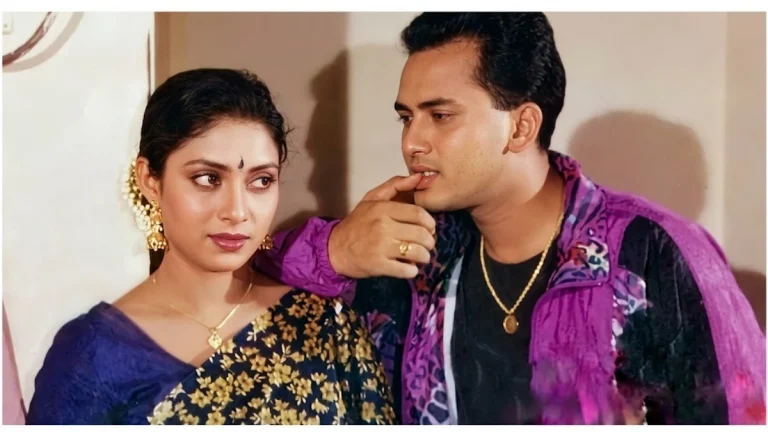
Shathi appeared in several notable films. Her debut was Ehtesham's "Pardeshi Babu" opposite Ferdous. She subsequently starred alongside Manna in "Abbajan" and "Bir Sainik," with Rubel in "Anyayer Protishodh," with Shakib Khan in "Boro Malik," and finally in "Aha!". For her performance in "Bir Sainik," directed by Delwar Jahan Jhantu, she won the National Film Award for Best Supporting Actress. "When I won the award, my mother said: 'You received the National Film Award; what more could one ask for?'" Shathi said, noting that state honors carry lasting dignity.
Shathi Bilkis Yasmin. Photo: Courtesy of Shathi
Her final screen performance came in Enamul Karim Nirjhar's critically acclaimed film "Aha!", which screened at festivals in Dubai and Turkey. While she appreciated creative storytelling, Shathi found the demanding shoot schedules and unpredictable industry environment challenging, wanting to preserve a clean personal reputation away from controversy. Grateful for the support she received from directors and co-stars, she chose not to pursue acting as a lifelong occupation.
Transition to corporate life
Following her cinema career, Shathi's father, Morshed Reza, encouraged her to join the family business, creating an office for her as the eldest daughter.
Shathi Bilkis Yasmin. Photo: Courtesy of Shathi
Backed by family support, Shathi embraced new challenges rather than being confined to a single identity. Over time she carved out a successful corporate career and now serves as managing director of a commercial enterprise. "Stepping away from cinema did not diminish that phase of my life," she explained. "Both Miss World and filmmaking taught me invaluable lessons. One should embrace life's opportunities without letting a single accomplishment define one's entire identity." Nearly three decades after representing Bangladesh on the global stage, she cherishes those memories while thriving in business.
Shathi Bilkis Yasmin. Photo: Courtesy of Shathi
Focus on substance rather than crowns
For the new generation of young women, Shathi advises that no pageant title or accolade should define their boundaries, but should serve as a springboard. Winning a crown can be a milestone, but life requires continuous growth, education, financial independence, and inner strength. "One should never fear stepping into spaces where one initially feels out of place," Shathi said. "My true journey began after taking off the crown. Competing in Miss World was a proud achievement, but everything I built afterward is what truly gave me a broader outlook on life."