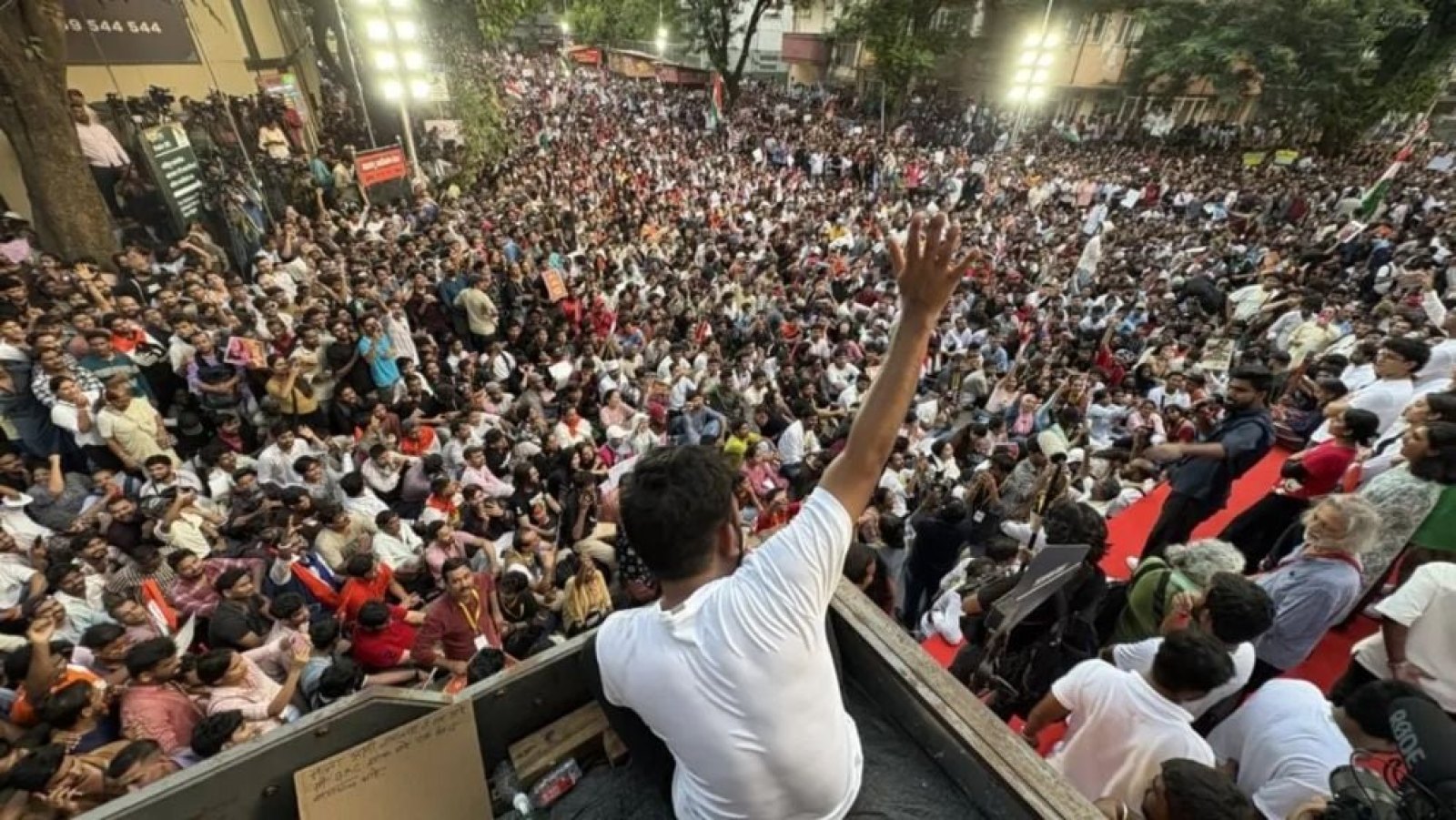
The police crackdown on and detention of young people and protesters in the heart of India’s national capital has caused widespread discontent among ordinary people.
Santosh Kumar, 29, who has long worked as a cleaner in the Connaught Place area of New Delhi, said plainly that his patience had run out after seeing police obstruct young people on the streets and detain them indiscriminately. Sharply criticising the present government’s policies and the conduct of the administration, he said the Modi government’s behaviour had become worse than that of the British colonial rulers.
In recent years historic mass movements led by Gen Z, the young generation, arose in Nepal and Bangladesh. Under their pressure unpopular governments in both countries were forced to resign. Citing those movements in neighbouring countries, he called on Indians to raise their voices on the streets in the same way.
Questioning whether the government’s repression of young people would work, Santosh said the law enforcement agencies would not be able to hold the movement back this way: if police detain 10 people on the street, another 50 young people join within a short time. He described this resistance as a natural reaction to an authoritarian mindset and said the present political leadership was afraid to face the people.
Speaking of political change, he said firmly that the time of Prime Minister Narendra Modi’s authoritarian attitude was coming to an end, and voiced the hope that this government would not last until the general election of 2029. Given the way ordinary people’s anger is growing, he believes change is not far off.
Appealing to the protesters, Santosh said: “Now is the time to make Delhi like Nepal and Bangladesh.” He called on Indians to learn from the student and popular movements in those two countries and come forward to take back their rights and their country. As in the neighbouring countries, he said, only the people’s hard-fought movement and unity can end unjust rule here.
The political movements of Gen Z in Nepal and Bangladesh in recent years had a wide effect on the politics of the whole region. In both countries the unpopular governments of the time were forced to resign in the face of strong mass movements. Angry citizens of New Delhi are now speaking of pressing their own political demands with that example before them.
বাংলায় মূল প্রতিবেদন পড়ুন · Read the original Bengali report