BJP leaders in India’s Uttar Pradesh are returning to Hindutva as a central election theme, with a Mathura temple pledge featuring in plans for a third consecutive assembly victory.
At a two-day strategy meeting in Mathura, state BJP president and Union Minister of State for Finance Pankaj Chaudhary rallied workers with slogans invoking Radha: “Radhe Radhe, let the lotus bloom” and “Radhe Radhe, give us a hat trick.” The lotus is the BJP’s election symbol.
Deputy Chief Minister Keshav Prasad Maurya said in Mathura on Tuesday: “Ayodhya is completely ours; now we must take Mathura. Like Ayodhya, a grand temple will be built at Krishna Janmabhoomi in Mathura.”
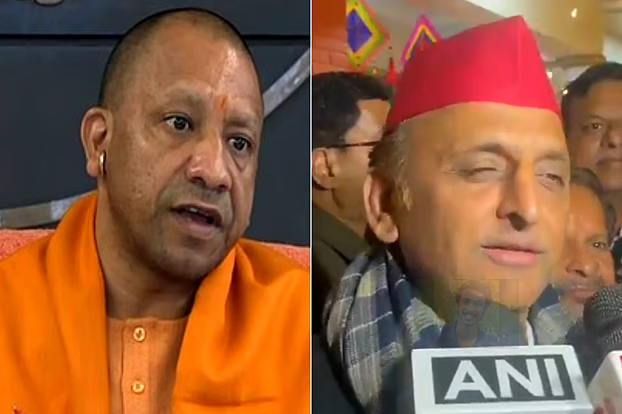
After the Mathura meeting, Chief Minister Yogi Adityanath went to Delhi on Tuesday to meet Union Home Minister Amit Shah and BJP national president Nitin Nabin. They discussed campaign strategy and seat-sharing with allies. Both sets of talks emphasized making a temple at what devotees regard as Krishna’s birthplace in Mathura a prominent campaign issue.
The strategy also follows claims about Uttar Pradesh’s Special Intensive Revision of electoral rolls. BJP leaders say 1 crore 27 lakh of the 2 crore 80 lakh voters whose names were initially removed or not included were Hindu.
Adityanath has pressed the Election Commission over the issue. State BJP leaders contrast those claims with an alleged 1.65% rise in Muslim voters and fear the difference could affect results in at least 58 constituencies.
The party is directing booth-level workers to add Hindu voters before the final roll is published on January 10. It has set a target of 200 Hindu voters per booth.
The election authorities have rejected the chief minister’s assertions. State chief electoral officer Navdeep Rinwa said Tuesday that the commission’s records could not establish a voter’s religion or caste.
Its database contains only names, relatives’ names, age, date of birth, house number and gender, he said. Those records do not identify religion or caste.
Rinwa said commercial software existed that purported to infer whether someone was Hindu, Muslim or Christian from their name. More than 2.5 crore adults were still absent from the rolls, he said, and everyone would have a month to apply.
The Mathura and Delhi meetings also agreed to emphasize a Uniform Civil Code. The Yogi government has not introduced one in Uttar Pradesh despite 10 consecutive years in office, while Uttarakhand has done so.
The campaign will also promise to close all illegally operated madrasas if the BJP wins a third term, and to take the strongest action against people it describes as believing in jihadist ideology or engaging in anti-national activity.
Alongside those pledges, leaders will promote what they describe as the chief minister’s achievements in law and order and development.
The party plans to argue that women are safer than ever, criminal intimidation and organized crime have ended, and improved security has encouraged business. It will also highlight completed and ongoing infrastructure projects.
The strategy has three campaign priorities: what leaders describe as a 180-degree turnaround in law and order that protects lives, property and livelihoods; business and industrial progress attributed to better security; and cultural identity and nationalism. The Mathura temple pledge will be prominent in the third theme.
Samajwadi Party leader Akhilesh Singh Yadav held a 20-km roadshow in Adityanath’s constituency, Gorakhpur, on Wednesday. Called the “PDA Rath Yatra,” it targets three constituencies of support: P for backward communities, D for Dalits and A for minorities, particularly Muslims.
An alliance with Congress could also bring Brahmins into its target group. Like the BJP, the Samajwadi Party has yet to hold seat-sharing talks with allies.
BJP leaders have invited Akhilesh to take part in voluntary temple-building service in Mathura, saying a genuine devotee of Krishna should help. The challenge seeks to appeal to his Yadav support base through Krishna’s association with the Yadav lineage.
বাংলায় মূল প্রতিবেদন পড়ুন · Read the original Bengali report