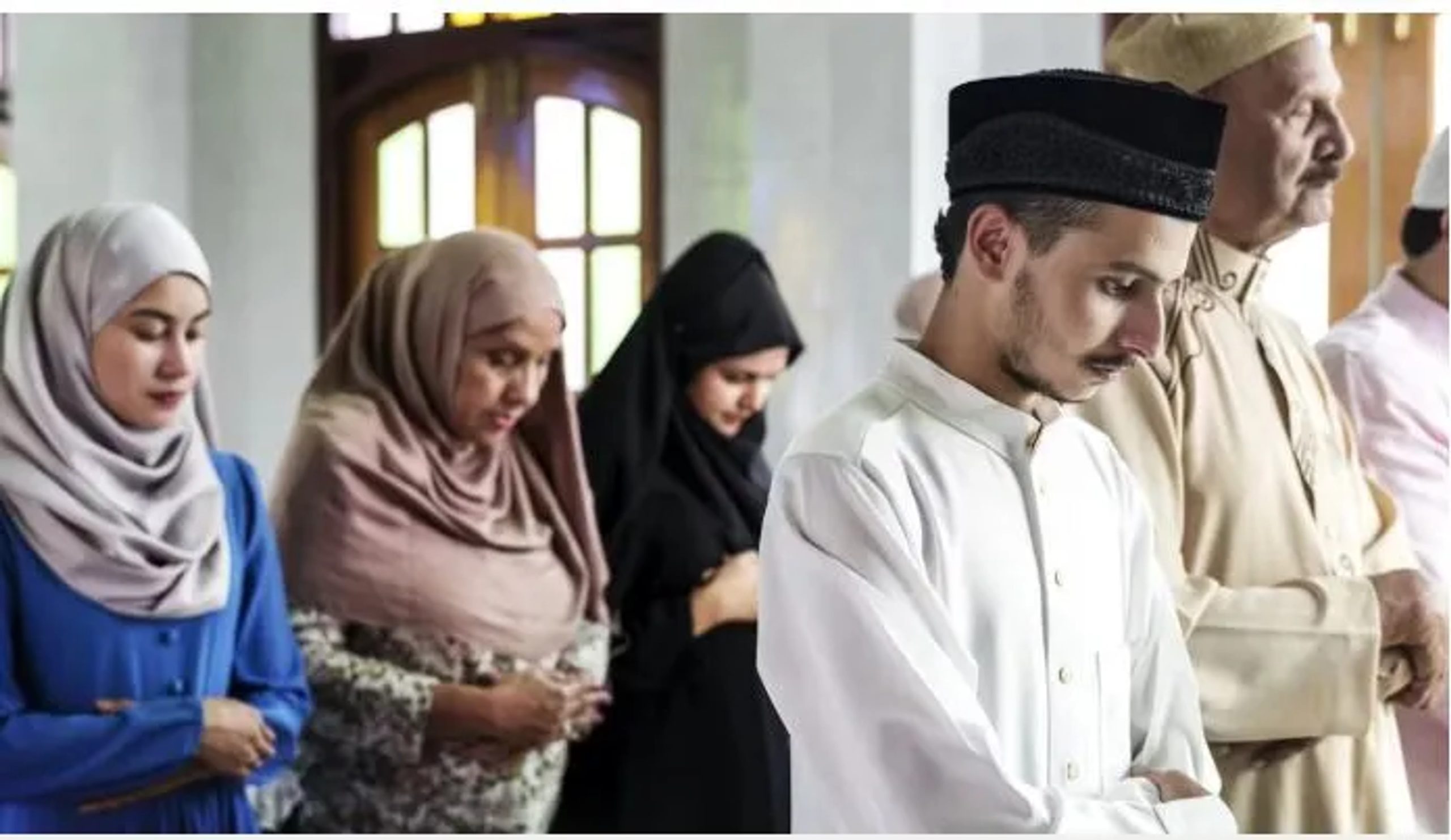
Muslims were part of America’s history long before the United States took shape as a republic. Decades before the English founded Jamestown in 1607 and the Pilgrims reached Plymouth in 1620, in the 1520s and 1530s the Moroccan Esteban de Dorantes — known as Estevanico — set foot in the deserts of what are now Texas, New Mexico and Arizona.
Born at Azemmour on Morocco’s Atlantic coast, Estevanico was taken to Spain as a slave and later across the ocean to the United States. He survived a disastrous expedition in which most of the party died. He learned various Native American languages and became one of the first people from the Old World to cross the southern part of the future United States. Evidence about his birth in Morocco and his life confirms that he was a Muslim.
Most Muslims came to the United States as slaves. Many of them were from the Senegambian and Sahelian regions of West Africa, where Islamic practice had existed for centuries.
Their number is thought to have been more than 10,000. Many of them were educated in Arabic and skilled in the Quran and Islamic law before being taken into slavery. They also left some written records, such as the autobiography of the enslaved Omar ibn Said.
Their deep influence can be seen in American culture and music. In researchers’ view, Muslim Americans played an important part in the development of jazz, one of America’s most distinctive traditions. The “field holler” songs sung by slaves while working in the fields were in particular one of the foundations of popular American music.
Many researchers have traced the roots of these melodies to West African slaves, who carried a centuries-old tradition of Islamic prayer into the fields. Clear similarities can be found between the melody and manner of the field holler, the call to prayer and Quranic recitation. Historians have noted the melodic similarity between a work song from Mississippi in the 1640s and the call to prayer.
An American Muslim later played a major part in the field of religious freedom in the United States as well. In 1964 the heavyweight champion Cassius Clay accepted Islam and changed his name to Muhammad Ali. Three years later, when he was asked to join the Vietnam War, he refused on grounds of religious belief.
In response his world championship title was taken from him, he was banned from the ring and he was sentenced to five years in prison. For three straight years — from the age of 25 to 28 — the finest boxer of his time was not allowed to fight in the ring.
He later went to the Supreme Court. In the 1971 case Clay v. United States the justices unanimously overturned his conviction. The court accepted that Ali’s decision was based on genuine religious belief. The ruling confirmed that America’s constitutional protection of religion applies not only to Christians or Jews but to people of every faith.
The third contribution of Muslims to the making of the United States is their civic engagement and charitable giving. One of the five pillars of Islam is zakat, under which 2.5 percent of one’s accumulated wealth is to be given to the poor. Alongside it is voluntary giving, or sadaqah.
According to researchers at Indiana University’s Muslim Philanthropy Initiative, although they are only 1 percent of the total US population, American Muslims gave about 4.3 billion dollars to charity in 2020. Each donor gave an average of about 3,200 dollars, far more than their non-Muslim neighbours (1,900 dollars).
About 85 percent of this giving stays within the United States. A large part of it goes not to mosques or Muslim institutions but to poverty reduction, tackling the Covid-19 pandemic and protecting civil rights. A large part of the roughly 1.8 billion dollars of zakat given in 2021 went to charitable non-profit organisations rather than to relatives or places of worship.
As the United States marks its 250th anniversary, it emerges that Muslims were not merely guests but among the partners in the making of the country’s history.
বাংলায় মূল প্রতিবেদন পড়ুন · Read the original Bengali report