The main topic at a meeting between US Secretary of State Marco Rubio and Russian Foreign Minister Sergei Lavrov, on the sidelines of a Southeast Asian summit in Manila, was Russia’s war in Ukraine.
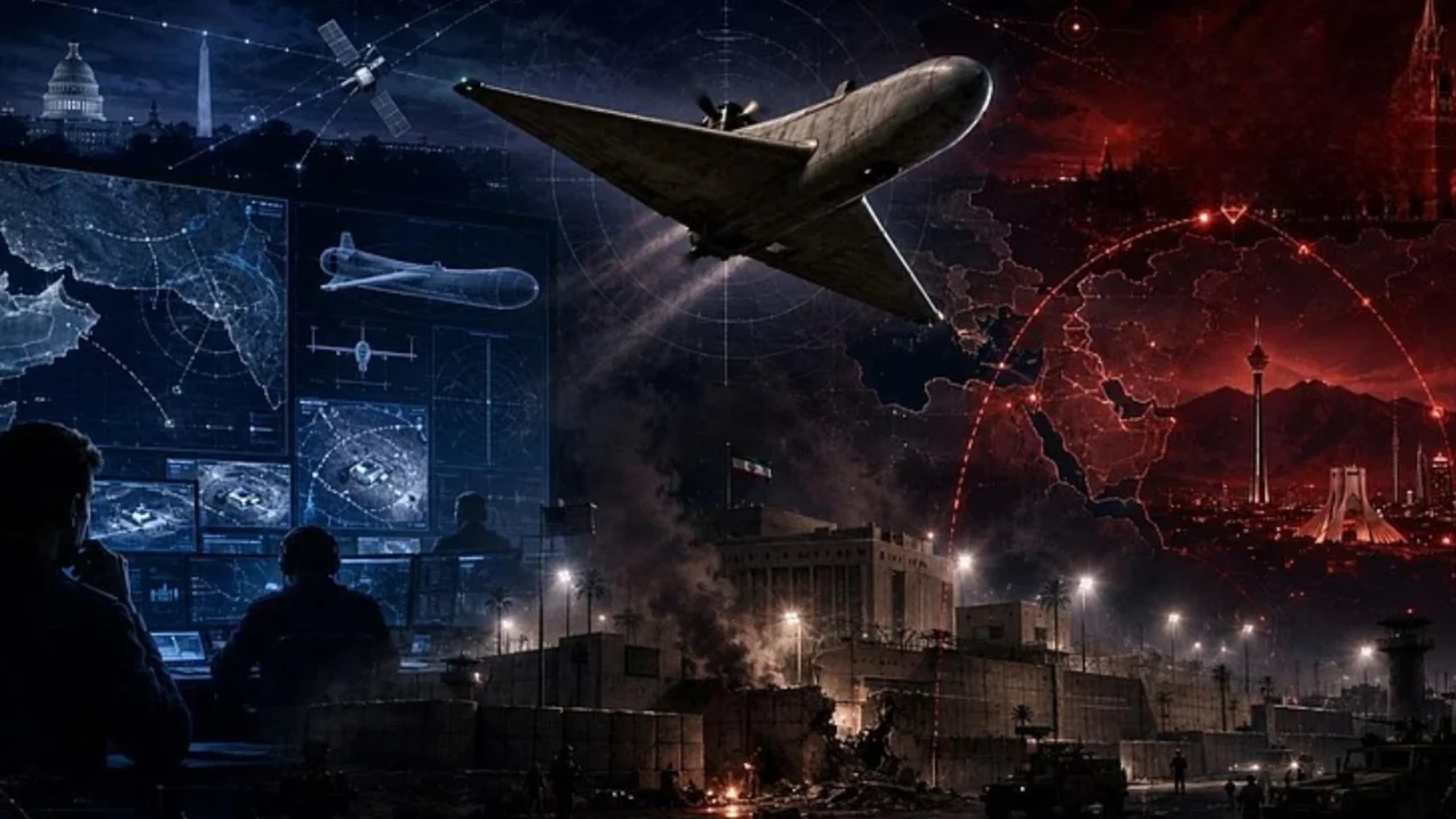
But the meeting came at a time when some new reports have claimed that Russia is playing a more active role in Iran’s strikes on US military installations in the Middle East than it has publicly acknowledged.
News of Iranian strikes targeting facilities linked to the US Central Intelligence Agency (CIA) first became public early in Iran’s war. On the third day after the war began, The Washington Post reported, citing sources, that a strike had been carried out on the CIA station at the US embassy in Riyadh, the Saudi capital.
Then, on March 6, CNN reported, citing US intelligence sources, that Moscow had been helping Tehran to locate US troops and military aircraft in the Gulf region.
Most recently, on Wednesday, Reuters reported that US intelligence agencies had begun investigating possible Russian involvement after Iranian drone strikes on several targets, including the CIA facility at the US embassy in Saudi Arabia. In their view, the effectiveness and precision of the strikes could point to Russian help.
Nicole Grajewski, an assistant professor at the Center for International Studies at Sciences Po university in Paris, said a Russian role in Iran’s targeting was a realistic possibility.
She told Al Jazeera: “There were such fears before too, because many of Iran’s recent strikes are far more advanced and accurate than in the past.”
She said: “Iran’s own space-based capacity is not very strong, whereas Russia’s is much greater. Iran also lacks enough military-grade satellites. So it can be assumed they have reached some kind of understanding with Russia on this.”
She noted, however, that Iran also has its own human-intelligence network for target selection and information gathering, which often does not get its due importance.
Russia’s support for Iran
Against the backdrop of the war and Western sanctions, military cooperation between Moscow and Tehran has strengthened significantly in recent years.
Although many analysts see the two countries’ relationship as an anti-Western, interest-based “opportunistic alliance,” Grajewski does not agree with that assessment.
She said: “Both countries believe they face the same kind of threats at the global level. Their cooperation deepened after the Ukraine war, and it has grown further recently. They are now much more dependent on each other.”
After Russia’s full-scale invasion of Ukraine in February 2022, Iran supplied Moscow with important military equipment including Shahed drones and Fateh-110 ballistic missiles. This brought the two countries’ military ties closer.
Last year the two countries signed a 20-year comprehensive strategic partnership agreement, committing to increased defence cooperation.
At the time, however, Russian Deputy Foreign Minister Andrei Rudenko told his country’s parliament that the agreement did not mean “forming a military alliance with Iran or an obligation of mutual military assistance.”
It is also alleged that Russia helped increase the precision of Iran’s Shahed-136 drones by supplying an anti-jamming navigation system called Kometa-M.
Moscow’s strategic interest
According to Grajewski, the US-Iran conflict serves Russia’s strategic interests to some extent, because it shifts international attention away from the Ukraine war and raises the possibility of weakening US influence on the global stage.
She said: “Russia sees this as a struggle for a new global order. It views it as a chain of consequences that could cause the fall of the United States.”
In her words: “Russia certainly does not want Iran to be defeated. So on one hand it is letting Iran fight the United States alone. On the other hand it wants to ensure the support Iran needs to survive this difficult time.”
Recent strikes
Tit-for-tat strikes between the United States and Iran have recently intensified further. According to Grajewski, it is proving to be Iran’s own strategy, rather than Russian intelligence help, that has more effect in determining the course of the war.
She said: “Russia’s help has not brought any fundamental change for Iran. Iran already had its own drone and missile capacity and had built it up over a long time. But Russia’s cooperation has increased its capacity somewhat further and given it an added advantage in the contest.”
বাংলায় মূল প্রতিবেদন পড়ুন · Read the original Bengali report