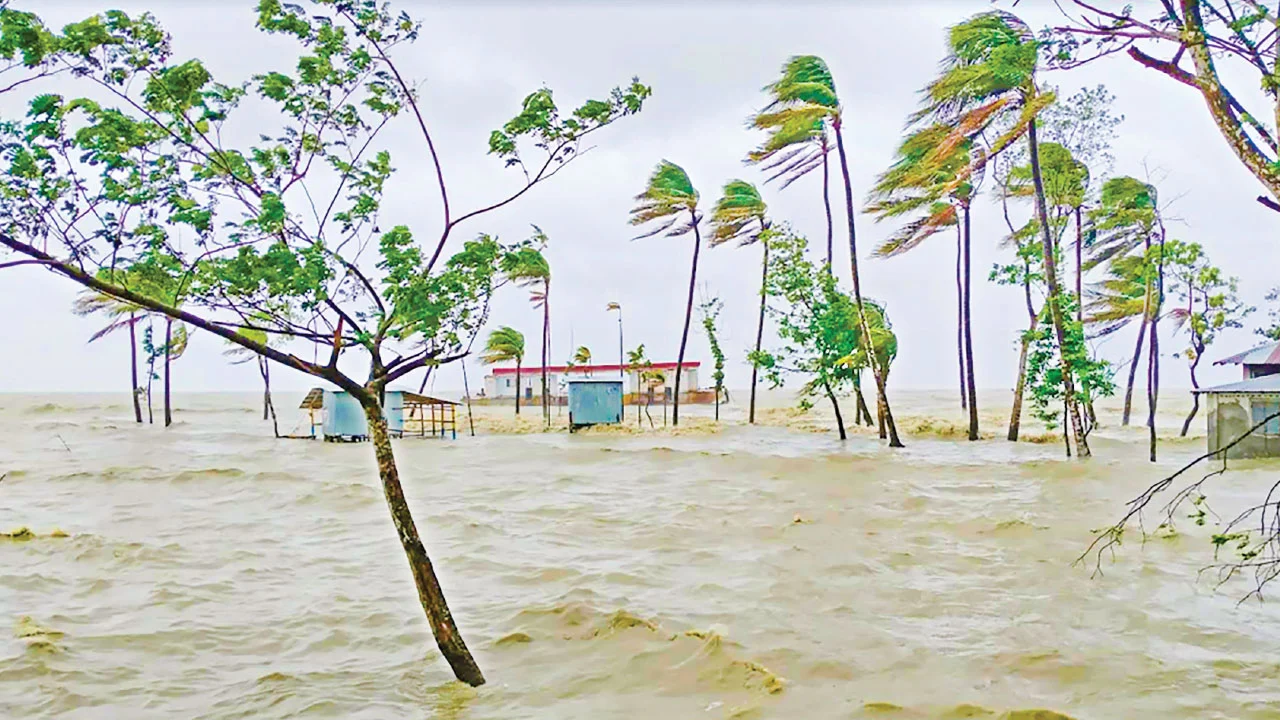
By nature’s law, many kinds of disaster strike the earth — floods, cyclones, earthquakes, fires, excessive rain or drought — disrupting ordinary life, taking countless lives, leaving families homeless, ruining farmers’ crops and pushing many into uncertainty. Modern science and technology have eased human life, yet before nature’s great power people remain helpless. In this reality, Islam sees disaster not merely as a natural event but weighs it in the light of faith, self-examination, humanity and responsibility, and offers principles for facing it that are relevant at the level of the individual, society and state.
First, Islam teaches that a believer keeps steadfast trust in Allah in times of disaster. The Qur’an says: “And We will surely test you with something of fear and hunger and a loss of wealth, lives and fruits, but give good tidings to the patient” (Al-Baqarah: 155) — telling us that hardship is an inseparable part of life, and that not despairing but holding patience and remaining content with Allah’s decree is a believer’s first mark. Second, repentance, seeking forgiveness and supplication carry immense importance in disaster, for hardship reminds people of their helplessness; the Qur’an says, “Seek help through patience and prayer” (Al-Baqarah: 45).
Third, Islam teaches not only supplication but also necessary preparation and practical action. The Prophet (peace be upon him) told a companion, “Tie your camel first, then rely on Allah” (Jami’ at-Tirmidhi) — teaching that caution, planning and preventive measures are not contrary to trust in Allah but part of it; so heeding disaster forecasts, taking safe shelter, preparing for rescue and reducing risk matter in the Islamic view too. Fourth, standing by people in disaster is a demand of faith: the Qur’an says, “Cooperate in righteousness and piety” (Al-Ma’idah: 2), and arranging food, clean water, medicine, clothing and shelter for the flood-hit, ensuring treatment for the injured and joining rescue work are all noble acts of worship. The Prophet (peace be upon him) said, “Whoever relieves a believer of a worldly hardship, Allah will relieve him of a hardship on the Day of Resurrection” (Muslim: 2699).
Fifth, Islam strictly forbids spreading rumour and confusion, for in disaster unverified information and panic-mongering deepen suffering; the Qur’an says, “O believers, if a corrupt person brings you news, verify it” (Al-Hujurat: 6) — guidance whose weight has multiplied in the age of social media. Sixth, Islam seeks to close every path of unjust gain around disaster — embezzling relief, hoarding, creating artificial shortages, overpricing goods or exploiting people’s helplessness through corruption are grave wrongs; a Muslim sees crisis as an opportunity to serve, not to profit. Seventh, sincerity matters immensely: charity and service should be for Allah’s pleasure alone, not for praise, and given in a way that preserves the dignity of the afflicted. Eighth, Islam stresses long-term rehabilitation — rebuilding homes, restoring livelihoods, arranging children’s education and returning affected families to normal life are part of Islamic duty. Finally, it is not our place to declare a particular disaster “Allah’s wrath” without clear evidence from the Qur’an and Sunnah; a believer’s task is to learn from calamity, review their own deeds, repent and stand by the afflicted. As climate change increases the number and severity of disasters, Islam’s teaching reminds us that facing disaster is not the state’s responsibility alone but the shared duty of the whole society — individuals, families, mosques, madrasas, social organisations, volunteers, businesspeople and the state together.
বাংলায় মূল প্রতিবেদন পড়ুন · Read the original Bengali report