Even as Bangladesh grapples with a measles outbreak, dengue infections have begun rising again. Cases are increasing across the country and several deaths have already been reported. With the onset of monsoon season creating ideal breeding conditions for the Aedes mosquito, the situation is expected to worsen.
Dengue is no longer just a problem for Dhaka — it has become a nationwide public health crisis. Every year during and after the monsoon, thousands are infected. In severe cases, patients go into shock, experience hemorrhaging, suffer organ failure, and die. Dengue can no longer be dismissed as merely a “mosquito-borne fever.”
Several countries now use approved dengue vaccines. Thailand, Indonesia, Brazil, and some Latin American nations have authorized their use.
Currently available dengue vaccines:
1. Dengvaxia (Sanofi Pasteur) — the first approved dengue vaccine. However, it is recommended only for individuals who have previously been infected with dengue.
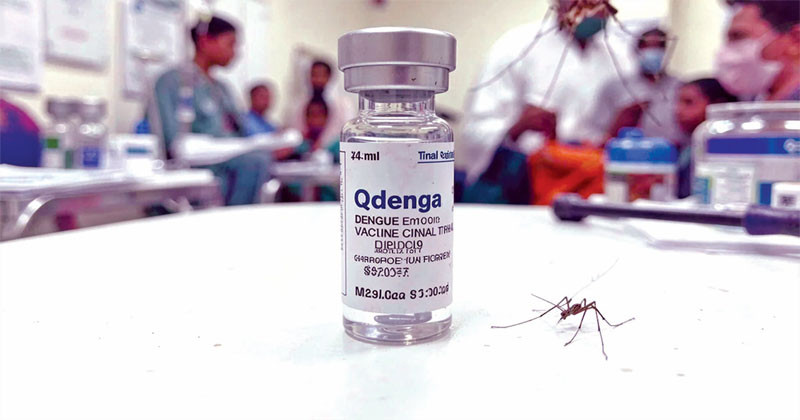
2. QDenga (Takeda) — currently the most widely discussed dengue vaccine, developed by Japan’s Takeda Pharmaceutical Company and approved in several countries.
QDenga requires two doses administered three months apart and is approved for ages 4 to 60. Immunity begins to develop 14 days after the first dose, meaning travelers to dengue-prone areas can take it at least 14 days before departure. Even a single dose provides an estimated 82 percent protection.
Bangladesh has the scientific infrastructure, the public health capacity, and the urgent need. What is lacking is a coordinated national policy to introduce dengue vaccination. With annual case counts regularly exceeding 100,000 and hundreds of deaths, the cost of inaction far exceeds the cost of a vaccination program. The time for a dengue vaccine in Bangladesh is now.
বাংলায় মূল প্রতিবেদন পড়ুন · Read the original Bengali report