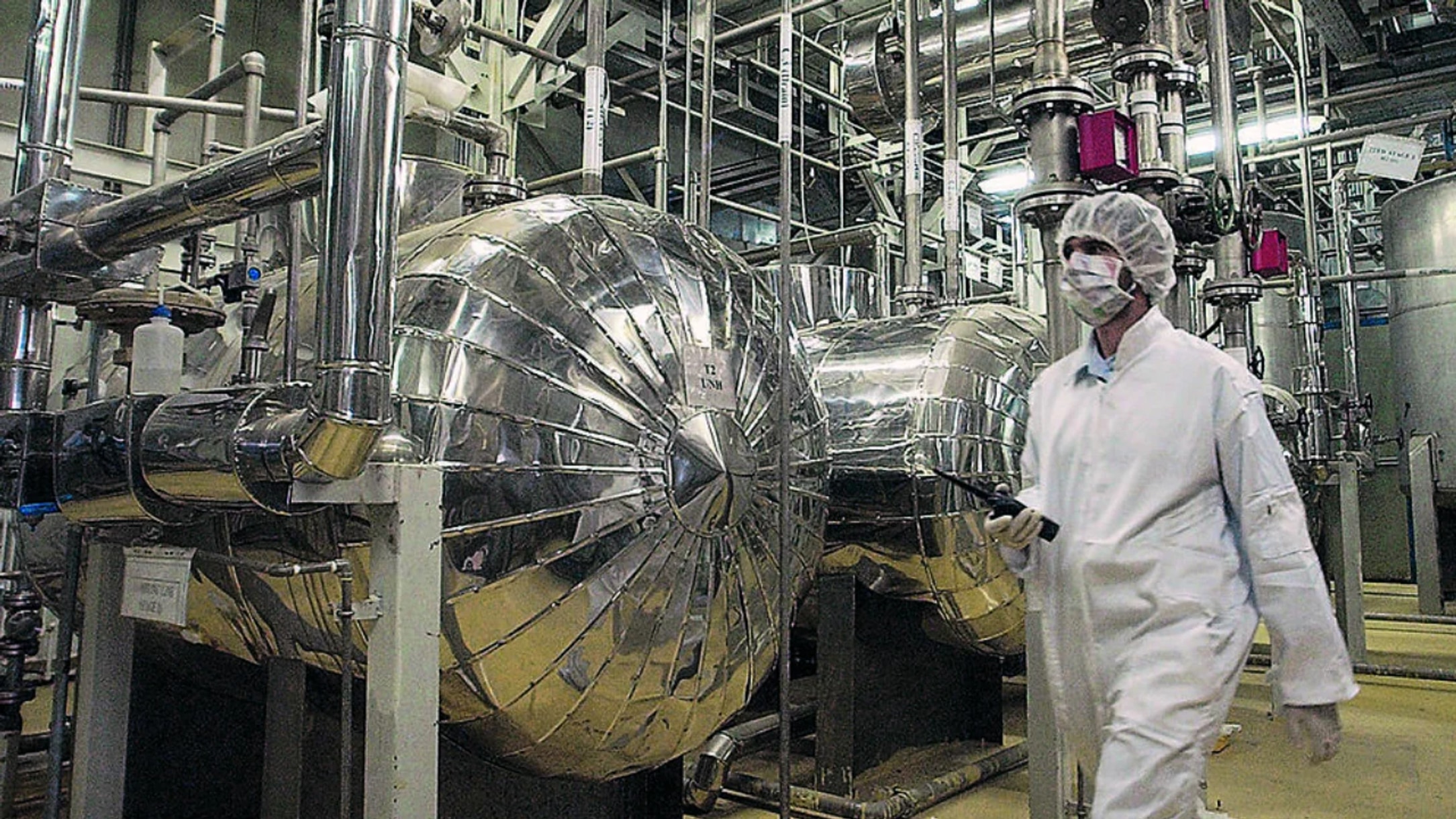
TEHRAN — Iran has stockpiled 22,000 pounds, or 11 tonnes, of enriched uranium since US President Donald Trump withdrew from the Tehran nuclear deal eight years ago. The status of that stockpile remains a mystery, even two months after the United States launched a war aimed at preventing Iran from building a nuclear bomb.
Uranium can illuminate a city or destroy one. Low-density uranium can power a nuclear reactor. Through enrichment, high-density uranium can be used to build a nuclear bomb.
As uranium density increases, enrichment becomes progressively easier and faster. Reaching 20 percent from 0 percent is harder than going from 20 percent to 60 percent, or even to 90 percent — the level required for nuclear weapons.
Iran began industrial-scale uranium enrichment in 2006 and described its purpose as peaceful. International Atomic Energy Agency reports show its stockpile grew steadily in subsequent years.
In 2010, Iran announced it would enrich uranium to 20 percent for research reactor fuel. That level marks the official dividing line between civilian and military use. The 20 percent threshold is considered alarming.
As stockpiles continued to grow, the Obama administration began talks to bring them under control.
In 2015, Iran and six countries led by the United States reached an agreement. The deal limited the purity of Iran’s enriched uranium to 3.67 percent and capped the stockpile for 15 years.
Under the agreement, Tehran capped its stockpile below 660 pounds.
By 2018, Iran did not have enough uranium to build a nuclear bomb when Trump withdrew the United States from the deal and reimposed several tough economic sanctions.
Iran then began enriching uranium beyond the agreed limits — first in small amounts to pressure the West, then up to 20 percent in early 2021, just before Trump left office.
The subsequent Biden administration made an unsuccessful attempt to revive parts of the abandoned deal. During those talks, Iran enriched uranium up to 60 percent — only slightly short of weapons-grade.
After Trump returned to power in 2025, Iran’s enriched uranium stockpile grew at the fastest rate yet.
During the 12-day war in June 2025, the United States bombed Iran’s uranium enrichment centers at Natanz and Fordow and the underground tunnels holding uranium stockpiles at Isfahan. A month later, Iran suspended cooperation with the International Atomic Energy Agency, ending monitoring of the country’s enrichment sites.
Without direct inspections, even satellite surveillance leaves the status of the 11 tonnes of uranium uncertain.
Parts of this radioactive and chemically hazardous stockpile may be hidden or buried under war rubble, making them difficult targets to track or destroy. Even confirming their existence is a challenge.
Experts said that even if Iran retrieves and processes this uranium, it would take many months — possibly more than a year — to build a weapon. They also said Iran posed no imminent nuclear threat when the war began.
The Trump administration has argued that US satellites are monitoring the uranium buried deep underground. They said that with Iran’s nuclear facilities and technology heavily destroyed, the stockpile would be of little use to Tehran.
But analysts have questioned the claim. They said Iran may have built a uranium enrichment center last year in the hills adjacent to its Isfahan facility. Tehran is believed to have stockpiled the bulk of its uranium reserves there. If true, the analysts said, the likelihood increases that Iran has a secret site where it could restart fuel enrichment for a nuclear bomb.
বাংলায় মূল প্রতিবেদন পড়ুন · Read the original Bengali report