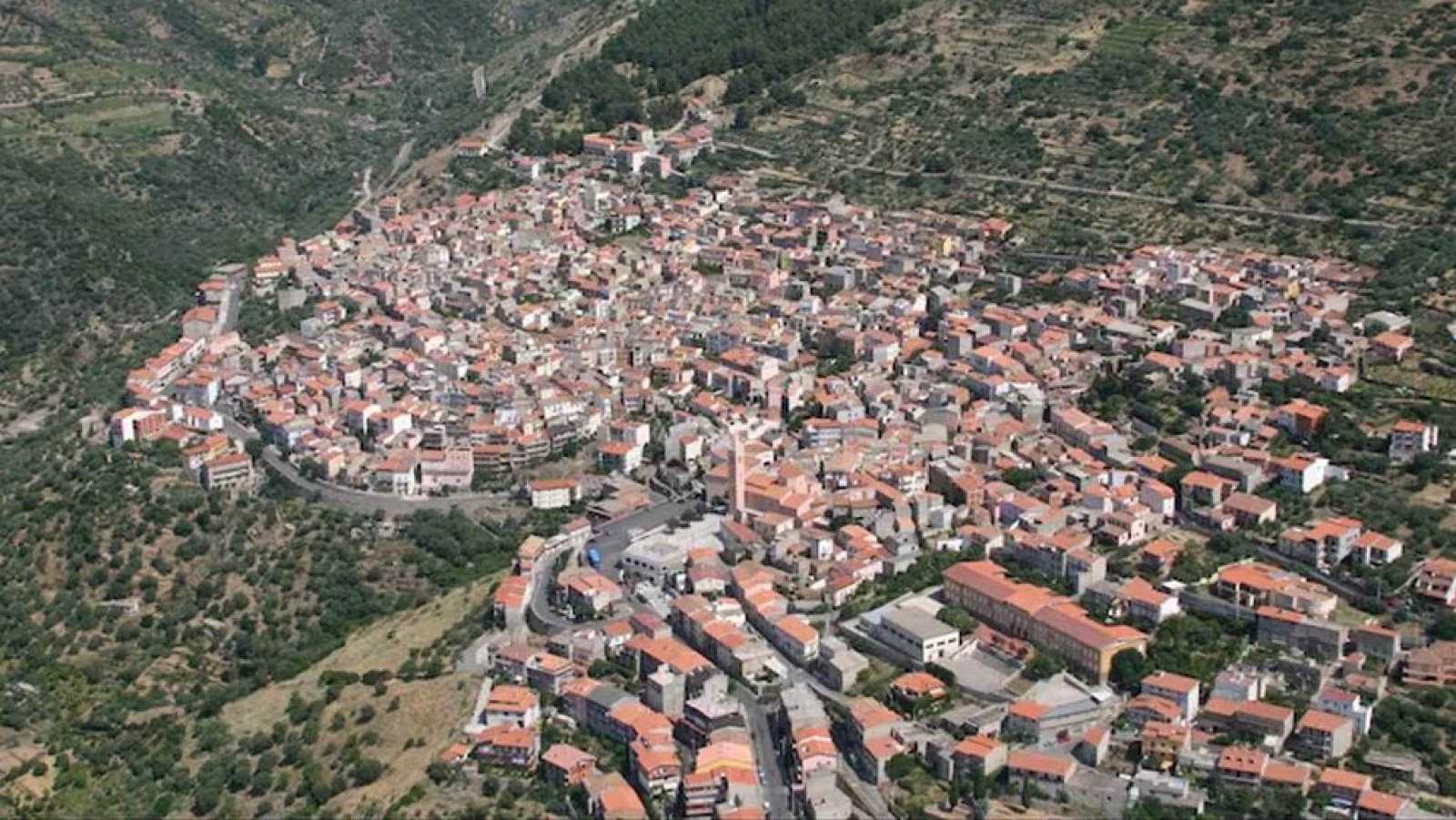
Scientists have new findings on the longevity of women in Bolotana, a small hill village on the Italian island of Sardinia. The research shows that a woman of the village who reaches the age of 70 is several times more likely to live to 100 than women in Italy as a whole or in the United States.
By the researchers’ calculation, published in the journal Frontiers in Aging, about 13.8% of women in Bolotana who reach 70 can expect to complete a hundred years. The figure for the whole of Italy is about 3.5% and for the United States 3.6%.
The researchers think the combined effect of local diet, daily walking, family ties, social contact and possibly genetic traits may lie behind this exceptional longevity. How much each matters is not yet certain.
Areas of the world where average life expectancy is unusually high and centenarians comparatively numerous are commonly called “blue zones”.
Some parts of Sardinia became known as such zones of longevity more than two decades ago. The new research, however, has brought to light a particular pattern of longevity among the women of Bolotana.
The researchers analysed survival data for the village’s elderly residents from 2021 to 2025, and used old civil records and church archives to verify residents’ ages at birth and death.
Analysing the records of 3,060 people born between 1900 and 1925 in the village, which has about 2,300 inhabitants, they found 38 who lived to 100 or more.
About 21 more years after 70
The research found that women in Bolotana who reach 70 can expect to live on average about another 21 years.
Comparing them with other populations in the world, the researchers found that in the chance of survival after 70 and of reaching 100, the women of Bolotana come second only to the women of Hong Kong.
According to S Jay Olshansky, a co-author of the study and emeritus professor of epidemiology at the School of Public Health of the University of Illinois Chicago, what is special about Bolotana is its long run of historical records, which made it possible to verify ages at birth and death independently.
The part played by walking and food
Scientists have not yet identified a specific cause of Bolotana’s longevity, but several things about life in the village have caught their attention.
The streets of Bolotana and the surrounding area are steep and hilly, so walking plays a large part in residents’ daily movement. In many cases errands have to be done on foot, not by car.
The researchers think diet may also be important. Besides locally produced food, olives and olive oil are part of the food culture here. Various studies have found the healthy fats in olive oil to be good for the heart and for health in general. But diet alone does not explain the longevity of Bolotana’s women.
Family and social ties
Family and social bonds among the people of Bolotana are also strong. Many live close to relatives, so older people are comparatively less likely to suffer social isolation.
In Olshansky’s view, people in a close-knit social setting look after one another. Physical movement in daily life and social contact can both contribute to a long and healthy life.
The researchers think diet, regular physical effort, family and social support and genetic traits may all have a combined effect. But simply copying the way of life in Bolotana does not guarantee a long life.
They caution that although a link has been found between the way people live in Bolotana and their longevity, it does not allow any single factor to be held directly responsible.
The research also found that the strength of this pattern of longevity has varied somewhat between periods. Longer runs of data and independent research are therefore needed before Bolotana can be formally recognised as an established “blue zone”.
Scientists hope, however, that further study of life in the village may yield new understanding of the part diet, physical activity, social ties and environment play in reaching old age in good health.
বাংলায় মূল প্রতিবেদন পড়ুন · Read the original Bengali report