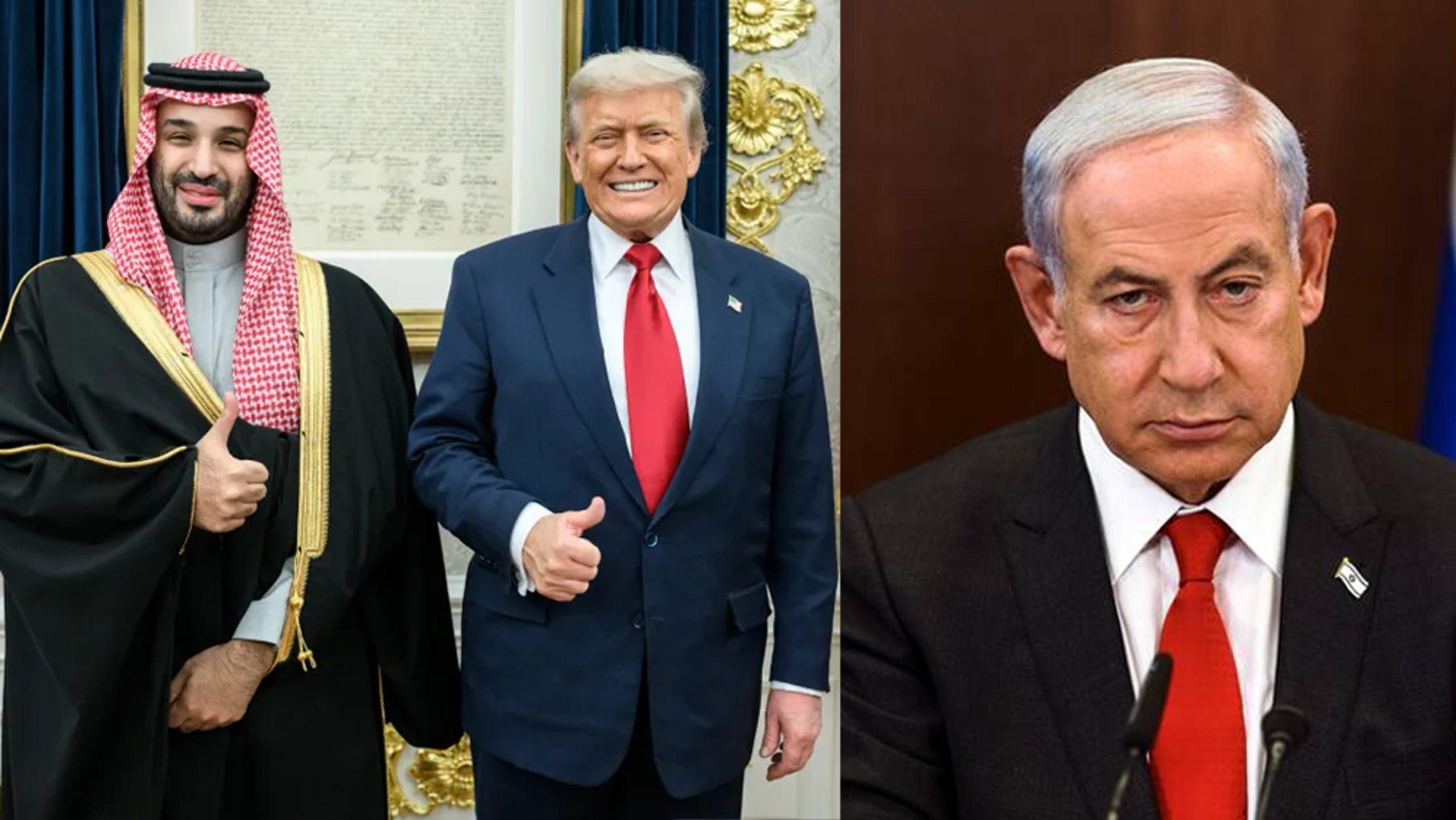
The United States has formally signed a civil nuclear cooperation agreement with Saudi Arabia. The deal is thought to potentially open a path for Saudi Arabia to acquire its own uranium enrichment capability in future. Experts have voiced fears of a renewed nuclear arms race in the Middle East, and Israel has expressed concern about the agreement.
US Energy Secretary Chris Wright and Saudi Energy Minister Prince Abdulaziz bin Salman signed the nuclear cooperation agreement, known as a “123 agreement,” along with a bilateral safeguards agreement on Wednesday, July 22.
The US administration has not published the details, but a source familiar with the matter said the framework would pave the way for building a uranium enrichment facility in Saudi Arabia after a joint US-Saudi study. The agreement will now go to the US Congress for approval.
In a statement, Chris Wright said the deal would further strengthen commercial ties between the United States and Saudi Arabia and protect both countries’ security and economic interests, claiming it maintained the highest standards of nuclear security and non-proliferation.
Responding to possible criticism, US Secretary of State Marco Rubio said no agreement would be made that created a risk of nuclear weapons proliferation. “The United States will not make such an agreement with any country in the world that increases the risk of nuclear proliferation,” he said.
The agreement does not, however, include the International Atomic Energy Agency’s (IAEA) Additional Protocol, which would have allowed broader international inspection and monitoring — a point that has caused concern among experts.
The agreement will run for 30 years, with various US companies taking part in implementing Saudi Arabia’s civil nuclear programme.
Fears over weapons development
Experts working on nuclear non-proliferation say that if Saudi Arabia acquires its own uranium enrichment capability, it could in future become the basis for building nuclear weapons — particularly as Saudi Crown Prince Mohammed bin Salman has previously indicated that if Iran builds nuclear weapons, Saudi Arabia would follow the same path.
Alexander Bollfrass, a nuclear expert at the London-based International Institute for Strategic Studies, called it a “revolutionary change” in non-proliferation policy, saying a path was being created to transfer sensitive technology without ensuring the highest international monitoring.
Israel normalisation condition dropped
Analysts say one of the most significant aspects of the deal is that it sets no condition on normalising Saudi relations with Israel. Donald Trump’s first term and later the Joe Biden administration had tried to make nuclear technology for Saudi Arabia conditional on normalisation with Israel; the current Trump administration is thought to have moved away from that condition.
Former US diplomat Dan Shapiro said: “Through this deal the Trump administration has handed Saudi Arabia, without any conditions, an important diplomatic tool for normalising relations with Israel.” In his view this could make it harder for the United States to achieve its broader strategic goals in the Middle East.
Concern in Congress
Several lawmakers from both the Democratic and Republican parties in the US Congress have expressed concern about the deal, fearing Saudi Arabia could in future convert the capability into a military programme.
California Congressman Brad Sherman said the United States was opposing Iran’s uranium enrichment programme on one hand while giving Saudi Arabia the opportunity to acquire the same capability on the other. “The only difference is that US companies will earn huge amounts from this deal,” he said.
Analysts say the US nuclear technology firm Westinghouse could be one of the biggest beneficiaries, with its technology likely to be used in building Saudi Arabia’s planned nuclear power plants.
The agreement comes at a time of acute tension in the Middle East over Iran’s nuclear programme. The United States and Israel say their aim is to prevent Iran from acquiring the capability to build nuclear weapons, while Tehran has consistently maintained that its nuclear programme is entirely peaceful.
বাংলায় মূল প্রতিবেদন পড়ুন · Read the original Bengali report