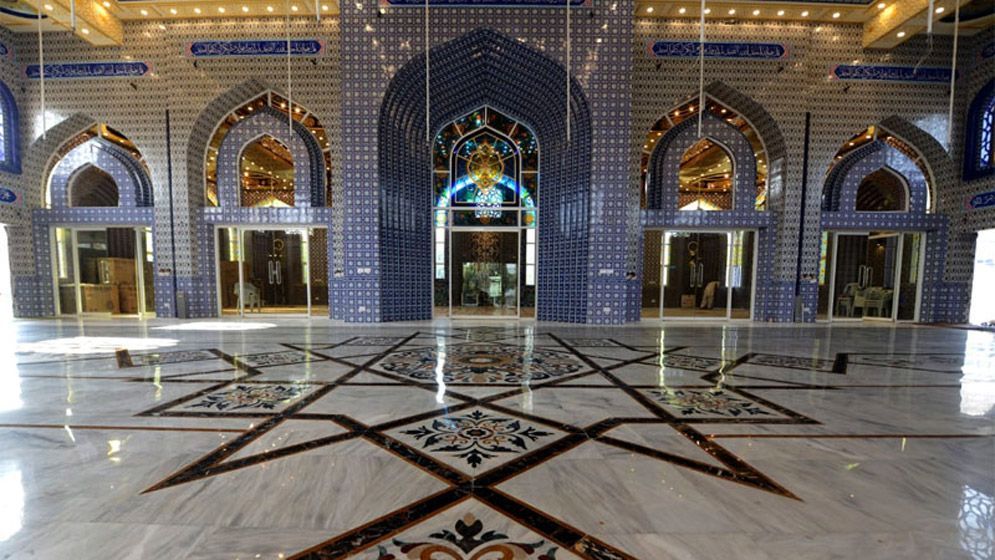
When the muezzin’s melodious call to prayer floats from the neighbourhood mosque on a Friday or at the five daily prayers, the busy clamour around it falls silent for a moment. When rich and poor, master and servant stand shoulder to shoulder in the mosque and bow together in prostration, a picture of perfect equality emerges. But behind this familiar everyday scene lies a great historical and social truth we are close to forgetting: the mosque was never merely a place of worship within four walls, but the heart of a self-sufficient social system whose revival is most needed in today’s decaying society.
Looking at Islamic history, the first thing the Prophet Muhammad (peace be upon him) did after migrating from Mecca to Madina was to lay the foundation of the Prophet’s Mosque. It was not only a place for prayer but the first state, social and judicial headquarters of Islam — at once a parliament and an administrative centre, a place for major state decisions, war strategy and diplomacy, and a cradle of education. In one corner arose the “Ashab-e-Suffa,” Islam’s first residential university. The settlement of social disputes, the rehabilitation of the needy and the distribution of the Baitul Mal (state treasury) were all done from the mosque. In the golden ages of later Muslim empires — the Rashidun, Umayyad, Abbasid and Ottoman — a grand mosque stood at the heart of every city, and around it grew universities, libraries, markets, hospitals and courts, as in Baghdad, Cordoba and Damascus.
In Bengal too, in the early days of Islam’s spread, society grew up around the mosque. In rural society the “panchayat” system was run by the mosque imam and local elders, and disputes, family problems and festivals were decided sitting on the mosque veranda after prayers, building an orderly sense of neighbourhood in which looking out for one another was a binding social duty.
Today there is no shortage of beautiful, multi-storey, air-conditioned mosques gleaming with marble and modern lighting — but have our social bonds improved in proportion? Today’s mosques have become almost “part-time” places of worship: people come after the call to prayer, pray, finish their supplications and quickly leave, with the gates usually locked outside prayer times. As the mosque’s role in society has shrunk, social decay has become acute — the menace of teenage gangs, drug addiction, family strife, the loneliness of the elderly and severe moral decline among the young — because there is no longer a living social centre to hold them.
To counter today’s complex social psychology and decay, the essay argues, there is no alternative to restoring the mosque to its old role — not a step backwards, but moving forward on the strength of roots. It calls for building each ordinary mosque into a social centre: a mosque-based library holding books on history, science and ethics alongside religious texts; a free clinic and blood-donor group; using the mosque’s zakat fund each year to make three or four unemployed young people of the neighbourhood self-reliant with a rickshaw, sewing machine or small shop; and safe, screened participation for women, as there was at the Prophet’s Mosque in Madina. Its main builders, it says, are the imams, who must be seen not as mere “prayer-leading employees” but as guides of society, skilled in contemporary knowledge, science and social psychology, with mosque committees including not only the wealthy but honest, educated and energetic young people. The call of unity from the mosque’s minaret, it concludes, must be spread not only to the rows of prayer but to every row of life, so that a peaceful, crime-free and humane Bangladesh can be built.
বাংলায় মূল প্রতিবেদন পড়ুন · Read the original Bengali report