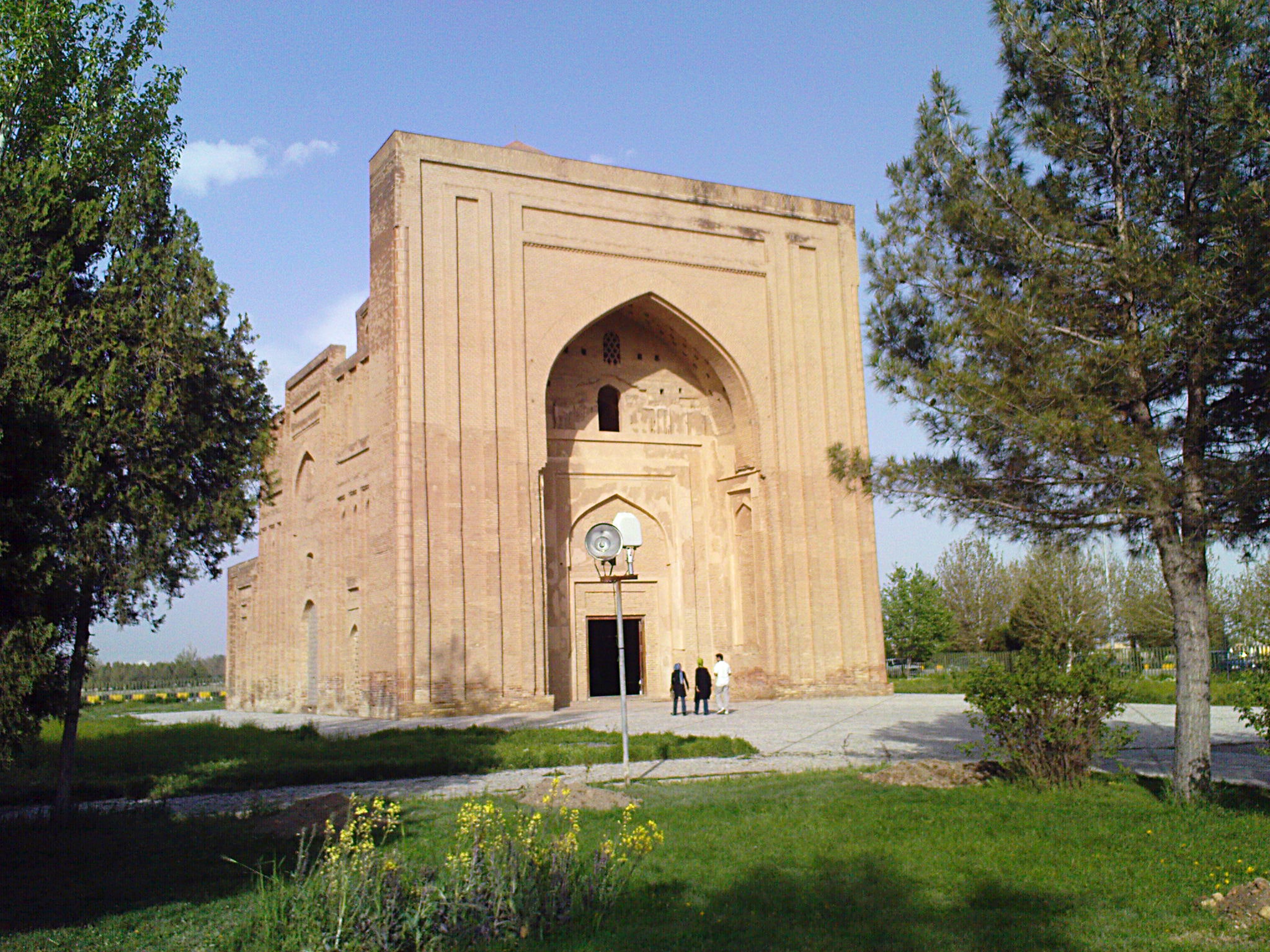
A person’s hardest battle is never against a visible enemy. The longest and most difficult struggle is fought in complete silence, deep in one’s own breast, against the restless lower self, the nafs. For anyone who loses this inner war, every outward victory in the world loses its meaning. The man who placed this truth at the centre of Sufi and Islamic thought was Imam Abu Hamid al-Ghazali, known as Hujjat al-Islam, the Proof of Islam.
Born in the city of Tus in Persia, he reached the height of learning and fame as head teacher of the famous Nizamiyya madrasa in Baghdad. But, driven by an inner thirst, he left position and splendour behind one night and set out in the dress of a wandering ascetic. After a decade of intense spiritual discipline and self-examination in the solitude of Jerusalem, Damascus and Makkah came his landmark work, Ihya Ulum al-Din, the Revival of the Religious Sciences.
In al-Ghazali’s thought the heart, the qalb, is the emperor of the body’s realm and the limbs are its obedient subjects. If the heart, which is like the royal palace, is sunk in filth, the whole of life goes down into the darkness of confusion. Set against modern life, his teaching on purifying the self can be arranged as eight main disciplines that guide the heart.
1. Self-knowledge and muhasaba: the mirror in which to know oneself
The first lesson in purifying the self is to know one’s own being: “Whoever knows himself knows his Lord.” For al-Ghazali, the greatest task of a mindful believer is to stand face to face with oneself every day in the mirror of the mind. Just as a trader reckons profit and loss to the last coin at the end of the day, so muhasaba is to go carefully over the day’s faith, deeds and conduct in the quiet of the night, before laying one’s head on the pillow.
2. Reining in the lower self (mukhalafat an-nafs)
Three unseen forces are always present in a person: the animal force (lust and anger), the satanic force (deceit and pride) and the divine or spiritual force. The essential struggle of self-purification is to keep the first two under firm control and let the divine force within prevail. The chief way to rein in the lower self is to refuse its unjust demands and deliberately walk the opposite way.
3. Healing the hidden diseases of the heart
When the body is in pain we run to the doctor, but we let the diseases of the mind grow in silence. Al-Ghazali identified three main killers of the soul: pride (kibr), the urge to display one’s own superiority; envy (hasad), the burning in the heart at another’s good fortune; and showing off in worship (riya), the wish for people’s praise in place of the Creator’s. To remove them he prescribed the practice of the opposite quality, like using an antidote against poison: unconditional humility against pride, deep love against envy and sincerity, ikhlas, against riya.
4. Tawba: the longing to return cleansed
Tawba, repentance, is the gate through which one leaves the world of filth and returns to spiritual purity. Merely murmuring “astaghfirullah” is not repentance. For al-Ghazali, repentance is to feel one’s heart bleed for the wrongs of the past, to abandon the path of sin at once and to make an unbending resolve never to return to it.
5. The balance of takhliya and tahliya
Two distinctive pillars of al-Ghazali’s teaching are takhliya and tahliya. Just as a good crop cannot be expected without first pulling the weeds and harmful stones from the field, takhliya, emptying, is to clear envy, greed and worldliness from the mind. Tahliya, adorning, is to sow in that cleaned and tended heart the seeds of God-consciousness (taqwa), patience (sabr), gratitude (shukr) and sincerity (ikhlas). Spiritual growth comes from the balance of the two.
6. Uzla and fikr: silence and remembrance
Needless talk, too much idle company and noise make the heart hard and unfeeling as stone. So al-Ghazali advised leaving the noise at times for uzla, the shelter of silence. To sit in solitude absorbed in the remembrance of the Creator deep in the heart, and to reflect (fikr) on one’s own mortality and the hereafter, melts the heart like ice and makes it shine.
7. Qanaa and zuhd: the royalty of contentment
Attachment to wealth and position brings a person down to the level of the beasts. Al-Ghazali’s zuhd, detachment from the world, does not mean leaving one’s family to live in the hills. Its true meaning is that the world may be in the palm of the hand, but love of it never enters the depths of the heart. Only when greed for money, honour or position can no longer control a person is that person truly free and raised to a higher humanity.
8. Suhba: the company of a worthy guide
It is almost impossible to cross the deep darkness of the soul alone. The faults hidden in one’s own heart cannot be seen with the naked eye. For al-Ghazali, an experienced and spiritually rich guide and good company, suhba, are indispensable on the journey. Just as a candle can give light only when it touches another that is already lit, the company of an accomplished person drives out in a moment the darkness gathered in the mind.
In today’s artificial, glittering and technology-driven age, when people’s outward shine has grown and their inner peace has sunk to the bottom, al-Ghazali’s teaching is like a shower of cool rain in the desert. In an age of display on social media, the rat race of materialism and depression, he reminds us that life’s real victory does not lie in conquering palaces or empires; it lies in defeating the pride and base desires within.
As al-Ghazali said: “Our heart is a very clear mirror. As the dust of each day’s sins, small and great, gathers on it, one day it clouds over and loses the power to reflect light. If the dust is wiped from that mirror with repentance, remembrance and sincere purification of the self, the unimaginable light of the Creator and the breeze of perfect peace will be reflected in it.”
বাংলায় মূল প্রতিবেদন পড়ুন · Read the original Bengali report