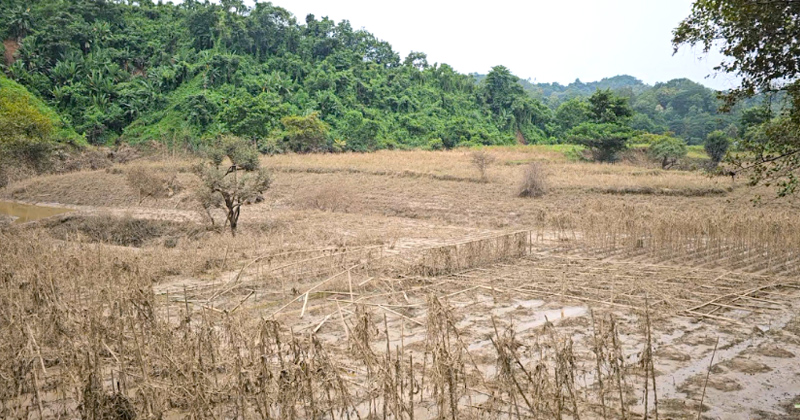
As continuous rain, hill run-off and flood water begin to recede, the scale of severe damage to the farm sector is becoming clear across Bandarban. Vast farmland, vegetable fields and orchards have been submerged and ruined in the district’s sadar as well as Lama, Alikadam, Naikhongchhari, Ruma, Thanchi and Rowangchhari upazilas. Extensive seasonal cultivation along both banks of the Sangu and Matamuhuri rivers has also been washed away by the strong current, badly damaging riverside fields of vegetables, maize, chilli, ginger, turmeric, banana, papaya, cucumber and okra. Many farmers’ aman rice seedbeds and orchards have also been ruined, leaving many facing extreme uncertainty after losing their only source of income; affected farmers have demanded government and private help to recover.
Mongmong Marma, a farmer from the Chhaingya area, said: “Sudden rain and river water rotted my bitter gourd and cucumber gardens. I took a big loan; now I don’t know how I’ll pay the instalments.” Josim, a farmer from Balaghata Bharakhali, said: “Such rain and floods have come that we farmers have been hit hardest. Who will make up this loss now?” Abdur Rahman, an affected farmer from Alikadam’s Panbazar, said crops had been submerged over several days of rain and flooding, with most cucumber and vegetable gardens lost.
Department of Agricultural Extension Bandarban deputy director Abu Naim Mohammad Saifuddin said a full list of the farm sector’s losses was being prepared, and steps had been taken to rehabilitate affected farmers and normalise production. He said that, according to information received so far from Bandarban’s seven upazilas, 2,104 hectares of farmland and orchards had been affected by the disaster and 368 hectares fully damaged, with about 5,323 farmers affected.
বাংলায় মূল প্রতিবেদন পড়ুন · Read the original Bengali report