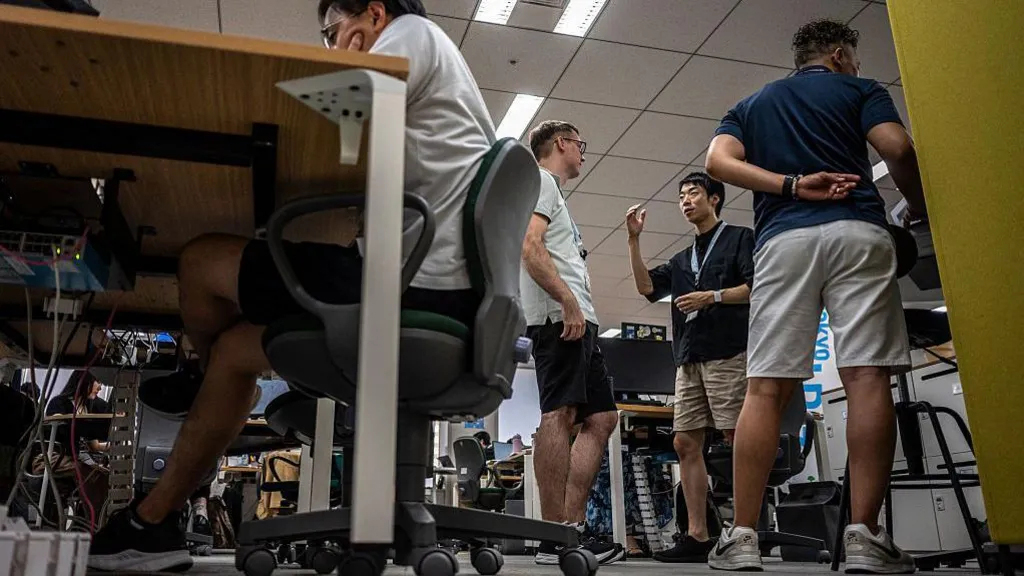
In extreme heat, Japanese men are wearing T-shirts, sneakers and shorts to the office as more comfortable clothing instead of suits and ties. The Tokyo Metropolitan Government recently introduced the rule. Reaction has not been uniform, however. Some women employees have objected to men coming to the office with bare legs, and there has been considerable discussion on social media, which many have labelled “leg hair harassment.”
According to a BBC report, Tokyo Governor Yuriko Koike launched the “Tokyo Cool Biz” campaign in April this year to cope with the heat. The rule, in place for about four months, has drawn mixed reactions. While many male staff can work comfortably in relaxed clothing, many women call it discriminatory, because Japan's conventional office culture still places invisible social pressure on women to keep their legs covered, while men face no such pressure.
That has given rise to the “leg hair harassment” debate. In the words of women employees, being made to look at male colleagues' bare, hairy legs is itself a form of “harassment.”
A survey by Japan's Gorilla Clinic in June found 53.5 percent of people opposed wearing shorts in the office and 46.5 percent in favour. The main objection among those against was body and leg hair. The clinic said women objected far more than men. Gorilla Clinic director Akifumi Funatsu said many men are now having laser hair removal because of wearing shorts, so as not to feel embarrassed in front of colleagues.
Yuriko Koike first launched the “Cool Biz” campaign in 2005 as environment minister. At the time, then prime minister Junichiro Koizumi and other senior government figures came to the office without ties or jackets to send a message about saving energy. Later, after the 2011 Tohoku earthquake and tsunami, the government introduced “Super Cool Biz” to increase energy saving further.
Japan, like other countries, is now facing record heat, made harder by rising fuel prices because of the Middle East crisis. The Japan Meteorological Agency has designated days above 40 degrees Celsius as “kokusho-bi,” or days of extreme heat.
According to the country's disaster management agency, seven people died of heat and more than 4,550 were hospitalised in the single week from July 6 to 12.
In the heat, people are using air conditioning along with fan-fitted clothing, wet towels, sun- and heat-blocking umbrellas and small hand fans. Experts say the body needs to be prepared during the monsoon to adapt to extreme heat, because high humidity in Japan's air means sweat does not dry easily and the body cannot cool quickly.