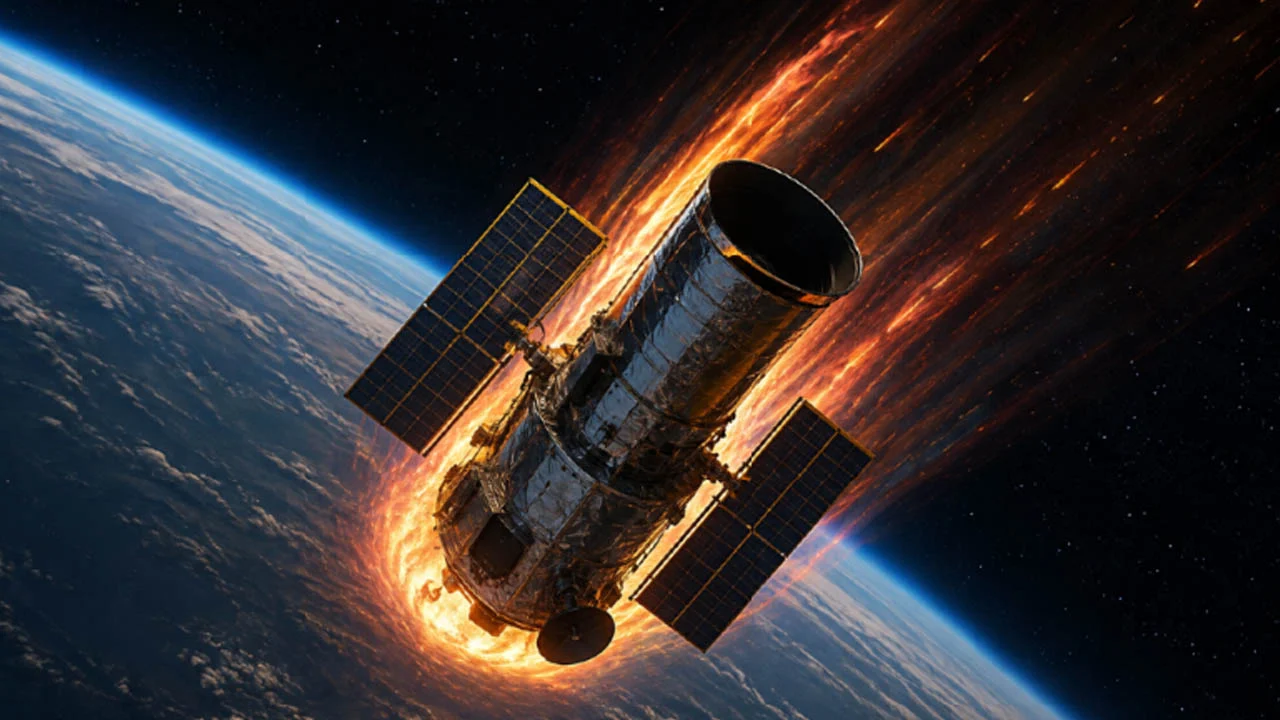
NASA's Neil Gehrels Swift Observatory, which monitors high-energy astronomical events including gamma-ray bursts, is descending because of orbital decay. Intense recent solar activity slightly expanded Earth's upper atmosphere, increasing drag and causing the telescope to lose altitude faster than normal. NASA scientists estimate that if the trend continues, Swift could reenter Earth's atmosphere in the second half of 2026.
NASA has begun a special $30 million orbit-boost mission to protect the scientific observatory, which cost $50 million to build, and keep its research program operating. The mission aims to move the telescope into a higher, safer orbit. A specialized spacecraft named Link, built by Katalyst Space Technologies, launched successfully from the Marshall Islands in the Pacific on July 3 and is moving toward Swift in stages. The spacecraft has three powerful robotic arms.
NASA's mission plan calls for Link to reach an orbit near Swift in about one month, but it will not connect to the telescope immediately. Engineers will first test the spacecraft's solar panels and internal systems. It will then begin the complex rendezvous-and-capture process. Over the following months, Link will observe Swift's movement, analyze its position and rotation, and use its robotic arms to capture the telescope safely. The spacecraft will then use controlled thrust to gradually raise Swift's orbit.
Since its launch in 2004, Swift has spent two decades observing the universe's most powerful and mysterious explosions, known as gamma-ray bursts. NASA said most of the telescope would burn up from friction if it reentered the atmosphere. Scientists are primarily concerned with preserving its future research capabilities, and the robotic orbit-boost mission is intended to keep Swift operating for several more years.