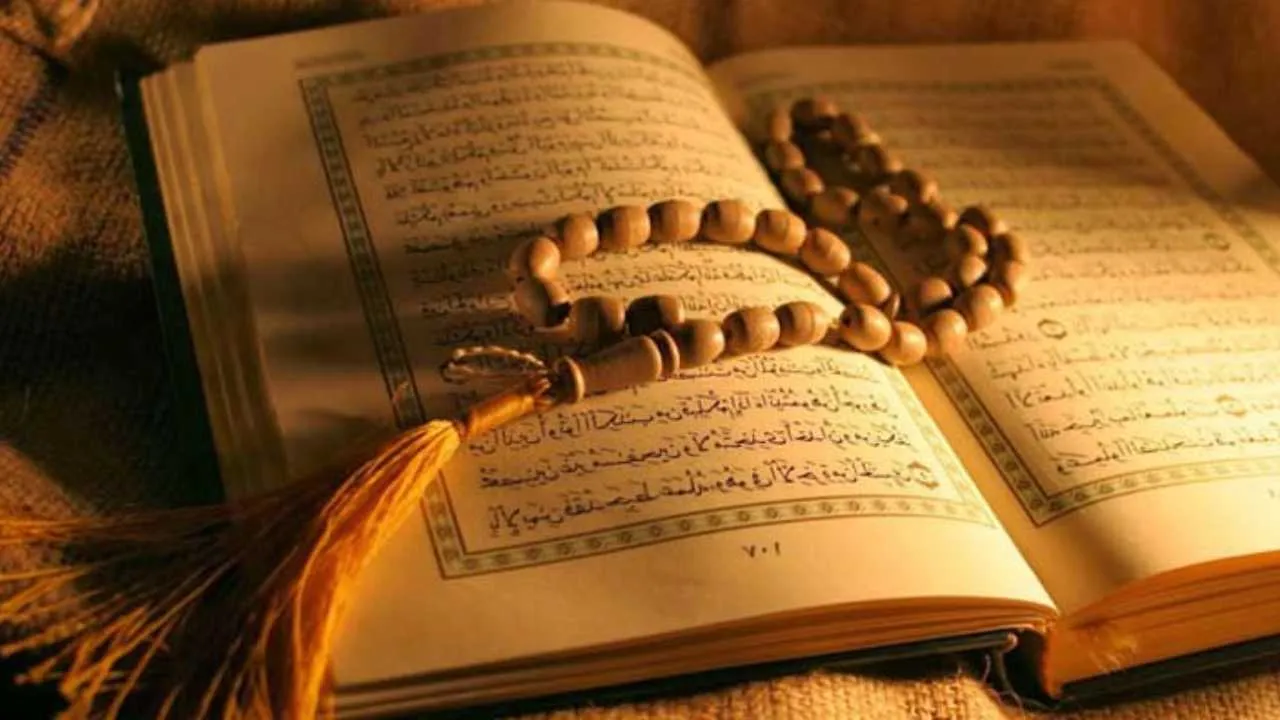
Allah Almighty has given humanity guidance on faith and Islamic law across generations for their benefit. It is a believer’s duty to obey and honor the rulings of Islamic law.
This is a demonstration and requirement of one’s faith. Conversely, mocking or ridiculing any ruling, symbol or part of Islamic law is an extremely serious offense that can even nullify a person’s faith. The Holy Quran states: “And if you ask them, they will surely say, ‘We were only conversing and jesting.’ Say, ‘Is it Allah and His verses and His Messenger that you were mocking? Make no excuse; you have disbelieved after your belief.'” (Surah At-Tawbah, verses 65-66)
Commentators say this verse was revealed after some people mocked the companions and various matters of faith during the Expedition of Tabuk. In the verse, Allah declares clearly that mocking faith is tantamount to disbelief.
Elsewhere in the Quran, Allah says: “That is [so]. And whoever honors the symbols of Allah — indeed, it is from the piety of hearts.” (Surah Al-Hajj, verse 32)
This verse shows that honoring the rulings of Islamic law and the symbols of faith is a sign of God-consciousness, while mocking and making derisive remarks about them runs contrary to piety.
The Prophet (peace be upon him) also warned his community on this matter. He said: “A servant sometimes utters a word that displeases Allah without giving it much thought, yet because of it he is thrown into Hell.” (Sahih Bukhari, Hadith 6477)
In the present age, many people mock Islamic rulings — the beard, hijab, prayer, sacrifice or other practices — in social media posts, everyday conversation and debates. While some view this as free speech or a trivial matter, it is an extremely serious offense under Islamic law.
This is because it undermines the dignity of the faith and breeds contempt for it in people’s hearts. Books of Islamic jurisprudence describe mocking the rulings of Islamic law as grounds for disbelief. Fatawa Alamgiri states: “Whoever mocks any matter of Islamic law becomes a disbeliever.” (Fatawa Alamgiri: 2/259)
Imam Ibn Nujaym (may Allah have mercy on him) said: “Mocking the faith or any of its rulings is disbelief.” (Al-Bahr al-Ra’iq: 5/134)
However, it must be remembered that asking questions for the purpose of gaining knowledge about the evidence, application or jurisprudential interpretation of an Islamic ruling is not the same as mocking it. Islam encourages thought, research and questions, but strictly forbids ridicule and contempt. A believer’s duty is to show humility and respect toward the guidance of Allah and His Messenger (peace be upon him). Even if the wisdom behind a particular ruling is not understood, one should hold the belief in their heart that every ruling of Allah is beneficial. Allah Almighty says: “It is not for a believing man or a believing woman, when Allah and His Messenger have decided a matter, that they should have any choice about their affair.” (Surah Al-Ahzab, verse 36)
In conclusion, mocking the rulings of Islam is not merely a moral offense — it poses a serious threat to one’s faith. The country’s prevailing laws also do not sanction it. A Muslim should honor every ruling of the faith, encourage others to respect it as well, and avoid, in speech and conduct, anything that could displease Allah and His Messenger (peace be upon him). May Allah grant everyone correct knowledge and understanding of the faith. Amen.
বাংলায় মূল প্রতিবেদন পড়ুন · Read the original Bengali report