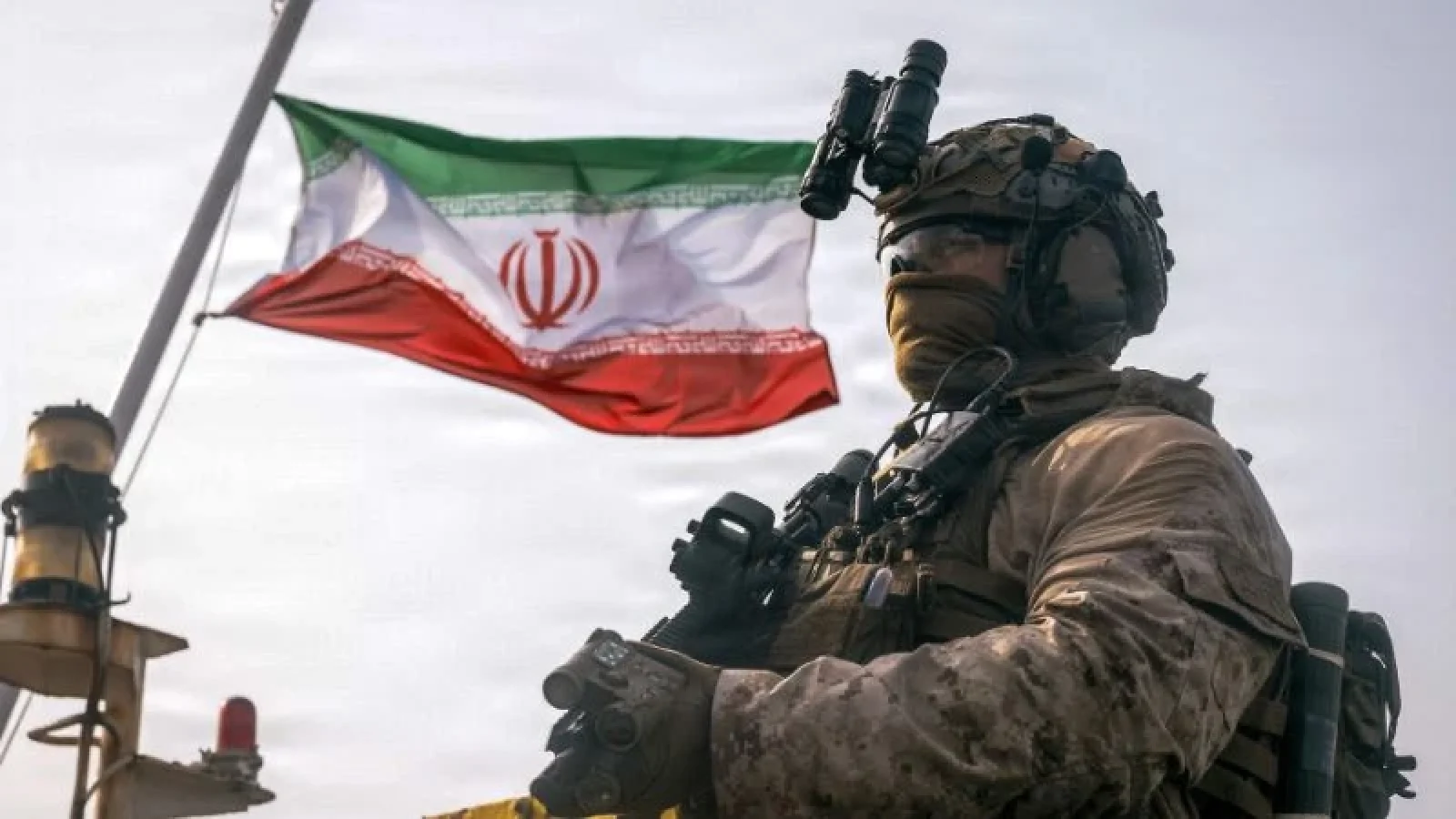
As the United States escalates its strikes on Iran, Tehran is hitting back — striking military and civilian sites in Gulf countries and Jordan, while avoiding the US fleet near its own coast and Israel.
Analysts say the aim is to pressure US President Donald Trump without widening the war. Washington is striking Iran’s railway stations, power plants, telecommunications networks and water-treatment infrastructure. In response, the Revolutionary Guard (IRGC) is attacking civilian airports, water and power plants in Kuwait and Bahrain.
Military analysts see logic behind this strategy. The question is why Iran is again targeting neighbouring countries.
Atifeh Taghiani, a professor of political science at Tehran University, argues that the United States is using Gulf countries, particularly Kuwait, to strike Iran’s civilian infrastructure. During the first round of war in March and April, Iranian officials said US operations were run from military bases on Gulf countries’ territory, and they make the same argument now. Such statements have widened the distance between Tehran and its neighbours, since the Gulf countries have repeatedly said they will not let their territory be used for attacks on Iran.
In an interview with Al Jazeera, Taghiani said that under international law Iran has the right to strike back at the country from which an attack originates. US warships are deliberately targeting Iran’s civilian infrastructure, she said, because Washington wants to deepen hostility among the region’s countries, which would make it harder for Iranians to respond.
Iran is “afraid”
Abdullah al-Shayji, a professor of political science at Kuwait University, called Taghiani’s remarks old “propaganda.” The claim that US attacks come from Gulf countries is no longer credible or realistic, he said, because all the strikes are coming from two US aircraft carriers, the George H.W. Bush and the Abraham Lincoln, no more than 150 kilometers off the Iranian coast. Iranians have shown no proof that Gulf countries’ territory is being used, he added.
The Kuwait University professor said the Gulf countries are unlikely to increase pressure on Washington to stop the war, because Trump did not consult them before starting it and has not honored earlier agreements.
Abdullah Bandar al-Otaibi, an assistant professor of international relations at Qatar University, agreed with al-Shayji’s assessment. Neither the United States nor Iran wants a full-scale war, he said, and both are striking selected targets after careful vetting.
Selected targets
Iran is avoiding US naval assets for fear of opening “the gates of hell” for itself, and has instead chosen to pressure Washington through the Gulf countries — though that is no longer very effective, al-Otaibi said. Iran is also not striking US refueling aircraft operating from Israel’s Ben Gurion Airport, he added, because Tehran does not want to widen the war; by targeting Gulf countries it is instead trying to keep domestic opinion calm.
Al-Otaibi said Iranian Foreign Minister Abbas Araghchi recently visited Muscat, and Iran struck Oman a day later — highlighting the failure of talks between the two countries, and Tehran’s wish for full control over the Strait of Hormuz rather than sharing it with Oman.
Since the new US strikes began, Yemen’s Houthis have so far stayed out of the conflict, trying to avoid losses like those of Hezbollah in Lebanon — which, al-Otaibi said, has increased the pressure on Tehran.
বাংলায় মূল প্রতিবেদন পড়ুন · Read the original Bengali report