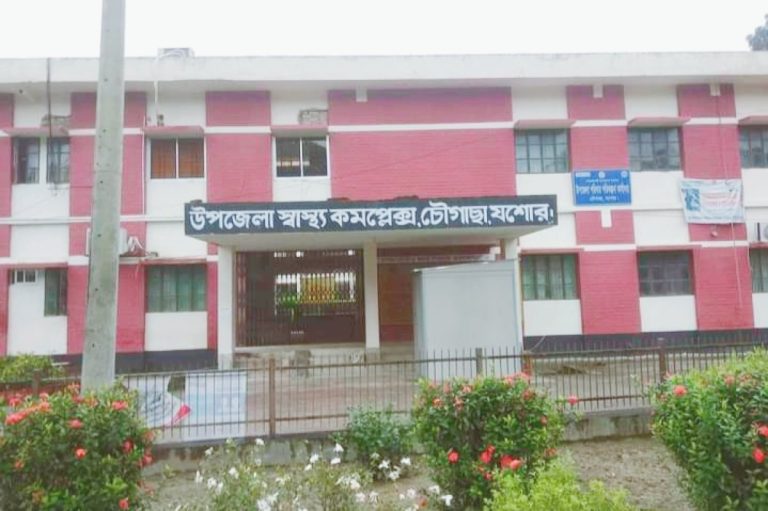
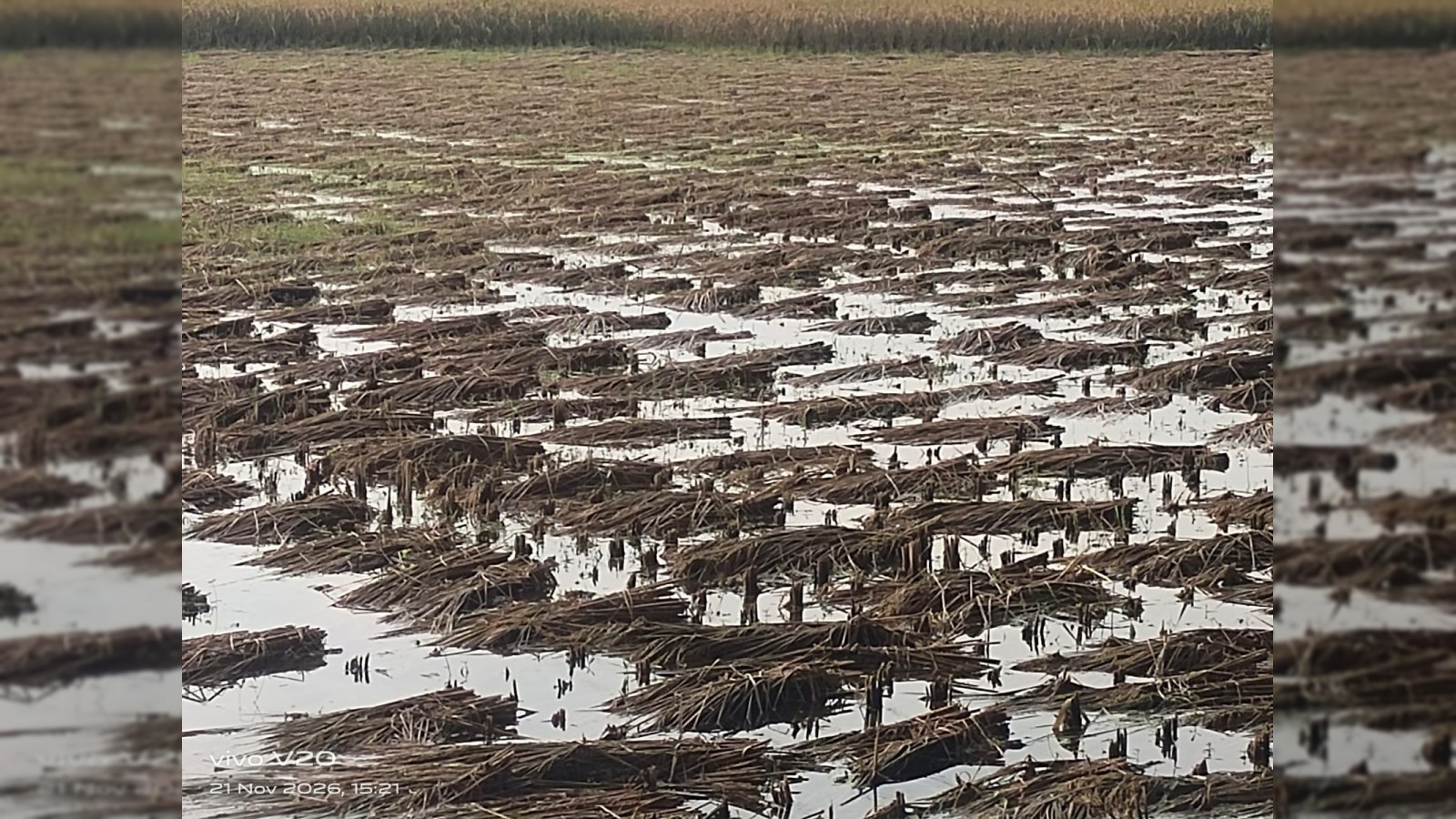
CHAUGACHHA, Jashore — Sudden unseasonal rain—alternating between drizzle and heavy downpours—has arrived amid the mild chill of approaching winter, leaving farmers deeply worried as ripe and harvested paddy lies exposed in fields across Chaugachha upazila of Jashore. Rainwater has submerged paddy left in fields before it could be brought home, threatening a year's hard labor and livelihoods.
Alamin Hossain, a farmer from Chandpara village in Chaugachha upazila, had Aman paddy on four bighas of land, all of which has been damaged by rainwater. He said paddy across his entire four-bigha plot is floating in water and he does not know how he will recover from the loss.
Shukur Ali, a farmer from the same village, faces a similar plight. He cultivated paddy on 5.5 bighas of land and had already harvested three bighas, leaving the cut stalks in the field where unseasonal rain soaked them and raised fears the grain will spoil.
Farmers said cultivating paddy on one bigha cost about 20,000 to 22,000 taka this year, and many borrowed money to buy fertilizer, pesticides and other inputs. They now worry about how they will repay those loans if their crops are damaged.
Local farmers said roughly a quarter of the paddy in their area had already been cut and left in fields, leaving it waterlogged and damaged by the sudden rain.
According to the upazila agriculture office, transplanted Aman paddy has been cultivated on about 18,000 hectares in Chaugachha. Most of the crop has not yet matured, raising fears of delayed harvesting as well as damage to other crops if rainwater remains standing in fields.
Abu Siddique, a farmer from Ramkrishnapur village, said Aman paddy was planted late in his area, so harvesting has not begun yet. He said the rain will delay harvesting further and slow ripening, though he does not expect major losses unless a storm hits.
Beyond Aman paddy, unseasonal rain has damaged vegetables, fruit and Rabi crops across the upazila. Vegetable losses have been reported heaviest in Patibila, Hakimpur, Narayanpur and Sukhpukuria unions alongside municipal areas, while Narayanpur union saw the greatest damage to Aman paddy. Mustard, black gram, chili, pointed gourd, radish and other winter crops have also been affected.
Mustard growers are particularly concerned. Several farmers said mustard sown 15 to 20 days ago has already sprouted, and standing rainwater could cause the seedlings to rot and inflict early losses.
The unseasonal rain has also disrupted the livelihoods of agricultural day laborers, halting harvesting, threshing and transport work and threatening daily earnings needed to support their families.
Chaugachha Upazila Agriculture Officer Mosabbir Hussain said large-scale harvesting of transplanted Aman paddy has not yet begun in the upazila, and only a few farmers who cut paddy early may suffer minor losses that will not affect overall rice output. He said farmers are being advised on draining water from fields and taking steps to protect other crops.