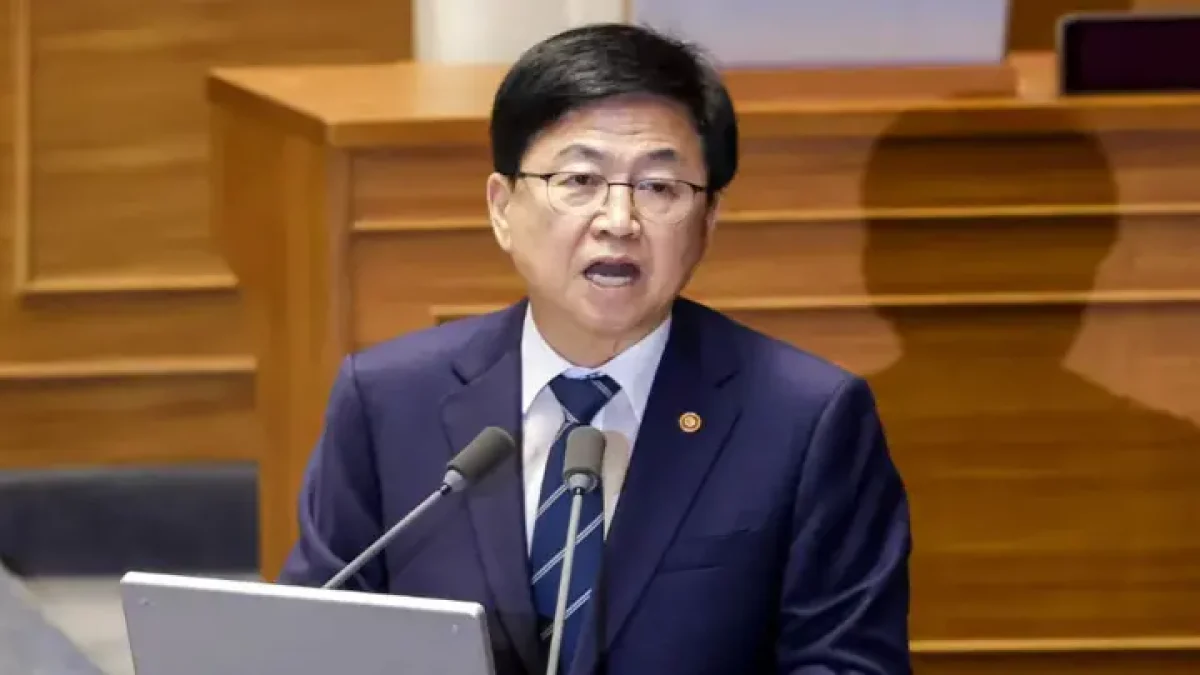
South Korea's Education Minister Choi Kyo-jin has resigned under intense public scrutiny following a cheating scandal involving artificial intelligence (AI) in a national qualification exam. South Korean President Lee Jae-myung accepted the minister's resignation.
The scandal erupted shortly before the high-stakes university entrance examination, triggering nationwide anxiety. Announcing his resignation on Sunday, Choi expressed regret and said he had failed to take appropriate measures to ensure the integrity and security of the university entrance exam.
The controversy began on November 15 when a candidate who achieved top marks in the national tax accountant qualification exam confessed to taking photographs of question papers with a miniature camera, transmitting them via smartphone to an AI system, and answering based on the generated solutions. The candidate made only one error out of 160 questions in the first stage. He admitted using the same tactic in the second stage before surrendering to police.
The disclosure sparked widespread alarm surrounding the critical university entrance test, known as the "Suneung" or College Scholastic Ability Test (CSAT). More than 550,000 students (5 lakh 50 thousand) sat for the exam held last Thursday. In response, the government imposed successive last-minute restrictions to prevent AI-assisted cheating.
Under the new rules, examinees were required to surrender smartphones, smartwatches, smart glasses, and other electronic devices. Officials ordered physical inspections of clothing buttons, collars, cuffs, glasses, and watches before entering test halls to detect concealed cameras or transmitting equipment. Public Wi-Fi was disabled around examination centres. Nationwide emergency alert systems were also deployed to trace active uncollected devices.
Authorities reported 111 infractions related to electronic devices during Thursday's examination, nearly half of which were detected through the emergency alert mechanism. However, repeated rule changes introduced just days before the exam caused confusion among students, parents, and educators.
The administrative disarray was a primary driver behind Minister Choi Kyo-jin's resignation. During a parliamentary hearing on Monday, when asked whether authorities were fully capable of detecting individuals attempting AI-enabled fraud, Choi admitted he lacked confidence given his age. The comment drew fierce criticism. In the days preceding the exam, Choi also avoided direct press briefings, leaving deputy ministers to announce emergency protocols.
Teachers' associations also criticised government preparations, alleging officials failed to take proactive measures against AI-assisted cheating and compounded confusion through abrupt rule changes. They urged an overhaul of conventional testing and evaluation frameworks in the AI era.
In South Korea, the university entrance exam is pivotal in shaping students' academic futures and career prospects. Countrywide measures are implemented annually to safeguard the roughly eight-hour examination. Flight schedules are adjusted during the 25-minute English listening section to minimise noise disruption. Military drills, live-fire artillery exercises, and tank movements are halted. Stock markets open an hour later than usual, and vehicular traffic is restricted within 200 metres of exam centres.