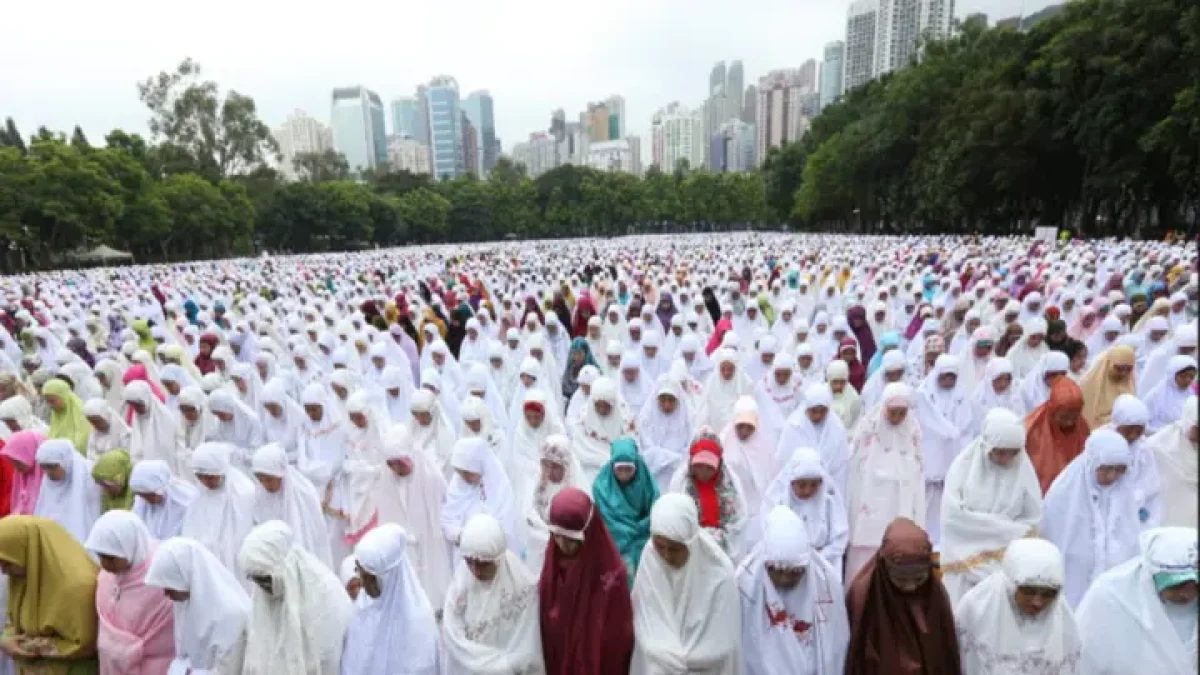
By 2070, the global Muslim population could rise to 360 crore (3.6 billion), while the Christian population is projected to remain slightly under 300 crore (3 billion). Consequently, Muslims would surpass Christians as the world's largest religious demographic group, with Pakistan projected to become home to the largest Muslim population globally.
This projection was presented in a report titled "The Future of World Religions: Population Growth Projections, 2020-2070" by the United States-based Pew Research Center. According to the organisation's estimates, if current demographic growth trends persist, Muslims could become the world's largest religious group by 2035.
However, this anticipated expansion in Muslim population is not simply a matter for celebration. While the global number of Muslims is expanding, the Muslim world's power and influence in international politics and the global system remain constrained. Alongside demographic growth, factors such as employment, economic capacity, social disparity, and political stability remain decisive.
According to Pew Research Center data, Muslim women currently have an average fertility rate of 3.1 children, compared to 2.5 for Christian women. The median age among Muslims is 24 years, while for Christians it is 31 years. A comparatively higher fertility rate and a younger population are driving rapid growth in the Muslim population.
The growth trend is particularly pronounced in South Asia and sub-Saharan Africa. In sub-Saharan Africa, fertility rates among Christians are also substantially higher than in Europe. Pew projects that the Democratic Republic of the Congo (DR Congo) could surpass the United States as the country with the largest Christian population. Meanwhile, Pakistan is projected to overtake Indonesia to rank first in Muslim population.
Yet both Pakistan and the DR Congo face multifaceted crises. Population growth alone provides no guarantee that people's standard of living will improve.
In Pakistan, rapid population growth is expanding the share of young people, creating what demographers term a "youth bulge." Millions of youth in the country lack employment opportunities. According to official government data from Pakistan, over 762,000 people (7 lakh 62 thousand) moved abroad in search of work last year alone, most of them youth.
In coming years, this dynamic could grow increasingly complex. While most Pakistani migrants head to Arab states for work, those nations face their own labour market constraints and employment regulations. Meanwhile, migrants heading to Europe and the United States encounter mounting social and cultural hurdles.
Islamophobia is on the rise across various regions of Europe and the United States, where Muslims are frequently viewed with suspicion. Against this backdrop, Pew's demographic projections raise fresh questions: even if Muslims become the largest religious community in numbers, will they attain equal standing with other faiths in human dignity and rights?
Conversely, wealthier and more educated Muslim-majority countries face a different demographic reality. In Iran, Turkey, Indonesia, Tunisia, and the United Arab Emirates, fertility rates have already dipped below the replacement level.
These nations could confront a new set of challenges in the future. As the elderly population grows, mirroring Western trends, the working-age demographic could shrink. States will simultaneously face added fiscal pressures to support healthcare and social expenditures for seniors. Thus, while countries like Pakistan must create jobs for millions of youths, others must manage the strain of aging populations.
Demographic shifts also carry political risks. In Turkey, regional variations in fertility rates are generating concerns over ethnic balance. Given that Turkish identity has been numerically, politically, and culturally dominant, such shifts could introduce future complications.
Meanwhile, recent youth- and Gen-Z-led movements across South Asia serve as a warning to regional governments. Frustration among young people over jobs and future prospects is palpable. While authorities may deploy repressive measures to curb protests, such grievances cannot be suppressed indefinitely.
The collapse of governments under pressure from youth movements in Bangladesh, Sri Lanka, and Nepal offers a potent lesson. Although Pakistan has not witnessed mass unrest on that scale, its youth population is continually expanding. If the state fails to address young people's aspirations, the risk of revolutionary movements could heighten, potentially allowing hardline Islamist groups to exploit religious sentiment among disaffected youth.
For this reason, South Asian nations must create broader economic opportunities for young people while fostering traditions of tolerance associated with Sufi heritage. A changing demographic ratio alone does not shift the global balance of power. Yet these numbers provide ample grounds to examine existing disparities between Muslims and other major religious communities.
Pakistan is soon poised to become the world's most populous Muslim nation. However, limited resources coupled with a burgeoning population could pose immense hurdles. If the state succeeds in delivering education, jobs, and greater opportunities for its youth, the potential to cultivate future leaders on the global stage will expand significantly.