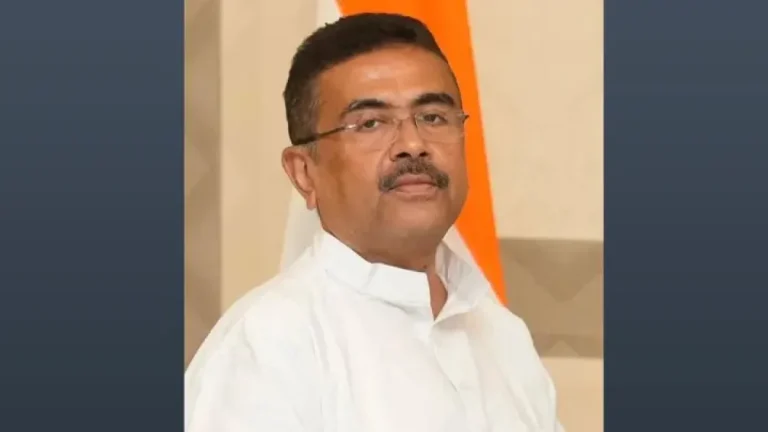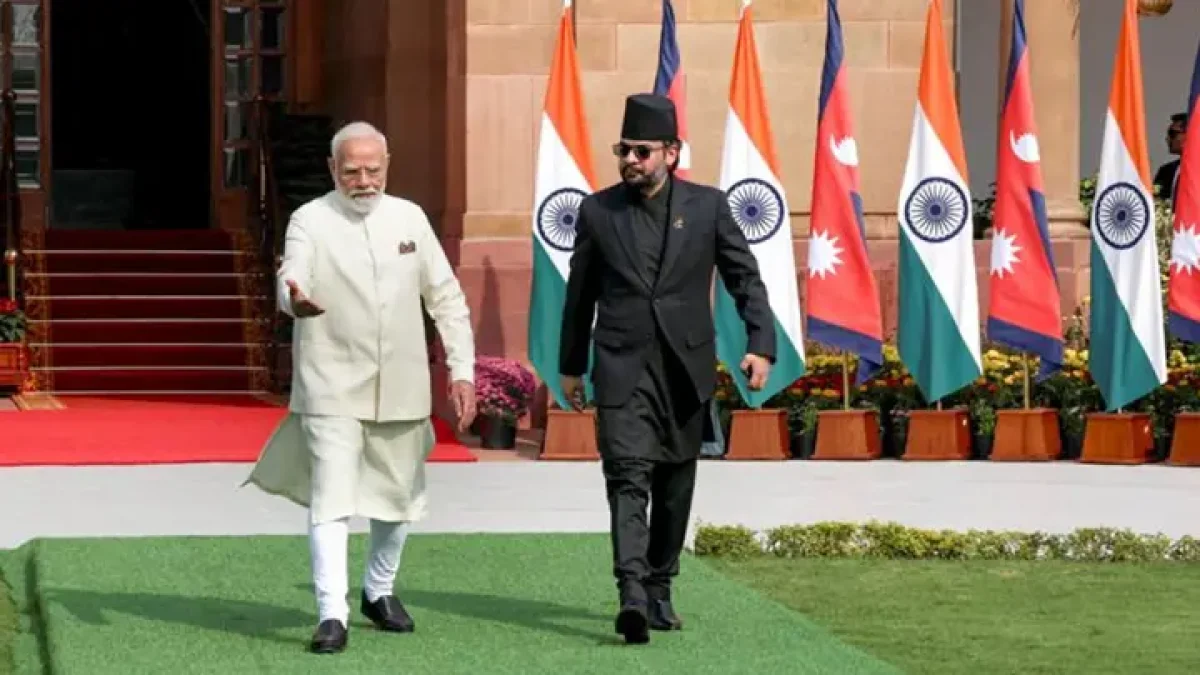
Nepali Prime Minister Balendra Shah is visiting India to discuss bilateral cooperation in the economic and energy sectors. Indian Prime Minister Narendra Modi accorded him a warm reception at Rashtrapati Bhavan, the official residence of the Indian President, where Shah was honored with a red-carpet welcome and a military guard of honor.
This marks his first visit to a neighboring country since taking office as prime minister in March of this year. Landlocked Nepal in the Himalayan region has a population of nearly 30 million (3 crore) and has long balanced diplomatic and economic ties between its two giant neighbors, India and China.
On Monday, Shah received a military guard of honor at Rashtrapati Bhavan in New Delhi and attended cultural performances during the formal welcome ceremony.
During their meeting, Modi praised the development vision and foresight of the 35-year-old prime minister. Modi said the historic mandate given by the people of Nepal reflects the hopes and aspirations of the country's younger generation.
Modi noted that India and Nepal are not merely neighbors, but are bound by deep trust and friendship. The two nations have stood beside each other during disasters and crises, he said, while expressing deep condolences over the loss of lives in recent floods in Nepal.
The Indian prime minister announced assistance of 24,000 crore Nepali rupees (24 thousand crore) for the reconstruction and development of flood-affected regions in Nepal, making the pledge in a joint statement following bilateral talks with Balendra Shah.
Modi also affirmed that despite domestic energy challenges, India would maintain uninterrupted supplies of fuel oil, fertilizer and other essential commodities to Nepal.
He emphasized that New Delhi will stand by Nepal as part of its "Neighborhood First" policy.
Nepali Prime Minister Balendra Shah expressed gratitude to India for the warm hospitality extended during his two-day state visit and invited Indian Prime Minister Narendra Modi to visit Nepal.
Shah described relations between India and Nepal as enduring as the Himalayas and as expansive as the ocean, saying words could hardly capture the depth of their friendship. He thanked the Indian government and its people for their support during natural disasters and emergencies.
During the visit, India and Nepal signed eight memorandums of understanding covering civil service capacity building, space research, healthcare, urban development, and traditional Ayurvedic medicine. The two leaders also inaugurated key transport and energy projects and laid foundation stones for new initiatives.
Arriving in India on Sunday, the Nepali prime minister held talks with External Affairs Minister S. Jaishankar. The Nepali Foreign Ministry said discussions focused on trade, freight transit facilities, and cooperation in the energy sector.
Unlike many predecessors, Shah did not travel abroad immediately upon taking office. While not his first overseas travel since assuming leadership—he visited New York in September—this represents his first formal bilateral visit to a neighbor.
India and Nepal share a long-standing open border that citizens can cross without passports or visas. While New Delhi has traditionally held deep influence in the Himalayan nation, ties have faced periodic strain over border disputes and allegations of political interference.
In recent years, China has expanded its footprint in Nepal through investments in airports, highways, and hydropower infrastructure.
Despite Beijing's growing presence, Nepal remains heavily dependent on India for fuel and essential goods. Meanwhile, power sector cooperation has deepened, with India currently importing about 1,200 megawatts (200 MW) of electricity from Nepal.