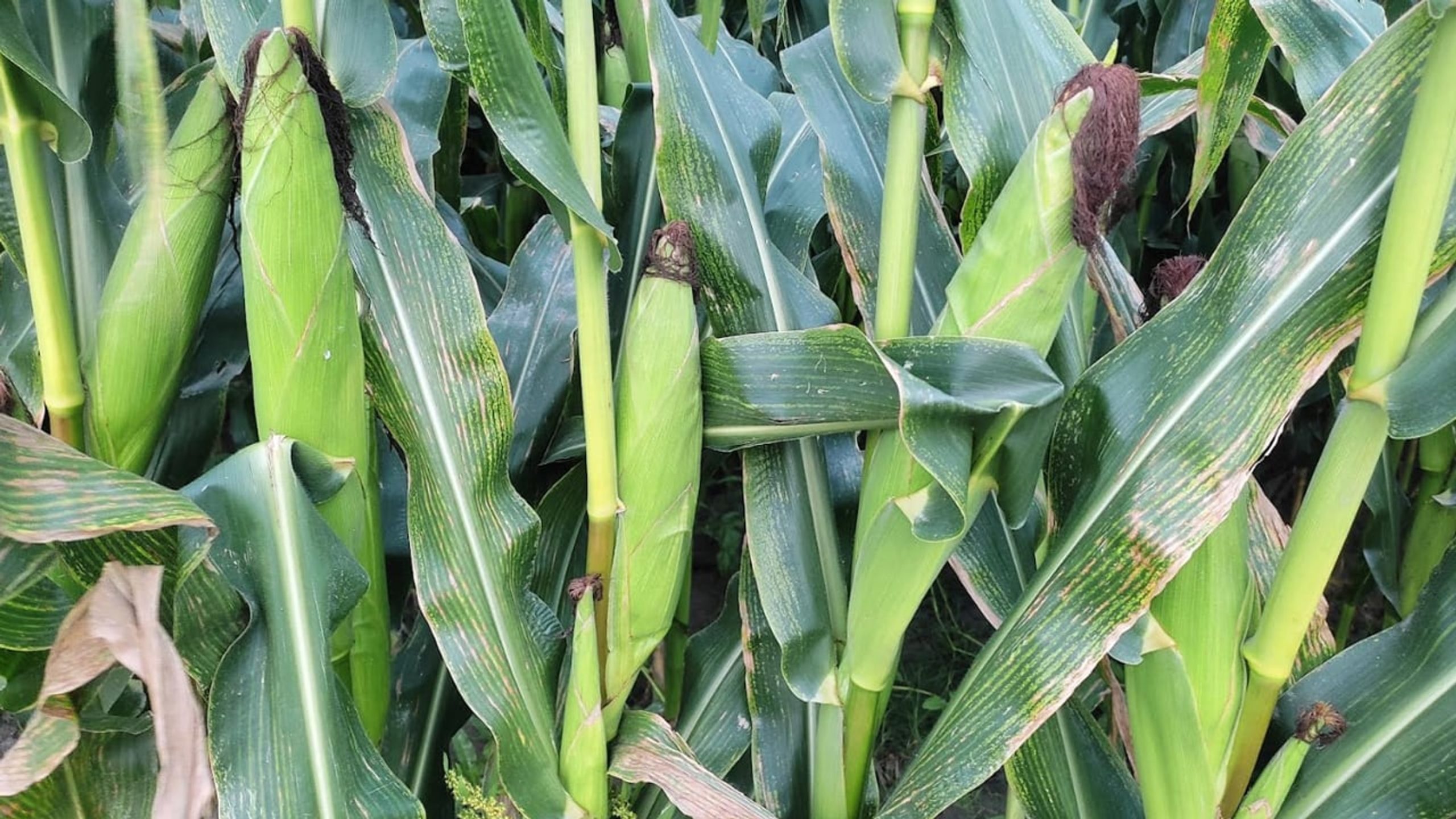
GAIBANDHA — Cultivation of golden maize in the river-island char lands of Gaibandha, a northern district shaped by its rivers, has brought visible change to the local agricultural economy. The hard work of the char residents and the fertile silt have made maize one of the district’s most profitable crops, transforming the livelihoods of farmers.
Maize is grown in all seven upazilas of the district, but most of the cultivation is concentrated in 165 large and small chars in Sadar, Saghata, Sundarganj and Fulchhari upazilas. The crop is now the main source of livelihood for thousands of farmers.
Agricultural officials said the fertile silt and broad stretches of land are well suited to maize, and cultivation has expanded significantly over the past decade. With lower production costs and higher yields than other crops, farmers are turning to maize. Strong demand from the poultry and fish-feed industries has also kept market prices favorable.
According to the Gaibandha office of the Department of Agricultural Extension, maize has been planted on 17,825 hectares (133,687 bighas) in the district this year — 236 hectares more than last year and 683 hectares above the official target.
By upazila, maize was planted on 1,190 hectares in Sadar, 1,100 in Sadullapur, 1,000 in Palashbari, 1,385 in Gobindaganj, 2,005 in Saghata, 4,405 in Sundarganj and 5,940 in Fulchhari. The production target has been set at 193,682 metric tonnes.
A recent visit to Char Rasulpur, Guptamoni in Kanchipara union and to Ratanpur and Kabilpur in Uria union of Fulchhari upazila showed maize fields in lush green. Most fields are bearing cobs, an indicator of strong yields, and farmers are busy with irrigation and care.
Local farmers said cultivating maize on one bigha of land costs about 15,000 to 18,000 taka, with a yield of 35 to 40 maunds. Last year, maize sold for about 1,150 taka per maund, leaving significant profit after costs.
Mazer Ali, a farmer on the char lands, said he had planted maize on four bighas of leased land. “This crop is the only support for our family,” he said.
Another farmer, Phul Mia, said maize is a profitable crop because the green plants can be used as livestock feed and the dried stalks as fuel.
Farmers want modern storage facilities and warehouses built in the char areas so the crop can be stored for longer. They have also called for the development of char-based markets or collection centers.
Sadekul Islam, deputy director of the Gaibandha agriculture department, said maize production has been rising thanks to improved seed varieties, training and modern technology. Because the crop is profitable, cultivation in the char areas has grown every year and consistently exceeded targets, he said.
He added that demand is growing because the maize is supplied to feed mills and food industries across the country.
Additional Deputy Commissioner (general) Jadab Sarkar said farmers were essential to the country. “The farmers of Gaibandha’s char lands are an important strength of the district’s economy,” he said. “Maize and chilli are this district’s branded products, and the issues farmers face will be raised at higher levels to protect their interests.”
বাংলায় মূল প্রতিবেদন পড়ুন · Read the original Bengali report