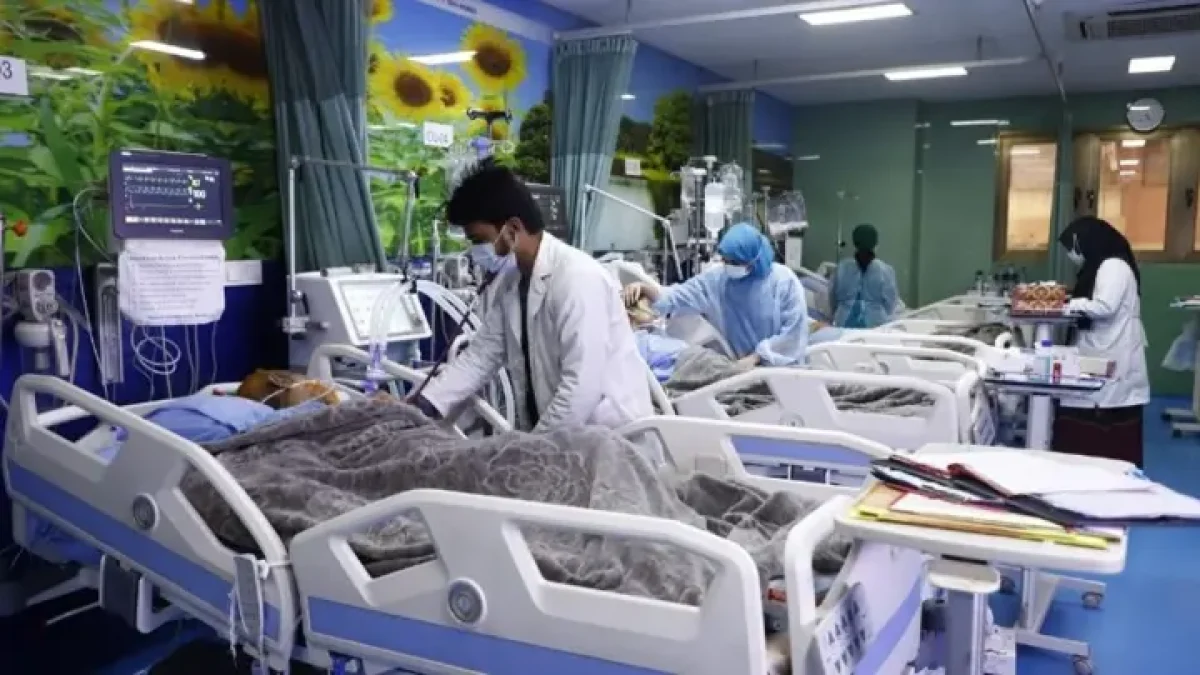
Multidrug-resistant (MDR) bacterial infections in Bangladesh have reached an alarming level, the Institute of Epidemiology, Disease Control and Research (IEDCR) has warned, finding that 55 percent of all infections nationwide and 93 percent among intensive care unit (ICU) patients are resistant to multiple antibiotics.
The findings were presented on Wednesday afternoon at IEDCR's Mohakhali office in Dhaka at the release of the national "Antimicrobial Resistance Surveillance in Bangladesh" report marking World Antimicrobial Awareness Week 2026. IEDCR Chief Scientific Officer Prof. Zakir Hossain Habib delivered the keynote presentation in the presence of State Minister for Health and Family Welfare Dr. MA Muhith and IEDCR Director Prof. Kazi Ahmed Zaki.
Sample analysis and pathogen profile
According to the 2026 national antimicrobial resistance (AMR) surveillance report, laboratories across eight divisions analyzed 99,867 samples, including 85,520 culture-positive isolates in the final report—5.1 percent from case-based surveillance and 94.9 percent from laboratory-based surveillance. Women accounted for 59 percent of donors and men 41 percent. By age group, the largest shares came from ages 21 to 30 (15.8 percent) and ages 51 to 70 combined (28.3 percent).
Gram-negative bacteria made up 78 percent of identified pathogens, led by Escherichia coli (33 percent) and Klebsiella pneumoniae (21 percent). Across sample types, reproductive-tract isolates were dominated by E. coli, Streptococcus species and Streptococcus agalactiae; stool samples by Salmonella, Vibrio cholerae and Shigella; and lower respiratory infections by Klebsiella pneumoniae, Pseudomonas aeruginosa and the Acinetobacter baumannii complex.
Urine samples mostly yielded E. coli, Klebsiella pneumoniae and Enterococcus faecalis; blood samples yielded Salmonella Typhi, Acinetobacter species and E. coli; and skin and soft-tissue infections yielded Staphylococcus aureus, Pseudomonas aeruginosa and Klebsiella pneumoniae.
Antibiograms and drug effectiveness
An aggregate review across 14 antibiograms covering 1,118 pathogen-antibiotic results from July 2022 to June 2026 found antibiotic susceptibility had fallen to 60 percent or lower in 71 percent of cases. Across 140 overall tested combinations, 73 showed 60 percent or lower susceptibility and only 37 exceeded 80 percent. In ICUs, 62 of 69 tested results stood at 60 percent or lower, with just 5 above 80 percent.
IEDCR said ciprofloxacin and third-generation cephalosporins are nearly ineffective against Enterobacterales, with ceftriaxone showing just 41 percent effectiveness and ciprofloxacin 38 percent against E. coli, while carbapenems, amikacin and fosfomycin remained effective. Acinetobacter species were reliably susceptible only to colistin (94 percent). Nearly half of Staphylococcus aureus isolates were methicillin-resistant (MRSA). For urinary tract infections, fosfomycin (96 percent) and nitrofurantoin (81 percent) remained effective against E. coli, whereas ciprofloxacin lost effectiveness against Salmonella Typhi (22 percent) and Shigella (9 percent).
MDR trends and ICU crisis
Across all health facilities, 55 percent of pathogens were MDR compared with 45 percent non-MDR, whereas in ICUs 93 percent were MDR and just 7 percent non-MDR—making MDR detection 1.7 times higher in ICU patients.
Among seven priority pathogens in the first half of 2026 (January–June), four exceeded two-thirds MDR prevalence. Enterococcus faecium rose from 54.1 percent in 2023 and 46.5 percent in 2024 to 72.5 percent in 2025 and 82.2 percent in 2026. Acinetobacter rose from 68 percent in 2022, 69.9 percent in 2023, 73.6 percent in 2024 and 70.6 percent in 2025 to 74.7 percent in 2026. Klebsiella pneumoniae rose from 57.6 percent in 2022, 61 percent in 2023, 61.3 percent in 2024 and 56.5 percent in 2025 to 69.1 percent in 2026, while E. coli climbed from 62.8 percent in 2022, 64 percent in 2023, 60.5 percent in 2024 and 57.4 percent in 2025 to 69.3 percent in 2026.
Enterococcus faecalis recorded 30.9 percent in 2023, 29.5 percent in 2024, 36 percent in 2025 and 32.5 percent in 2026, while MDR rates declined for Pseudomonas aeruginosa (58 percent in 2022 to 44 percent in 2026) and Staphylococcus aureus (59.7 percent in 2022 to 47.4 percent in 2026). Sensitivity to carbapenems and amikacin has declined every year since 2023.
Antibiotic prescribing in hospitals
Analysis of 19,386 antimicrobial records across 13 sentinel hospitals showed 54 percent (10,474 records) were used in ICUs, 38.9 percent (7,542) in general wards and 7.1 percent (1,370) in outpatient departments (OPD).
In ICUs, meropenem accounted for 30.5 percent (3,199 records) and ceftriaxone 21.7 percent (2,270), followed by vancomycin at 7.6 percent (794), moxifloxacin at 6 percent (625) and metronidazole at 4.5 percent (473). In general wards, ceftriaxone led at 38.6 percent (2,908), followed by ciprofloxacin at 10.8 percent (812), meropenem at 9.1 percent (685), azithromycin at 7.1 percent (532) and flucloxacillin at 5.3 percent (402).
In OPDs, no single drug exceeded 12 percent, led by cefixime at 11.5 percent (158), cefuroxime with clavulanic acid at 10.4 percent (143), cefuroxime at 8.5 percent (116), levofloxacin at 8.4 percent (115) and azithromycin at 8 percent (109). Yet despite ICU Klebsiella pneumoniae showing only 14 percent susceptibility to imipenem and ward E. coli showing only 22 percent susceptibility to ceftriaxone, those very drugs remained heavily prescribed.
Concluding the report, IEDCR noted prescriptions continue relying on drugs rapidly losing efficacy while effective medicines go unused, urging rational antibiotic use especially in ICUs alongside screening and isolation of patients with resistant pathogens, handwashing and stricter infection prevention and environmental hygiene.