The Leather Foundation of Bangladesh (LFB) has put forward a 13-point proposal—including establishing a separate ministry—to resolve the leather sector's crisis and unlock its future growth, alongside allocating a 5,000 crore taka special fund to reopen damaged and closed factories.
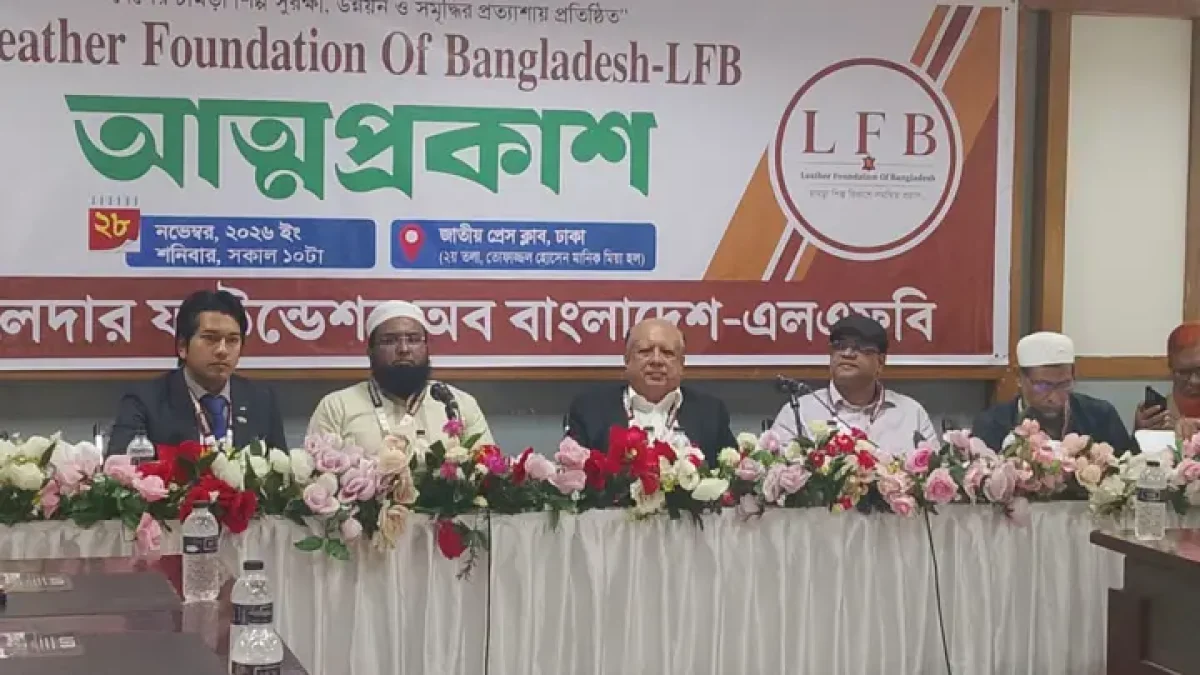
Leaders of the organization presented the demands at its launching ceremony on Saturday at the Tofazzal Hossain Manik Mia Hall of the National Press Club in Dhaka.
Speaking at the event, foundation president Sadat Hossain Selim said that while a central effluent treatment plant (CETP) is important for environmental compliance in the leather industry, it is not a cure-all. Relying solely on an ETP will not suffice, he noted, adding that enterprises such as Khulna's Super Ex Leather have also run into serious difficulties and urging practical government support covering chemical supplies, imports and exports.
Secretary general and founder M Mufazzal Ibne Mahfuz outlined the foundation's mission and action plan, saying LFB aims to build coordination across leather sub-sectors, trade bodies, entrepreneurs and technical institutes while promoting modern technology, environmental balance and policy advocacy.
Presenting the keynote paper, joint secretary general Engineer A Fattah Al Monjur Asif said that despite abundant domestic raw materials and a hardworking labor force, Bangladesh's leather sector is failing to capture its target share of global markets due to a shortage of skilled mid-level personnel, outdated technology and difficulties securing Leather Working Group (LWG) certification. Under its first-year work plan, LFB plans to provide skills training to 1,000 workers, develop 30 factories into "model green factories" and launch educational stipends for workers' children, while working with foreign agencies to draw overseas investment and strengthen international market linkages.
LFB's 13-point roadmap calls for modernizing the Savar CETP, building two new CETPs, setting up one to two specialized leather goods and footwear industrial parks and establishing four to five new leather industrial zones. It also proposes creating a full-fledged leather and footwear university, constructing 10 to 15 state raw-hide preservation hubs and cold storages nationwide, and mandating domestic leather and jute in footwear and accessories supplied to government forces.
Attending the program were senior vice president Mohammad Shafiqur Rahman, vice presidents Mahbubul Haque and Belal Hossain, secretary general M Mufazzal Ibne Mahfuz, joint secretary A Fattah Al Monjur and treasurer Sultan Mahmud, alongside directors Mohammad Abdul Hakim Khan, Makauda Khatun, Md Billal Hossain, Md Sohib Ibne Mahfuz, Safiqul Islam Kaiser, Faisal Mahfuz, Md Mintu and Mohammad Ziaul Haque Zia.