Extremist Israeli settlers attacked Palestinian villages in the occupied West Bank, setting fires and spraying racist slogans early on Sunday. Gadi Eisenkot, the Israeli opposition leader tasked with forming a new government, condemned the violence as “Jewish terrorism.”
According to a report by Reuters news agency, settler violence in the West Bank has surged since the 2023 attack on Israel launched from Gaza by Hamas. The latest attacks come roughly a month after Prime Minister Benjamin Netanyahu lost his parliamentary majority in elections. Although opposition leader Eisenkot has been entrusted with forming the next government, he faces severe political complications.
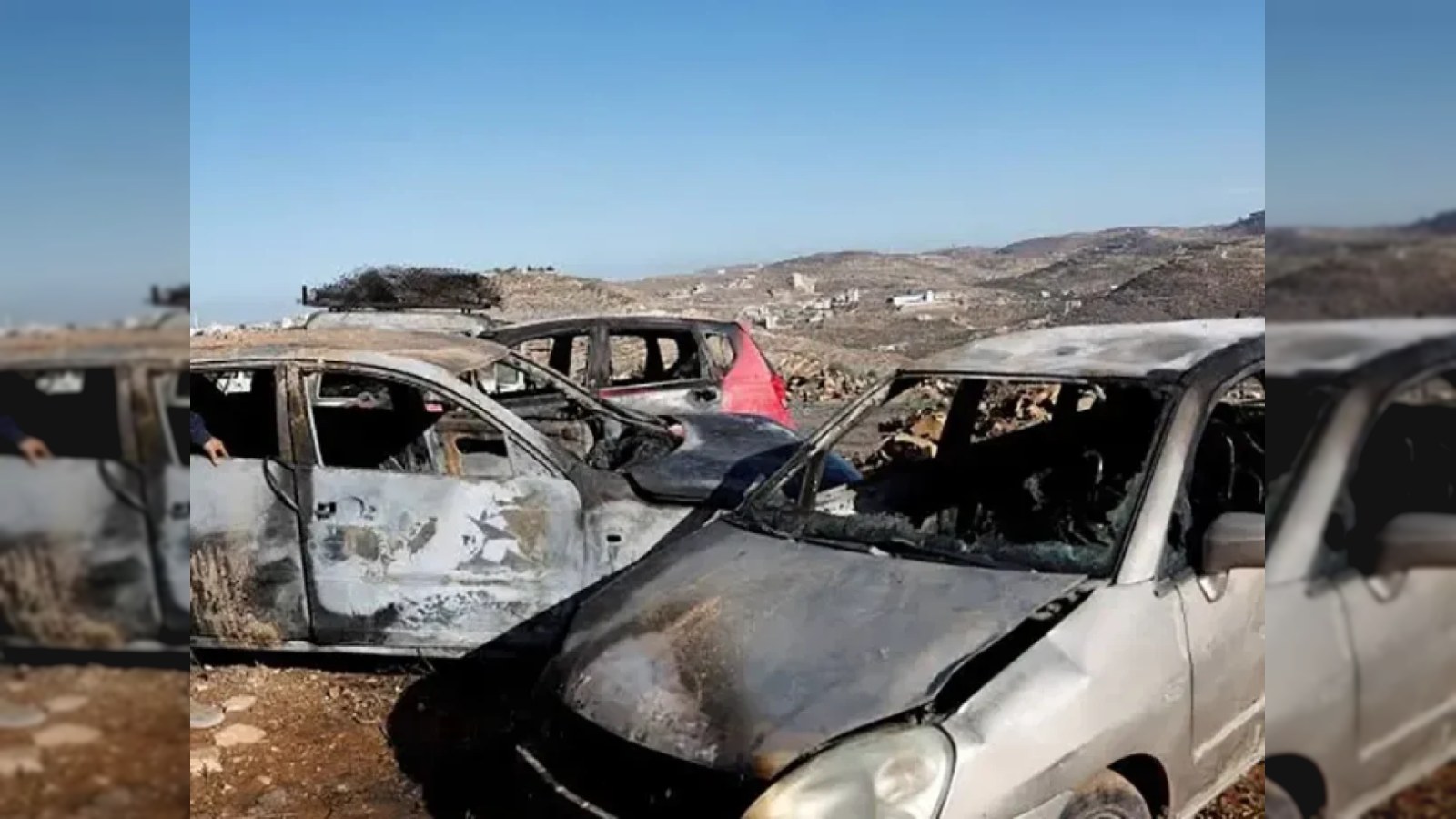
Reuters journalists witnessed burned Palestinian vehicles in several villages near Ramallah, with spray-painted slogans on walls reading “revenge” and “death to Arabs.” No group immediately claimed responsibility for the attacks, and no casualties were reported.
Branding the attacks “Jewish terrorism,” Eisenkot stated that extremist groups setting fire to cars and homes are shattering regional stability, endangering human lives, and inflicting severe damage on Israel’s national security and foreign relations. Criticizing the policies of two ultranationalist ministers in Netanyahu’s cabinet—Itamar Ben-Gvir and Bezalel Smotrich—he said their agenda had brought the region to the brink of anarchy, while authorities have yet to take effective measures to confront the crisis. Netanyahu offered no comment on the matter.
However, Israeli Foreign Minister Gideon Sa’ar condemned the attacks, describing the perpetrators as a “fringe group of extremists” whose actions contradict Israeli values. Such individuals do not represent the law-abiding citizens of Judea and Samaria, he said, using the biblical term for the West Bank. Speaking at the ELNET conference in Jerusalem, Sa’ar asserted that Israeli authorities are determined to enforce the law against extremist violence.
Meanwhile, various United Nations agencies and most countries worldwide consider Israeli settlements in the West Bank illegal under international law, warning that settlement expansion steadily diminishes the prospects of establishing an independent state of Palestine. Israel disputes this view.
Israeli police said an investigation into the attacks has been launched, while the military also condemned the violence. In a statement, the military said soldiers and police officers were dispatched to the areas of Deir Ibzi, Deir Abu Mash'al, Kafr Malik, and At-Tuwani following reports and video evidence of torched vehicles and racist graffiti sprayed on walls.
Responding to Eisenkot's comments in a post on X, Ben-Gvir claimed that his condemnation amounted to surrender to Arab political parties, whose backing might be needed to assemble a governing coalition. Meanwhile, Smotrich continues to advocate for the expansion of Israeli settlements in the West Bank and demands full annexation of the territory to Israel.
Yousef Jabareen, head of the Joint List, the largest Arab political party in Israel’s parliament, said the attacks are the direct outcome of deepening occupation and government policies under which violence against Palestinians has become a daily occurrence, holding encouragement and backing from Ben-Gvir and Smotrich directly responsible.
Netanyahu lost his majority in the 27 October elections, but no other faction secured a clear majority to form a government either. Against this backdrop, the swearing-in of Israel’s parliament took place on 10 November without a new government in place. Israeli President Isaac Herzog tasked Eisenkot, head of the centre-right Yashar party, with forming an administration.
In the interim, Netanyahu continues to serve as caretaker Prime Minister. If unable to form a national unity government with Netanyahu, Eisenkot may have to rely on the support of Arab parties to secure a majority across the 120 seats in parliament. If no one succeeds in forming a government, Israel will hold fresh elections next year.