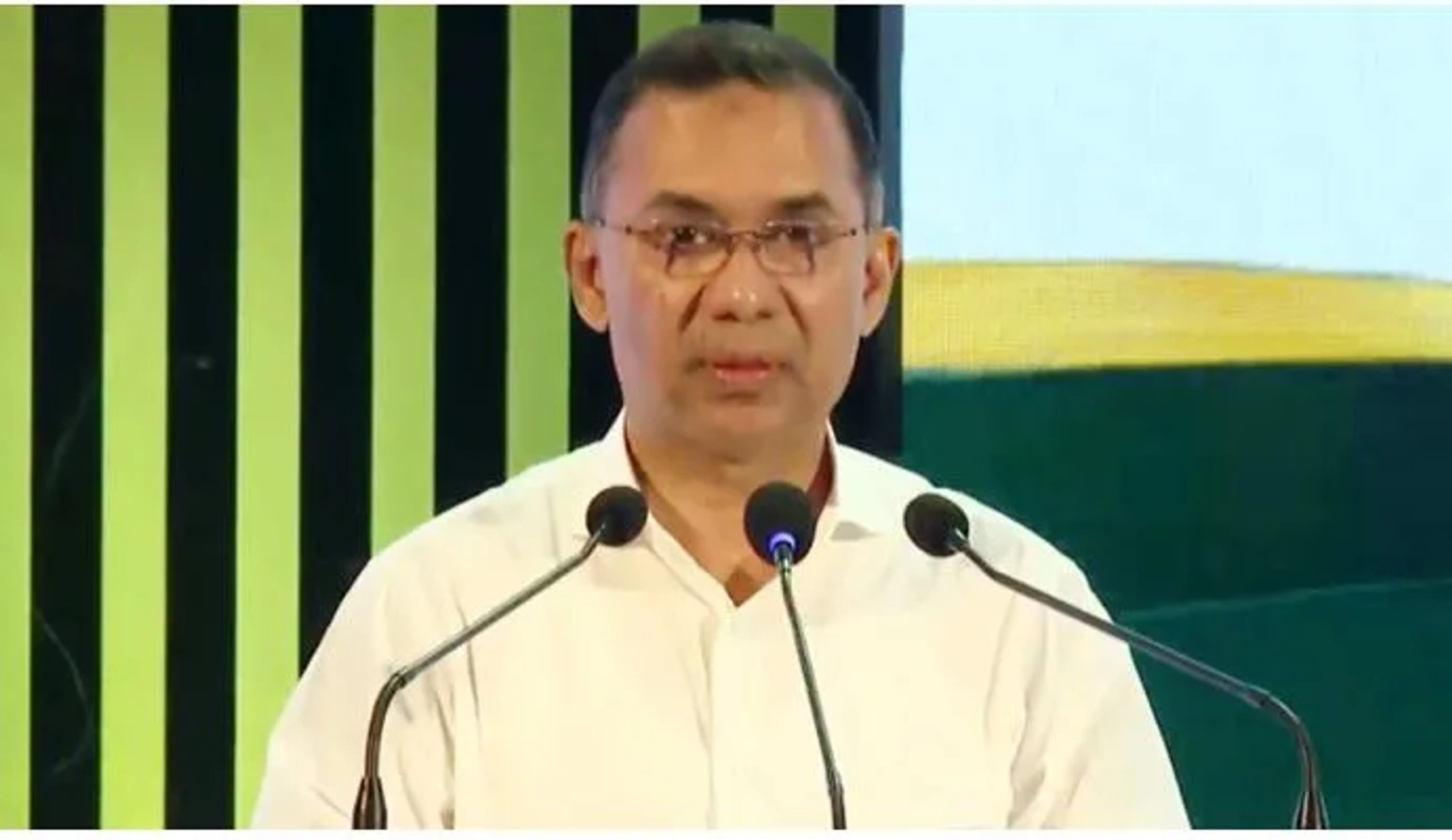
Prime Minister Tarique Rahman has said the government is working towards turning Bangladesh into a one-trillion-dollar economy by 2034. To achieve it, he said, special priority has been given to renewable energy, pharmaceuticals, electronics, digital services, agro-processing, advanced textiles, healthcare and logistics. Emphasis is also being placed on building Bangladesh as a global manufacturing centre, diversifying the ready-made garment sector and developing a skilled workforce.
He made the remarks as chief guest at an international conference organised by the Foreign Investors Chamber of Commerce and Industry (FICCI) at the Bangladesh-China Friendship Conference Centre on Thursday, July 23. Domestic and foreign diplomats, businesspeople, chief executives of multinational companies, development partners and investors from various sectors attended.
Calling on domestic and foreign investors to come to Bangladesh with new investment and to expand their businesses, the head of government said the new government wants to build a business-friendly environment in which both domestic and foreign entrepreneurs can invest with confidence. If anyone invests capital in Bangladesh, the government will stand by them with time, institutional support and the necessary policy backing. This is not merely a promise but a clear commitment of the government, he said.
Praising the contribution of domestic and foreign entrepreneurs investing in Bangladesh, he said their investment has created new jobs, increased the use of modern technology, strengthened Bangladesh's position in global supply chains and accelerated overall economic growth.
Referring to his own working life, he said: “Before entering politics I too began my career as a businessman. From that practical experience I learned that no business can succeed on an entrepreneur's skill or political assurances alone; a large part of business success depends on the government's growth-supporting policies.”
He said that although Bangladesh faces some challenges, the scope of its potential is greater. A fast-expanding domestic market, a young and able workforce, a strategic geographical position and an elected government with public support — these four strengths can carry Bangladesh's economy towards sustainable growth.
Setting out the government's economic goals, he said it is working to build a rules-based economy connected to the global economy and driven by the private sector. The election manifesto sets out a clear outline of this economic transformation. The government is not only inviting foreign investment but wants to involve international partners in a long-term development journey.
He said the government began preparing for economic reform before taking office, taking the views of investors, entrepreneurs, business bodies, economists, development partners and policymakers. Their advice highlighted that increasing foreign investment requires ensuring legal protection for investment, building a business-friendly regulatory framework, simplifying the tax system, easing the process of taking earned profits abroad, building a strong capital market and constructing better infrastructure.
The government has already begun work on implementing these recommendations, he said, with initiatives to modernise the legal and regulatory framework, strengthen investor protection, provide rapid dispute resolution, simplify tax and VAT administration and make the transfer of profits at home and abroad more transparent and hassle-free.
Work is also advancing on making the capital market more dynamic, increasing support for startups, reducing unnecessary restrictions and red tape, simplifying administrative processes and digitally transforming public services, he said. The government is also giving importance to increasing investment in renewable energy, developing port and logistics infrastructure and ensuring energy security.
Bangladesh's future depends not only on attracting investment, he added, but above all on building partnerships based on long-term trust and confidence. Calling on domestic and foreign businesspeople and investors to be part of Bangladesh's development journey, he said a strong, just and inclusive economy can be built through collective effort, and urged everyone to work together to create new jobs and build a prosperous Bangladesh.