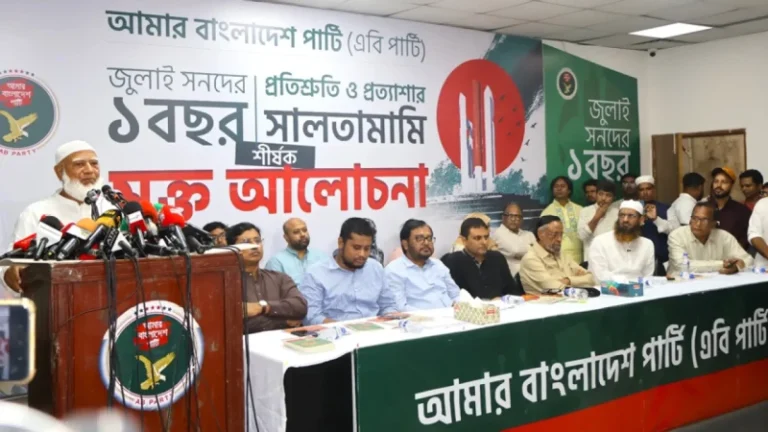
Mojibur Rahman Manju, chairman of the Amar Bangladesh Party (AB Party), has said people grieved in silence at the brutality of May 5, with mothers and sisters weeping and praying at home. But around the events of August 5, he said, men and women alike came out onto the streets, building a strong resistance against fascism and forcing them to flee. That, he said, is the reality and significance of the mass uprising.
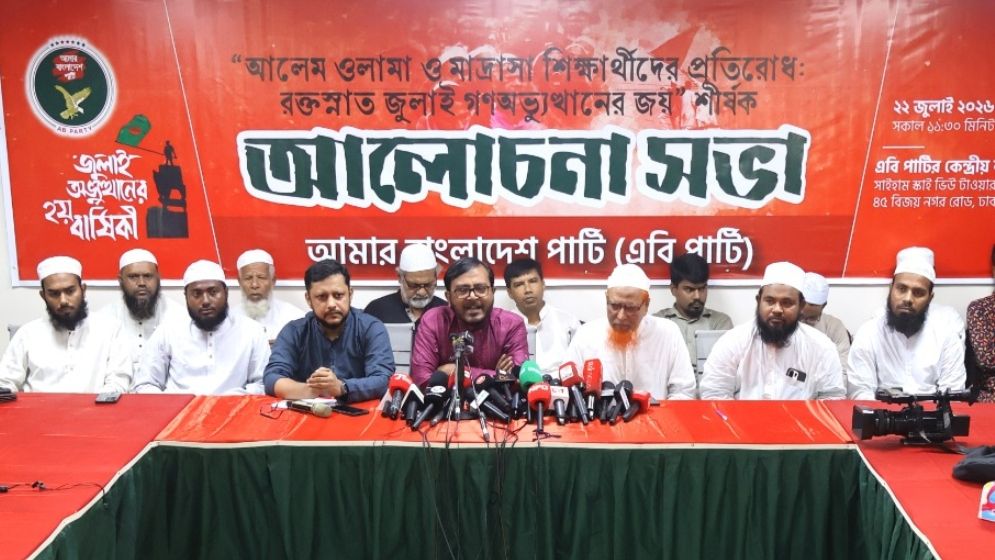
He spoke on Wednesday, July 22, at a discussion organised by the AB Party to mark the second anniversary of the July mass uprising, titled “The resistance of scholars, ulama and madrasa students: the victory of the blood-soaked July uprising.”
The meeting was held at the party office in Bijoynagar in the capital and moderated by joint general secretary Shahadatullah Tutul.
Mojibur Rahman Manju said that in 1971 the defeated force surrendered and fled to Pakistan, but their collaborators took shelter in various political parties and regrouped. This time too, after fascism fled, some of its collaborators have remained in the country and are now trying in various ways to make fascism relevant again, he said.
Alongside university students, ulama and religious scholars also came out onto the streets in large numbers during the July uprising, he added. There may be differences of opinion among the ulama, but on questions of Bangladesh's independence, sovereignty and national interest they are uncompromising.
Manju said university students joined the July uprising first, followed by college, private university and madrasa students. The uprising succeeded when men and women, cultural activists and people from all walks of society came onto the streets.
Ahmad Ali Kasemi, senior naib-e-ameer of Khelafat Majlish, said the ulama had always played a courageous role in movements, and that the change had come through a united movement of all patriotic forces. Without structural reform, he said, resisting fascism in future will not be possible, and their movement demanding implementation of the July Charter will continue.
Maulana Sanaullah, member secretary of the National Ulama Alliance, said the seeds of the July uprising were sown at Shapla Chattar on May 5, 2013. He alleged that the then government stayed in power for a long time by using allegations of militancy.
Maulana Abdullah Al Masud Khan, secretary general of Islami Jubo Samaj, said that although madrasa students had no direct stake in the quota-reform movement, they joined it in flocks. Jahiduzzaman, president of Khelafat Jubo Majlish, said the ulama have a historic contribution to every important movement in the country, from the anti-British movement onwards.
Guests at the discussion also included July fighter Maulana Sadman Fuad and Md Alif, along with a number of the party's Dhaka metropolitan south and other unit office-bearers.