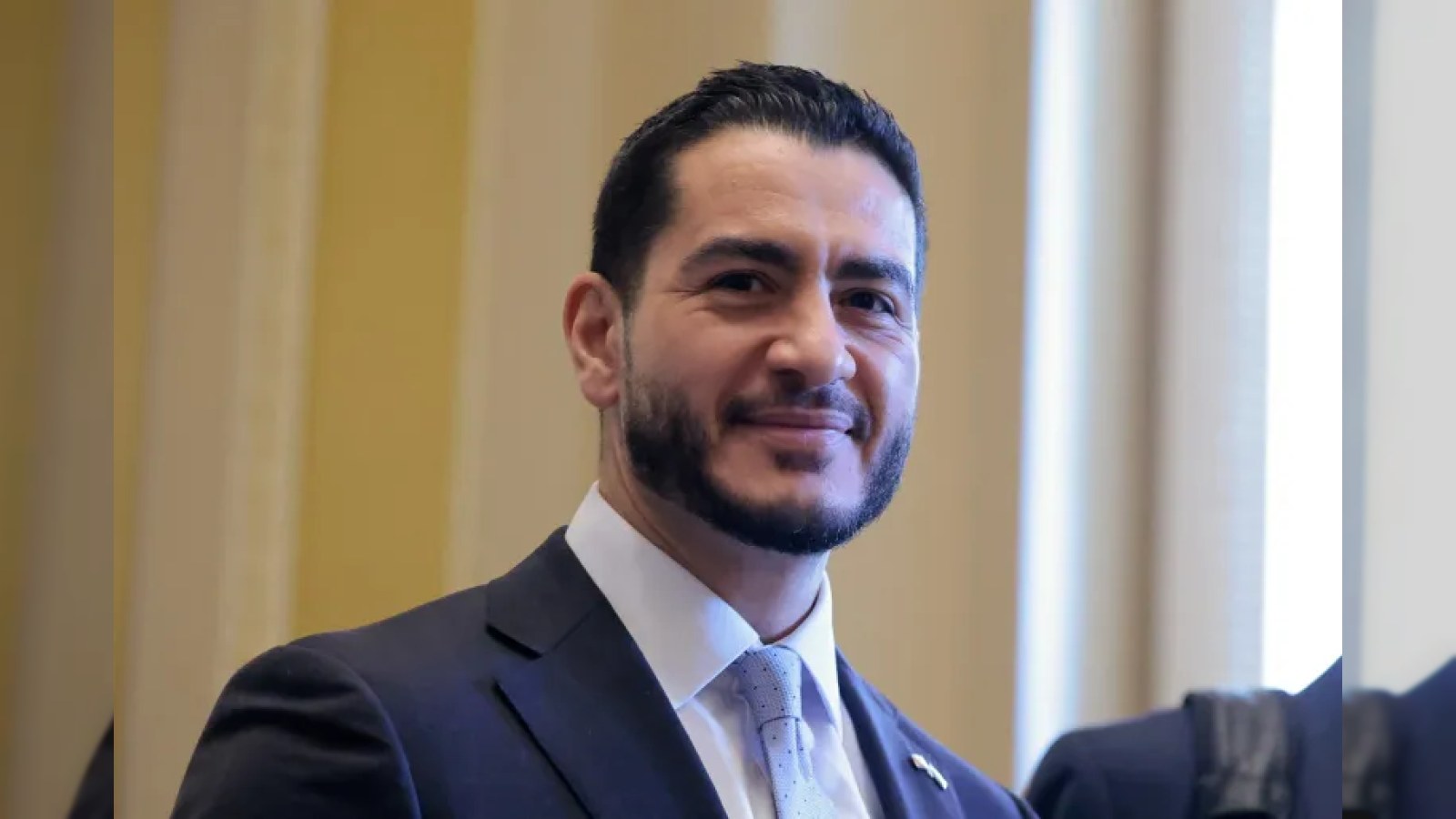
An unforeseen dramatic turn has appeared in US politics. President Donald Trump has announced that he will sit in discussion over the universal health insurance plan proposed by Abdul El-Sayed, the newly elected Democratic senator from Michigan, a plan El-Sayed has proposed naming 'TrumpCare'. Yet only a month ago, during the election campaign, Trump and his allies made fiercely aggressive and Islamophobic comments against El-Sayed. Analysis of reports by Al Jazeera, the New York Post, NBC News and The New York Times has revealed the reasons behind this possible understanding in the US health sector and politics, and the future equation.
Trump's tone changes in the Oval Office
On Tuesday, November 24, in a 45-minute interview given to the New York Post at the Oval Office, Donald Trump lavishly praised Democratic senator-elect Abdul El-Sayed. On El-Sayed's proposal to rename the 'Medicare for All' plan 'TrumpCare', Trump said: "He is a smart guy. He has done quite a good job. I will definitely sit in a meeting with him. Maybe we can reach somewhere in the middle." However, no specific date for the meeting has been announced yet. Trump, as always, criticised former president Barack Obama's health policy 'ObamaCare', saying it did not work, and said he is keen to work with the Democrats on health sector reform.
How did this 'TrumpCare' proposal begin?
In the midterm elections of November 3, physician and public health expert Abdul El-Sayed defeated the Republican candidate Mike Rogers in Michigan and was elected as the first Muslim member in the history of the US Senate. Right after his victory, he gave Trump a political proposal.
November 6: in an interview with journalist Mehdi Hasan's Zeteo, El-Sayed first said that since Trump likes to put his name on everything, if he passes 'TrumpCare' for everyone, he has no objection to it.
November 12: posting on social media platform X (formerly Twitter) a picture of a symbolic gold 'TrumpCare' card bearing Trump's signature, he wrote: "Donald, it stayed on the discussion table. Ensure healthcare for every American from birth to death."
November 17: in a video message addressing Trump with the Arabic word 'Habibi' (dear), El-Sayed said people want healthcare, and Trump can put his own name on this whole project if he wants.
At first the White House dismissed this proposal as 'socialist', but last Saturday Trump himself shared El-Sayed's post on his 'Truth Social' platform. NBC News then reported that the office of Vice President JD Vance had contacted El-Sayed's team to fix a time for the meeting. Analysis by The New York Times says that, as a progressive Democrat, El-Sayed is very strategically trying to use the president's 'ego', or self-publicity mentality, in the public interest.
Bitter election past versus present reality
Trump's current position is the complete opposite of the picture of just a few weeks ago. On October 25, at an election rally in Port Huron, Michigan, Trump, without any evidence, labelled El-Sayed a 'member of the Muslim Brotherhood'. Even Vice President JD Vance had made harsh comments against El-Sayed in August. In reply, El-Sayed also criticised Trump as 'immature'. But after the midterm elections, in which the Democrats took control of both chambers, the Senate (56-44 seats) and the House of Representatives (258 seats), the political equation has changed. When the new Congress takes charge next January, the Democrats will be able to pass bills on their own, but they do not have the two-thirds majority (67 votes in the Senate) needed to avoid Trump's 'presidential veto'. As a result, winning Trump's consent is essential for the Democrats to pass any major law. On NBC's 'Meet the Press', El-Sayed said: "What the bill is named is not the main thing to me; whether every American is getting healthcare without premiums or extra costs, that is the real thing."
The US health sector crisis and analysts' views
The United States is the only country among the world's rich countries that has no universal health system run with tax money. According to Peterson-KFF data, in 2024 the United States spent 18 percent of its GDP (about $14,775 per capita) on the health sector, which is about double the average spending of other rich countries. Despite that, until 2025 about 26.7 million people in the country were not covered by any kind of health insurance. Recent surveys have found that 66 percent of Americans support 'Medicare for All'.
International politics analyst and Dublin University professor Scott Lucas told Al Jazeera that after discontent over the Iran war, the rising cost of living and the drubbing in the midterm elections, Trump wants to restore his image. In his view, it is much like Trump's recent cordial meeting with New York's newly elected mayor Zohran Mamdani, where, despite fierce attacks before the election, Trump later gave importance to personal chemistry and publicity. On the other hand, the news outlet The New Arab has reported that some discomfort and anger has appeared in Trump's hardline supporter 'MAGA' camp over this step. Analysts say it is uncertain whether Trump will ultimately agree to a single state insurance system, but this meeting has taken El-Sayed to a unique height in national politics and has brought the issue of healthcare reform back to the centre of discussion.