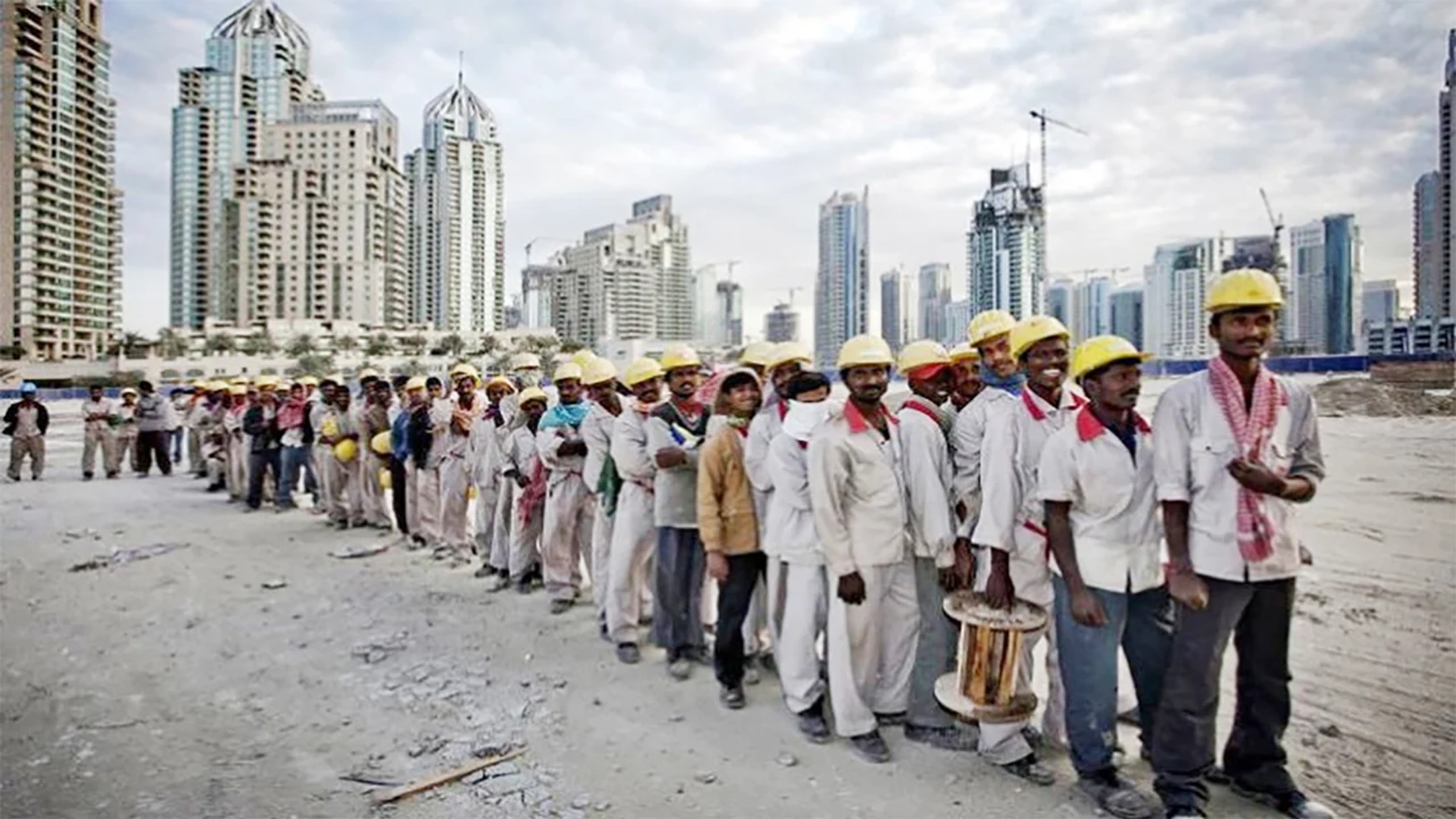
DHAKA — Cities that once offered Bangladeshi migrants steady livelihoods have turned into nightmares because of the Middle East war. Kuwait, Qatar and Lebanon may differ on the map, but the picture of Bangladeshi migrants’ suffering looks the same everywhere. Drones and missiles overhead, vanishing jobs underfoot — the country’s remittance lifeline is being crushed.
U.S.-Israeli strikes on Iran have brought tight restrictions and economic standstill to Qatar and Kuwait, leaving hundreds of workers jobless. In Lebanon, Israeli strikes have driven homeless migrants from place to place. Skyrocketing airfares and passport delays have closed off any way home. These migrants, who left to provide for their families, now spend their days in uncertainty. The biggest question in this Middle East turmoil: Who will guarantee the safety of these workers who sweat to support Bangladesh?
Qatar: Insecurity and economic collapse
The impact of the ongoing Middle East war is visible in Qatar. Daily reports of intercepted suspicious drones and attacks on ships near the seaport have made the situation more volatile. Residents have been moved out of the capital’s Musharib VIP area, where multiple American institutions are located.
Qatari authorities have banned photography and video recording and ordered citizens not to go outside unnecessarily.
Qatar migrant Rifat Alam Hero said government restrictions have brought life to a standstill. Bangladeshi workers are worst affected, especially those who came on free visas and rely on work. They have now lost jobs and income and are adrift.
“Many have no work and no income. Paying rent and buying food has become very difficult. They can’t return home either. Prices of basic goods are sky-high, yet income is nearly zero,” he said.
The crisis has worsened with transport. With only Qatar Airways flights operating, ticket prices have moved beyond ordinary migrants’ reach. Passport delays have added to the problem. Migrants complain that even after submitting passports for renewal, they aren’t getting them back on time, leaving them unable to return home even in emergencies. Many also voiced frustration over what they called inadequate warnings or effective help from the Bangladesh Embassy.
At Doha’s old seaport, anxiety is also rising among tourists stranded on a cruise ship. Schools have reopened on a limited basis, but normal conditions have not returned.
Kuwait and Lebanon: Lands of fear
Jahid Hasan Avi, a Bangladeshi in Kuwait, said public life has frozen amid war fears. Economic zones have stalled, and migrants face severe anxiety about job security. Many tourists are stranded in Kuwait because no flights are operating. With schools closed, everything is at a standstill.
Lebanon’s situation is far worse. Israeli forces have killed more than 1,300 people in the country; over 1.2 million have been displaced. Heavy strikes continue along the Israeli border area Aria, in Dahieh and various locations in Beirut.
Lebanon migrant Alamgir said 500 to 600 Bangladeshis are currently living in inhuman conditions at various temporary shelters. Because 70 percent of Bangladeshis in Lebanon are undocumented, formal remittance flow from the country is very low. Most transactions now happen via hundi or bKash. While basic commodity prices are stable, gas and electricity costs have risen. A significant number have lost jobs.
Migrant workers are bearing the heaviest burden of the Middle East’s multifaceted crisis — security fears, economic pressure and human suffering. With a yearning to return home and a struggle to survive abroad, they are alone today.
According to the Bureau of Manpower, Employment and Training, about 450,000 Bangladeshis currently live in Qatar — a notable share of the country’s population. In 2025, Bangladeshi employment in Qatar grew by 10 percent, and in January 2026 remittance flow from the country was about 16,877 million taka (BDT). These Bangladeshis, working in construction, services and driving, play an important role in maintaining Qatar’s modern infrastructure.
About 350,000 Bangladeshi migrants currently live in Kuwait. In 2025, manpower exports from Bangladesh to Kuwait made up about 4 percent of total migration, and in January 2026 remittance from the country was about 20,644 million taka (BDT). Bangladeshis dominate Kuwait’s government cleaning sector, driving and agriculture — making the country one of Bangladesh’s key sources of foreign currency for decades.
About 100,000 Bangladeshi migrants currently live in Lebanon, a large share of them women domestic workers and male agricultural and garage mechanics. According to a March 2026 report, about 100,000 Bangladeshis are living in inhuman, dangerous conditions because of Lebanon’s war, many of them working in Hezbollah-controlled areas of southern Lebanon. The economic downturn and current instability have severely damaged remittance flow from Lebanon in recent months.
বাংলায় মূল প্রতিবেদন পড়ুন · Read the original Bengali report