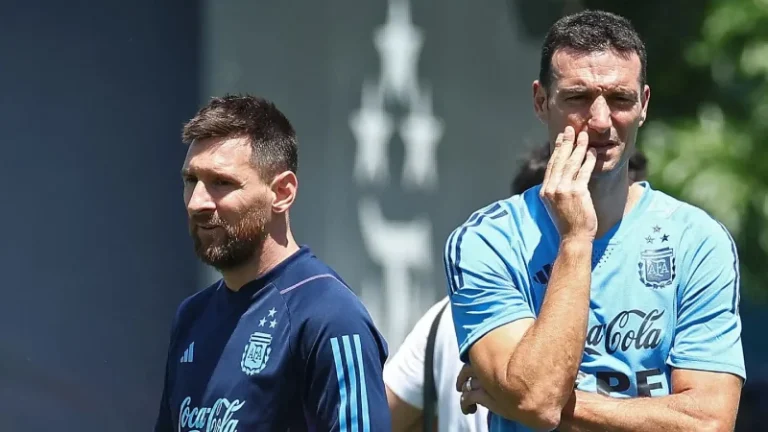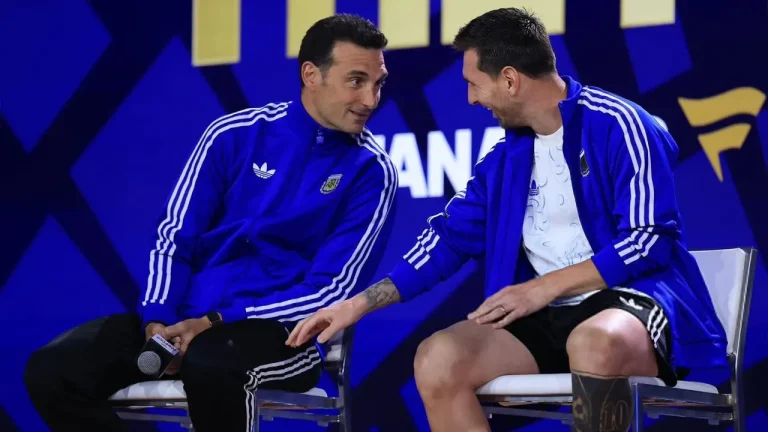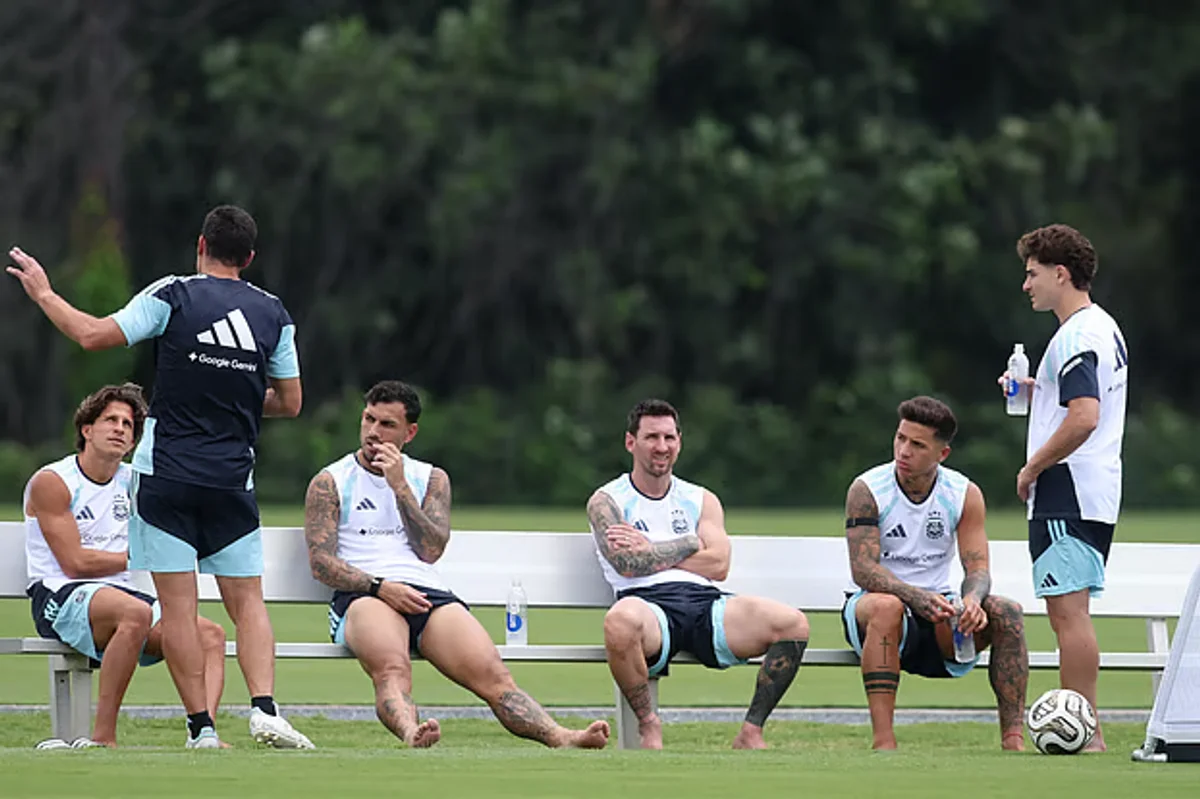
From Qatar's Lusail Stadium to New York's MetLife Stadium, the two Argentina teams led by Lionel Messi are just three and a half years apart. It is as if the Albiceleste have started exactly where they finished the last World Cup. Coach Lionel Scaloni has reached a second straight final leaning on the same players on whom he ended a 36-year wait at the 2022 World Cup.
The last World Cup squad was a blessing for Scaloni, with an average age of just 27. Setting aside the vast experience of Messi, Ángel Di María and Nicolás Otamendi, the squad was a collection of youth. Of the 26, seven were over 30, two of them bench goalkeepers. The experience of the over-30s Papu Gómez and Marcos Acuña was harnessed by young players like Enzo Fernández, Rodrigo De Paul and Julián Álvarez, who were key members of the starting eleven from day one. So even after stumbling against Saudi Arabia in the first match, Argentina returned from Qatar with the World Cup, the pairing of Messi and Di María with Álvarez and Fernández ending 36 years of waiting.
Over four years Scaloni's squad has grown in both age and experience. There have been nine changes across the two squads, but most are on the bench; only two changes worth mentioning are near the starting eleven — Di María, who has bid farewell to football, and Paulo Dybala, dropped for being out of form. Setting those two aside, it is hard to find a difference between the two World Cup starting elevens. Comparing the last World Cup final against France with this tournament's semi-final against England, only one change stands out: Giuliano Simeone in place of Di María.
Keeping faith in and performing with the same team four years on is not easy, and Scaloni has shown he can. Since Di María left, Argentina's left flank has been largely ineffective — the chemistry Di María had with Tagliafico last World Cup is gone, and age has blunted Tagliafico too, forcing Scaloni to play through the midfield and build attacks that way. Here he may have missed a creative midfielder like Dybala, someone who could absorb the opponents' press and use the space inside the pitch. He has used the sharpened Enzo Fernández in that role; though the roles of Fernández, De Paul and Mac Allister have shifted, they are doing their jobs well. New midfield additions such as Giuliano Simeone, Nico González and Nico Paz have come in, but Scaloni cannot place full trust in any of them as he did in the youngsters last World Cup, fielding no one unless his back is truly against the wall — so the team's flaws show easily. Except for the first two group games, Argentina have conceded in every match, and except against Cape Verde, they have had to win every knockout match after falling behind. It is on experience and an extraordinary ability to handle pressure that Scaloni's side have reached the final.