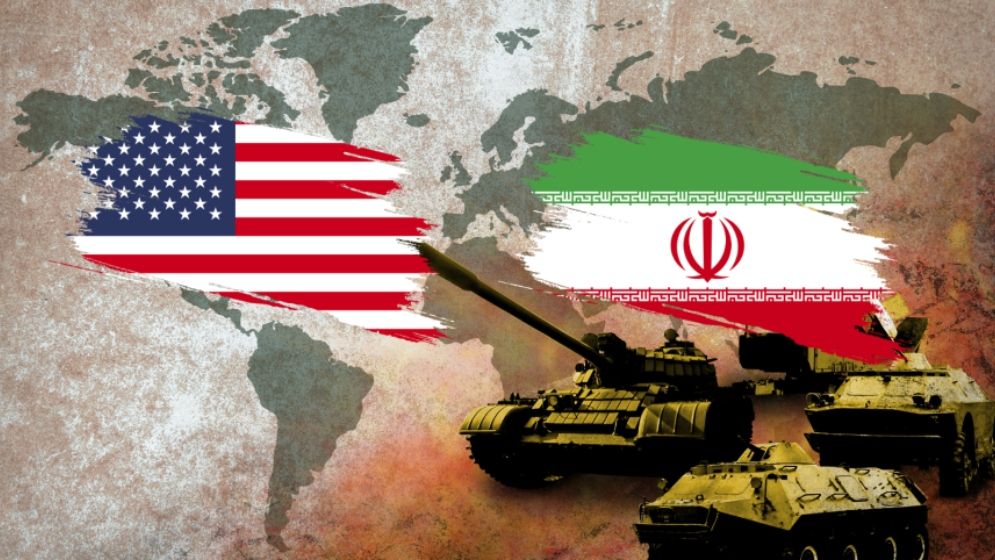
A new settlement between the United States and Iran has finally ended the bloody war that began on February 28, analysts say. But the war will be marked in history as the biggest mistake of US President Donald Trump’s foreign policy, they said.
The conflict dealt a heavy blow to US dominance in the Middle East and to its ability to subdue adversaries, while also exposing the limits of US military power to the world, according to analysts. In particular, they said, China watched closely as the limits of that power became clear at a time when Washington was depleting its limited stockpile of weapons.
The war was based on a serious miscalculation by the United States and Israel, analysts said. They believed Tehran’s government was weak and that the war would be short and easily won. On the first day of the war, Iran’s supreme religious leader, Ayatollah Ali Khamenei, was killed in an Israeli strike, and a US strike destroyed a school in the southern city of Minab, killing at least 150 civilians, including more than 120 schoolgirls, according to the account.
The prediction by Trump and Israeli Prime Minister Benjamin Netanyahu, made in video messages, that Iran’s government would fall has completely failed, analysts said. Despite these severe blows, Iran’s government did not collapse; instead it emerged stronger under the leadership of Khamenei’s son, Mojtaba Khamenei, and young, aggressive commanders of the Revolutionary Guards, they said.
Iran’s resistance and counter-strategy have caused a rift in the United States’ long-standing alliance with the oil-producing Arab monarchies of the Gulf, analysts said. The business model of these countries, long seen as islands of stability, is now under severe threat, and recovering from the damage will take many years.
According to reliable sources, officials in the Gulf are now thinking of diversifying their alliances rather than relying solely on the United States, and are looking for ways to coexist with Iran.
The war was started abruptly at the very moment formal talks between Iran and the United States on the nuclear program were under way in Geneva, Switzerland. The war closed the Strait of Hormuz, through which about 20 percent of the world’s oil and natural gas is transported, along with fertilizer essential for agriculture and raw materials for semiconductors. The prolonged stalemate left the global economy stagnant and pushed poor countries, such as those in sub-Saharan Africa, into a severe food crisis, analysts said.
Now, under this two-page, 14-point settlement, the Strait of Hormuz is reopening, the US naval blockade is being lifted and the ceasefire is being extended, bringing relief to the global economy and to hundreds of millions of ordinary people, they said.
The settlement is not a permanent peace deal, however; complex issues such as Iran’s nuclear program and the lifting of sanctions have been left for future talks. Despite being a full partner in the conflict, Israel has been completely left out of the deal, which has left the Netanyahu government deeply frustrated, analysts said.
By ending the war with Iran left intact — the enemy Netanyahu had dreamed of destroying throughout his political career — he now faces sharp criticism from political opponents at home, which could prove a major setback for him in the general election this October, according to analysts.
One of the main complications that remains is Israel’s declaration of long-term military occupation in Lebanon, Syria and Gaza, they said. The occupation of southern Lebanon and recent Israeli airstrikes on Beirut were essentially an attempt to derail the peace talks, but the attempt failed and the talks gained further momentum, analysts said. Trump has already expressed his anger at Netanyahu, and it remains to be seen whether Israel will defy US sanctions and carry out further aggression.
All told, analysts said, the February 28 war shattered the image of the United States as the all-powerful arbiter in the Middle East and posed a major challenge to its struggle to maintain unrivaled superpower dominance on the world stage.
বাংলায় মূল প্রতিবেদন পড়ুন · Read the original Bengali report