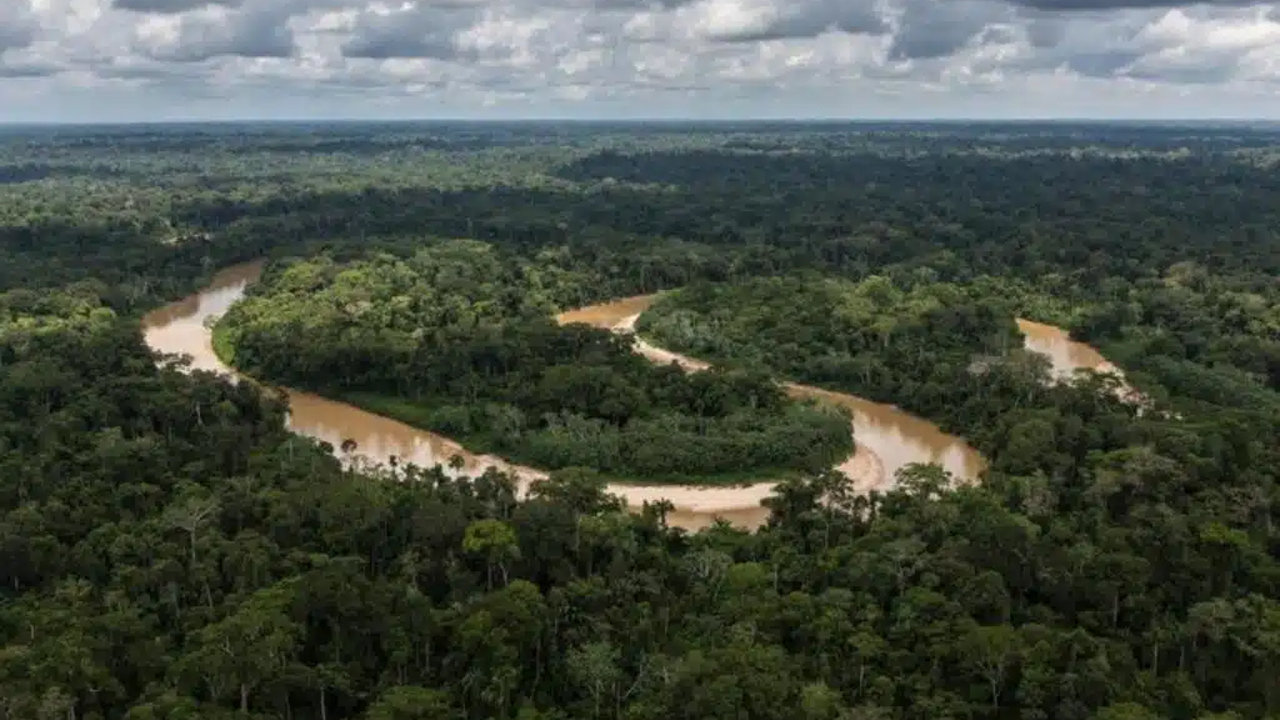
Water levels in Brazil’s Amazon region rose significantly in 2025 after two years of severe drought, though a monitoring network said the long-term situation remained worrying.
The information came in a report published Tuesday, news agency AFP reported from Rio de Janeiro. Brazil holds about 12 percent of the world’s total supply of fresh water, nearly two-thirds of it in the Amazon region.
According to MapBiomas, a network of organizations that monitors land use and land cover change, Amazon water levels in 2025 were 2.6 percent above the historical average because of increased rainfall compared with the previous year.
But while the situation had improved, the network warned that extreme weather events were becoming more frequent, leaving the overall picture still worrying.
“Extreme weather events are increasing by the day,” said Bruno Ferreira, a member of the MapBiomas Amazon team. “Because of climate change and changes in land use, we are also seeing signs of instability in the water flow system.”
Brazil’s vast territory contains various biomes, including forests, wetlands and grasslands. The report said that in the Pantanal, Brazil’s wetland region south of the Amazon basin, water levels at the end of 2025 were 56 percent below the historical average.
That marked some improvement over 2024, when the region faced its worst drought in decades. Even so, the Pantanal remains the country’s most stressed ecosystem.
The arrival of the natural climate phenomenon El Nino typically causes drought in parts of the Amazon and raises the risk of worsening conditions.
The phenomenon, which raises surface temperatures in the central and eastern equatorial Pacific Ocean, began last week.
The U.S. National Oceanic and Atmospheric Administration (NOAA) said it could become one of the strongest El Ninos on record by the end of the year.
বাংলায় মূল প্রতিবেদন পড়ুন · Read the original Bengali report