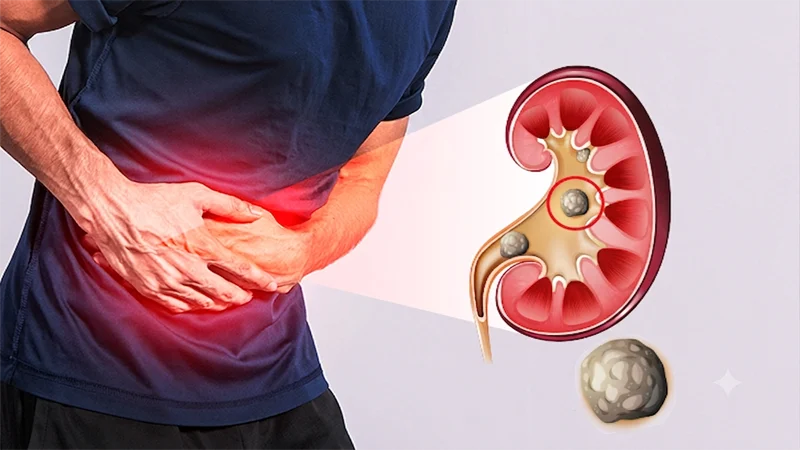
Like older adults, many young people now suffer from kidney stones, and some from bladder stones. Such problems should be treated before they become serious. Recognizing the signs of kidney stones early, along with lifestyle changes, often helps a great deal — but many people ignore the symptoms, which can later put life at risk.
Five important signs of kidney stones were outlined in a report by the Indian outlet News18, with advice from urologist Anil Kumar Varshney of Max Super Speciality Hospital in Delhi.
Back pain
People with kidney stones often have severe pain in the lower back or on both sides of the spine, spreading to the pelvic area and into the abdomen, making it hard to stand or walk. Seek treatment if you notice these signs quickly.
Pain or burning during urination
When a stone lodges in the tube connecting the kidney and bladder, you may feel pain while urinating. This discomfort, which doctors call dysuria, can be quite distressing, so identifying it early is important for proper treatment.
Blood in the urine
Blood in the urine, known as hematuria, is a common sign of kidney stones. The blood may be red, pink or brown, and in some cases the blood cells are so small they can be seen only under a microscope.
Nausea and vomiting
Nausea and vomiting are common signs of kidney stones, arising from the interconnected nerves between the kidneys and the digestive system. A kidney stone can activate these nerves, causing abdominal discomfort, and severe pain can also trigger nausea and even vomiting.
Fever and chills
Fever and chills are another sign of a kidney or urinary-tract infection and can also occur with kidney stones. These symptoms may point to other serious health problems too. If fever comes with pain, see a doctor in time; identifying these signs early makes proper treatment possible.
বাংলায় মূল প্রতিবেদন পড়ুন · Read the original Bengali report