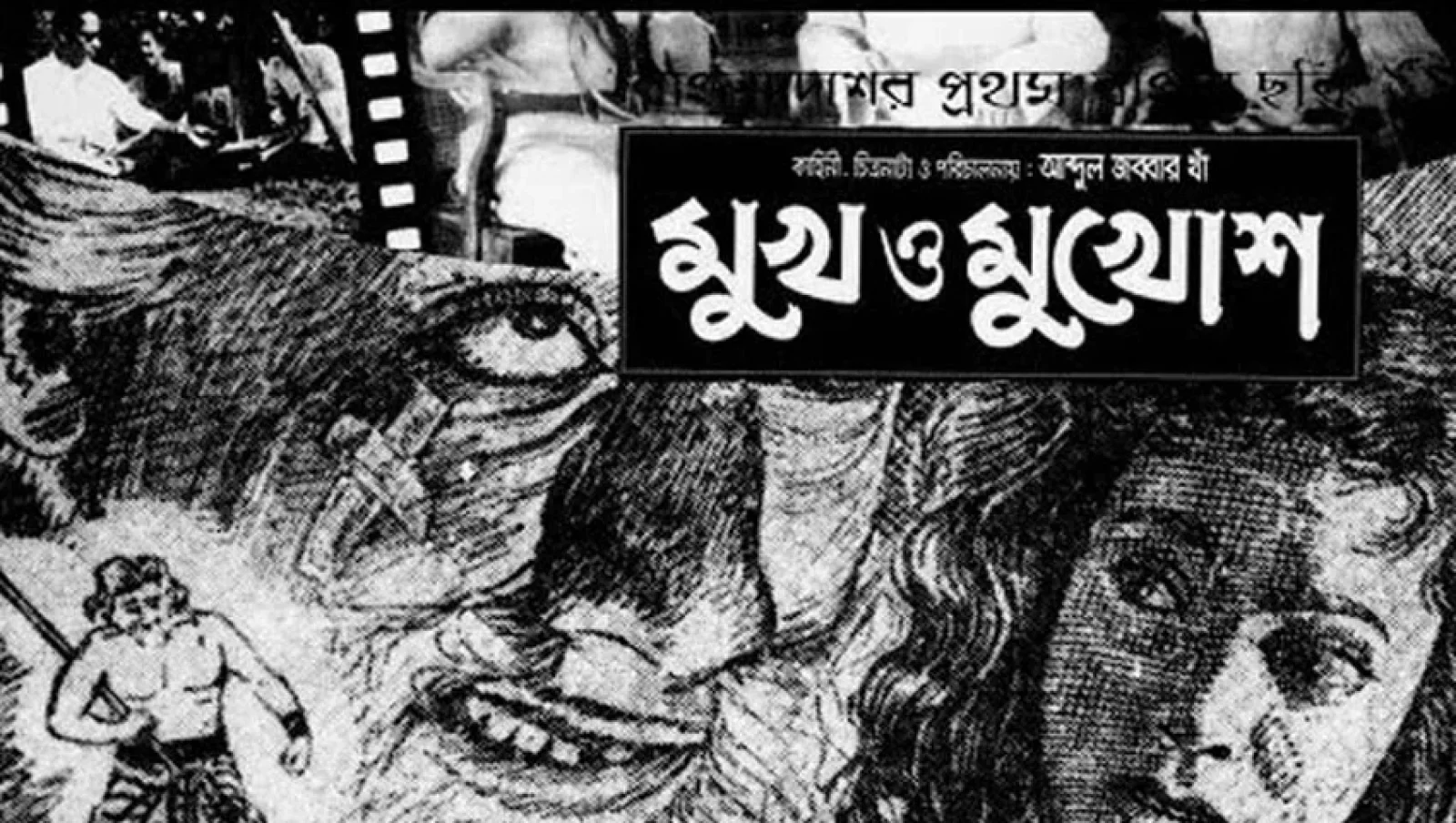
Bangladesh marked the 70th anniversary of “Mukh O Mukhosh,” a landmark in the country’s film history. The release of the country’s first full-length Bengali-language sound film on Aug. 3, 1956, formally launched Dhaka’s film industry.
The pioneering film opened at Rupmahal Cinema Hall in Dhaka 70 years ago, inaugurated by then-East Pakistan Governor Sher-e-Bangla A.K. Fazlul Huq. Abdul Jabbar Khan directed the film, which grew out of a challenge. At a 1953 meeting on the prospects for filmmaking in East Pakistan, speakers said the region’s humid climate made film production impossible. Khan challenged that assertion and pledged to make a film himself. Although he had no previous filmmaking experience, he wrote the screenplay from his own play “Dakat.”
Production began with an old Eyemo camera and an ordinary tape recorder brought from Kolkata. A newspaper advertisement was used to find actresses because of a shortage of women performers. Kolkata’s Purnima Sengupta played the heroine, Kulsum, while Khan played the male lead, Afzal.
The film was shot in Kaliganj across the Buriganga River, Lalmatia, Tejgaon, Zinjira and along the Turag River in Tongi. Filming ended on Oct. 30, 1955, and editing and printing were completed at Shahnoor Studios in Lahore. Dhaka distributors were initially reluctant to release it, but Pakistan Film Trust and Pakistan Film Service later took responsibility for distribution. In addition to the premiere at Rupmahal, the film opened in Chattogram, Narayanganj and Khulna. Its enthusiastic reception demonstrated that films could be made in Bengal and opened a new chapter in Bangladesh’s film history. Samar Das directed the music, Mahbuba Hasnat and Abdul Alim sang, and Gawhar Jamil directed the dance sequences.
A Bengali film-poster exhibition opened at the Channel i premises on Aug. 2 to mark the film’s 70th anniversary. It featured posters from notable Bangladeshi films from different eras, including popular films produced by Impress Telefilm.
Dhaka South City Corporation Administrator Md Abdus Salam was the chief guest at the opening. Impress Telefilm and Channel i Managing Director, children’s author and producer Faridur Reza Sagar; filmmakers Kazi Hayat and Matin Rahman; actor Sohel Arman; and other film-industry figures attended.
Salam said he had seen many of the films represented in the exhibition. Recalling the celebrated history of Bengali cinema, he urged other production companies and filmmakers to become more active alongside Impress Telefilm. Audiences would return to theaters if they were offered quality films, he said.
Film journalist Abdur Rahman said about 3,500 Bengali films had been released since 1956, but the industry began a gradual decline after 2000. Bangladesh once had about 1,700 cinemas, he said, while only 50 to 60 now survive. The number rises to about 80 during major festivals such as Eid.
Rahman said the 70-year history of Bengali cinema was a source of pride, but the industry’s current crisis was also a reality. Sustaining it would require collective action and long-term planning, he said.
Filmmaker Kazi Hayat said production technology and the ways audiences watch films had both changed over time, but he remained optimistic. “Cinema will never disappear,” he said. “People who once stopped going to theaters have started watching films again. If the government helps build more multiplexes across the country, Bengali cinema will be able to make a comeback.”
বাংলায় মূল প্রতিবেদন পড়ুন · Read the original Bengali report