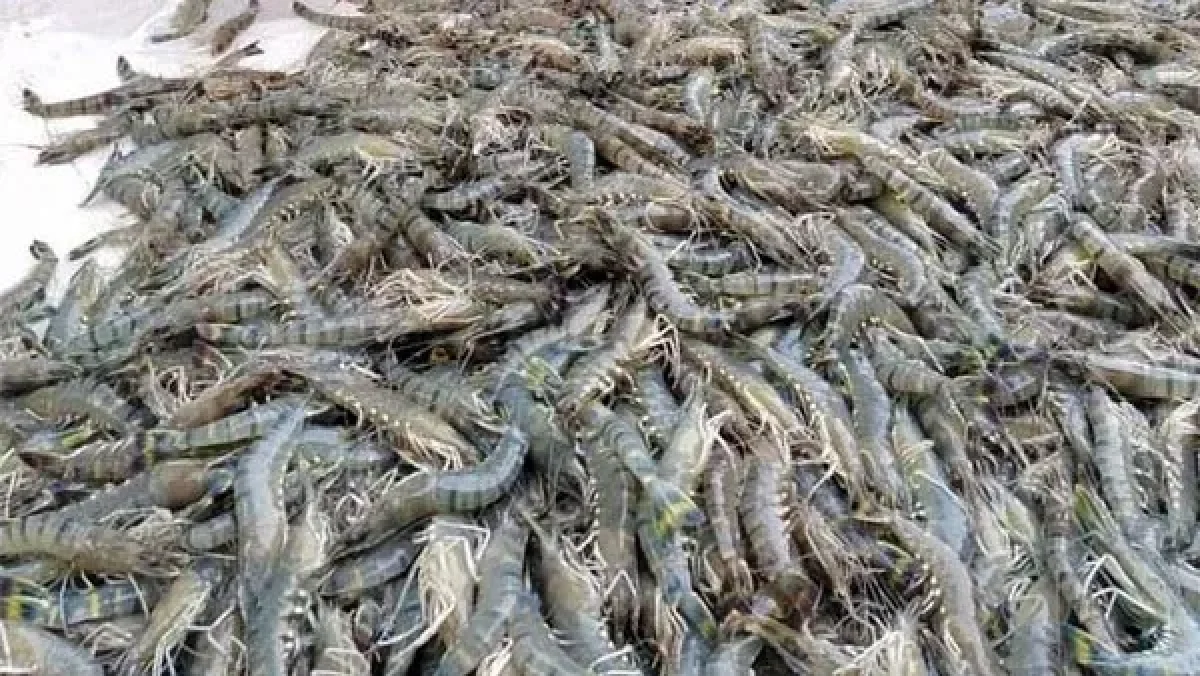
Bangladesh's frozen shrimp industry, known as the country's second-largest export sector and a major source of foreign currency, is facing a deep crisis. The sector, known as "white gold" in the southwestern hub of Khulna, is weakening amid raw-material shortages, fierce global competition, rising production costs and social and environmental pressures.
Shrinking export earnings and reduced activity at processing plants have raised concern about the industry's future. At the same time, the spread of high-yield vannamei shrimp and growing domestic demand are changing the market. Industry participants say timely measures and coordinated reforms are needed to keep the sector viable.
Bangladesh's total shrimp exports fell to about 19,000 tonnes in fiscal 2025-26, generating about $285.6 million, less than in the previous fiscal year. Frozen-shrimp processors in Khulna cannot operate at full capacity throughout the day because of raw-material shortages, power cuts and rising costs.
About 178 frozen-shrimp export factories were established after independence. Of those, 75 closed years ago. Only 40 of the remaining 103 factories are operating, including 30 in the Khulna region. The others are renewing Department of Fisheries licenses and retaining membership in the Bangladesh Frozen Foods Exporters Association while waiting for conditions to improve.
Most operating plants are struggling for raw materials and can export less than half the volume needed to meet demand. Owners, workers and employees fear for the industry's survival as cultivation of bagda and golda shrimp declines each year.
Depot closures and quality-control drives
Regional depots are a key part of the shrimp supply chain. Hundreds of shrimp and fish depots operate in Rupsa, Dacope, Paikgachha and Batiaghata, but about two-thirds of Rupsa's 405 depots have already closed. The closures illustrate the weakness in raw-material collection and primary processing.
Quality and food safety are also major challenges. Authorities have stepped up monitoring and enforcement to stop traders from injecting foreign substances into shrimp to increase their weight.
In October 2025, a joint operation by the Bangladesh Coast Guard and relevant agencies, assisted by the Department of Fisheries Inspection and Quality Control, seized about 38 maunds of adulterated shrimp from an export factory in Rupsa. The shrimp were later destroyed publicly in the presence of an executive magistrate.
In September, a joint drive by the Dumuria upazila administration and fisheries office seized and destroyed 100 kg of adulterated shrimp and fined one trader Tk 10,000. During the same period, an operation in Paikgachha fined three traders over allegations of injecting and trading adulterated bagda shrimp and destroyed 10 kg. Such practices seriously damage the reputation and international acceptance of Bangladeshi shrimp.
Many enclosure farmers in coastal Khulna are abandoning bagda and golda shrimp because of viruses and disease, a shortage of quality fry, salinity imbalances, excessive rain or drought and repeated financial losses. Some are switching to other fish, while others are leaving aquaculture altogether.
Meanwhile, the dominance of vannamei shrimp in the global market has increased interest in the faster-growing, higher-yield variety in coastal enclosures in Khulna, Paikgachha and Satkhira. Industry participants are also discussing environmental risks, an uninterrupted supply of quality fry and the policy and infrastructure needed for expansion.
The industry's supply chain has contracted as raw-material shortages and higher costs force factories to operate at limited capacity. Exporters' margins and plant capacity are also being squeezed by intense international competition. Proposed reforms include improved hatchery management, digital traceability, wider vannamei cultivation and greater access to finance.
Md Ashrafuzzaman, deputy director of the Department of Fisheries Inspection and Quality Control in Khulna, said domestic supply was rising in step with growing local demand. He said this may be one reason shrimp exports have declined.
Khulna District Fisheries Officer Md Badruzzaman said export volume had fallen somewhat while earnings remained broadly unchanged. However, inflation meant the sector's real foreign-currency earnings were still at the level of 10 years ago, he said.
Badruzzaman said inadequate farm infrastructure and insufficient water depth were preventing shrimp output from growing as expected. There was no overall shortage of fry, but quality shrimp fry remained scarce, he said, adding that resolving the problems could lift production above normal levels.
He said Khulna district had 7,400 clusters under a Sustainable Development Goals project, each with 25 members, for infrastructure development. Although infrastructure had been improved, ensuring adequate water depth and supplying quality fry remained essential.
Khulna's frozen shrimp industry is at a crossroads. Participants say quality fry, better farms and infrastructure, strict quality control and modern cultivation methods could help this important economic sector recover.