The 30-year Ganges water-sharing treaty signed by Bangladesh and India in 1996 will expire on December 12, making the two countries' positions on renewal and future sharing terms increasingly important.
Bangladeshi and Indian representatives attended the 91st regular Joint Rivers Commission meeting in Dhaka on November 21 and 22. JRC member Md Anwar Kadir led the Bangladesh delegation, while Indian JRC member Sharad Chandra led India's side.
The meeting reviewed implementation of the 1996 treaty and finalized the annual report for 2026 after the sides exchanged data on flows and allocations in the Ganges and Padma rivers.
Officials did not say whether renewal or a new treaty was discussed. They said policy decisions such as extending the agreement were outside the technical committee's authority.
Background to the dispute
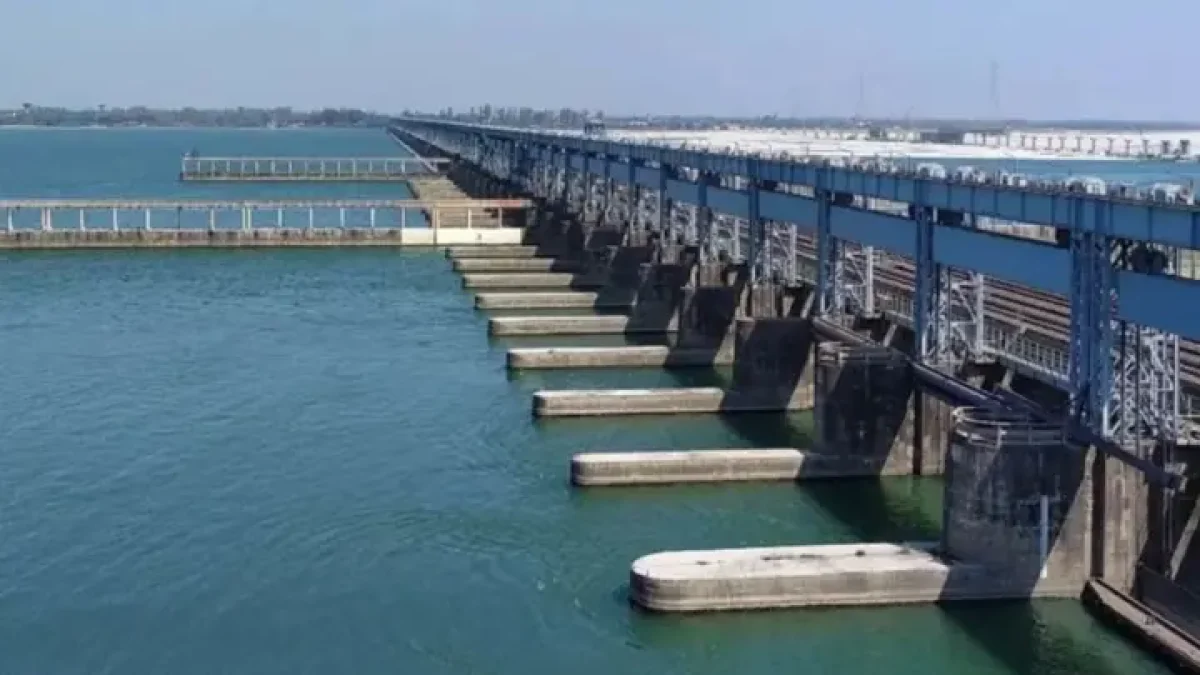
The dispute dates to the 1950s, when India planned the Farakka Barrage in West Bengal, about 18 km from the international border. Construction began in 1961 and ended in 1975, after which India began diverting Ganges water toward the Hooghly River to flush silt and preserve navigation at Kolkata port.
In 1976, Bangladeshi political leader Maulana Abdul Hamid Khan Bhashani led a historic long march against the barrage. He said it was reducing flow into the Padma, the Ganges' main branch in Bangladesh, risking river degradation and desertification.
Interim sharing arrangements were reached in 1977, 1982 and 1985 without a permanent settlement. Indian Prime Minister H D Deve Gowda and Bangladeshi Prime Minister Sheikh Hasina finally signed the Ganges treaty in December 1996.
The agreement established a January-to-May dry-season sharing formula and a joint committee to monitor implementation.
How the formula works
Based on historical flow data from 1949 to 1988, the treaty has three allocation tiers. When flow at Farakka is 70,000 cusecs or less, Bangladesh and India split it equally.
When flow is between 70,000 and 75,000 cusecs, Bangladesh receives 35,000 cusecs and India gets the remainder. At 75,000 cusecs or more, India receives 40,000 cusecs and Bangladesh gets the rest.
From March 11 to May 10, each country is guaranteed 35,000 cusecs in alternating 10-day periods across three cycles. The treaty does not provide a permanent minimum-flow guarantee.
A special emergency clause says the two governments must consult urgently if flow at Farakka falls below 50,000 cusecs during any 10-day period.
Disputes are first referred to the joint committee and then, if unresolved, to the JRC. Created in 1972, the commission deals with the countries' 54 shared rivers, but the Ganges is the only one covered by a formal sharing treaty.
Differences over renewal
Population growth, rising demand and climate change have raised questions about the 1996 formula. The treaty permits renewal by mutual consent, and both countries have indicated that its terms need review.
Media reports last year said India might seek an additional 30,000 to 35,000 cusecs from March 11 to May 10 and had discussed a new agreement lasting 10 to 15 years.
Bangladesh, according to a PTI report, asked at a JRC meeting for a guaranteed 40,000 cusecs from February to May. It also proposed a longer treaty term and more extensive sharing of flood data.
A major Bangladeshi demand is restoration of a minimum guarantee. Under the 1977 interim agreement, Bangladesh was assured at least 80 percent of its stated allocation during specified dry-season periods even when actual availability was low.
India has opposed such a guarantee. Nilanjan Ghosh of the Observer Research Foundation said an obligation to supply a fixed quantity regardless of actual flow could impose unequal risk on the upstream country during climate-driven shortages.
Political and regional context
Reports said renewal would be a priority after the BNP, led by Tareque Rahman, won a large election victory in February 2026, but no visible progress has followed.
Tensions also persist over the proposed extradition of former Prime Minister Sheikh Hasina, who has been in India since her removal from power in August 2024. Reports said the dispute affected relations and that Rahman's proposed visit to India in August 2026 did not proceed.
There is opposition inside India as well. The Janata Dal (United), a BJP ally in Bihar, said the treaty harmed the state's interests and opposed renewal in August.
India's decision to suspend unilaterally the 1960 Indus Waters Treaty with Pakistan after the April 2025 Pahalgam attack has also increased concern in Bangladesh about the Ganges agreement's future.
What comes next
Experts say a new agreement could do more than renew the 1996 formula. It could create a management framework reflecting current water availability, climate risk and changing conditions in both countries.
Srinivas Chokkakula, chief executive of the New Delhi-based Centre for Policy Research, said the countries must review their existing bilateral institutions.
A future framework would need effective provisions for data collection and monitoring, dispute settlement and risk management as well as allocation. Experts say Bangladesh and India must rebuild the political trust and goodwill that made the 1996 treaty possible.
The decision before December 12 matters directly to Bangladesh's agriculture, environment, livelihoods and river management because all depend on an equitable share of Ganges water.