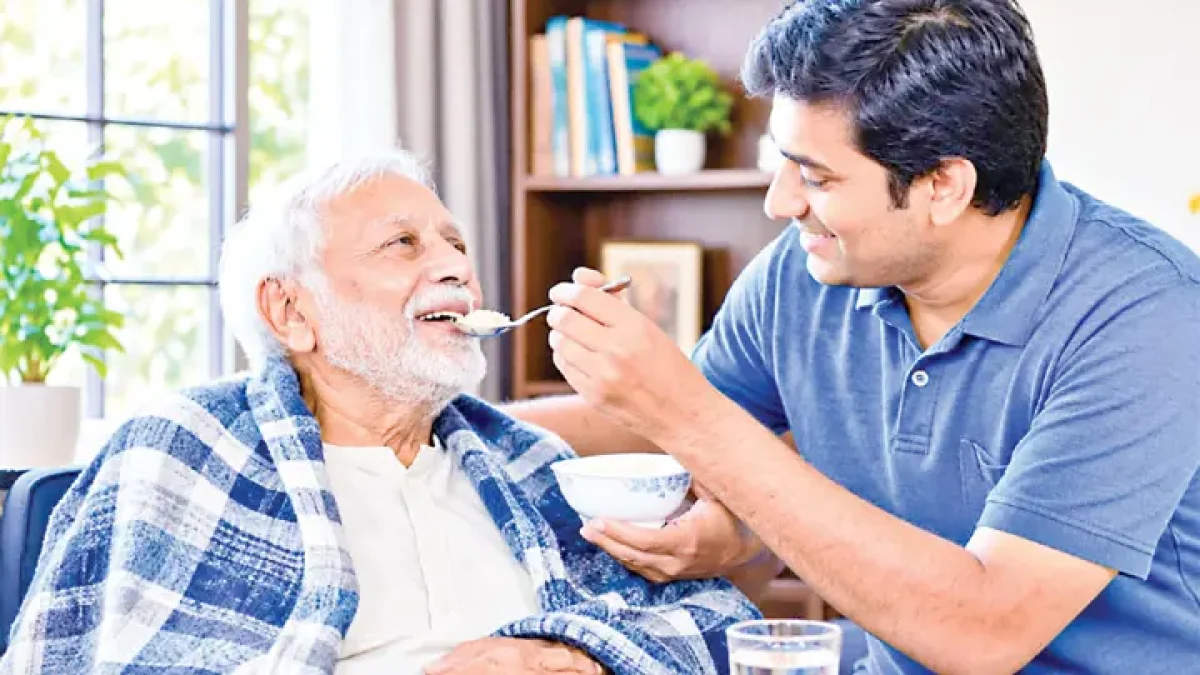
Today’s world is passing through an unprecedented demographic change. Average life expectancy is rising thanks to remarkable advances in medical science and better living standards. With that reality in view, the theme set for this year’s United Nations International Day of Older Persons was “The Age of Longevity: Rethinking Systems for Longer Lives”. The theme reminds us that the greatest challenge of our time is to keep older people’s long lives dignified, healthy and active, and not merely long in years.
The Bangladesh context
Traditionally, Bangladeshi society rests on the joint family and family ties, with the family carrying the main responsibility for looking after its elders. But rapid urbanisation, economic change and the growing number of nuclear families are breaking down this traditional family model. According to statistics, by 2050 about 20% of Bangladesh’s total population, or more than 40 million people, will be counted as elderly. While our health sector still focuses mainly on protecting maternal and child health, the lack of specialised treatment, or geriatric care, for this vast elderly population is acute. As a result, many older people living with multiple chronic conditions of old age, such as diabetes, high blood pressure and dementia, suffer from loneliness and a lack of proper treatment.
The role of hospitals
BIRDEM General Hospital is playing a commendable part in giving older people’s healthcare an institutional form within Bangladesh’s overall medical system. Besides treating diabetes and hormonal diseases, the hospital runs a specialised geriatric day care unit to deal with older people’s various health problems. This initiative is a model in the Bangladesh context:
- Integrated care: because of old age, patients suffer from several complications at once (comorbidities). In BIRDEM’s geriatric department an effort is made to give a patient the advice of doctors from several specialities under one roof.
- The day care idea: without being fully admitted to hospital, patients can come at a set time of day for the therapeutic services, physical tests and specialist advice they need.
- Training and awareness: BIRDEM is playing a leading role in making doctors skilled in geriatric medicine and in training nurses in specialised care.
But a few institutions such as BIRDEM cannot meet this vast need across the country on their own. Spreading such geriatric care units to every district and upazila hospital, in the public and private sectors, is now the demand of the time.
What we should do
To build Bangladesh into an “age-friendly” state in keeping with this year’s UN theme, several urgent steps are needed:
Modernising the medical system: every public and private hospital in the country should open separate geriatric wards for older people and special counters so they can get tickets and medicine quickly.
Infrastructure: roads, public transport and footpaths need to be built so that older people who use a stick or wheelchair can also move about independently.
The social safety net: the coverage and the amount of the government’s old-age allowance need to be increased further, so that older people can enjoy a minimum of financial independence.
Family and social awareness: older people are not a burden on society; their experience is our asset. Respect for the elderly and a sense of responsibility towards them must be built among the young generation.
A long life is a blessing, but if that long life is one of illness and neglect, it turns into a curse. At the demographic turning point where Bangladesh stands today, the elderly of the future will face a deep crisis unless investment is made now. Let us, with the UN’s call before us, rethink our health and social systems so that our elders can live with respect, in good health and with a smile until the last day of their lives.
বাংলায় মূল প্রতিবেদন পড়ুন · Read the original Bengali report