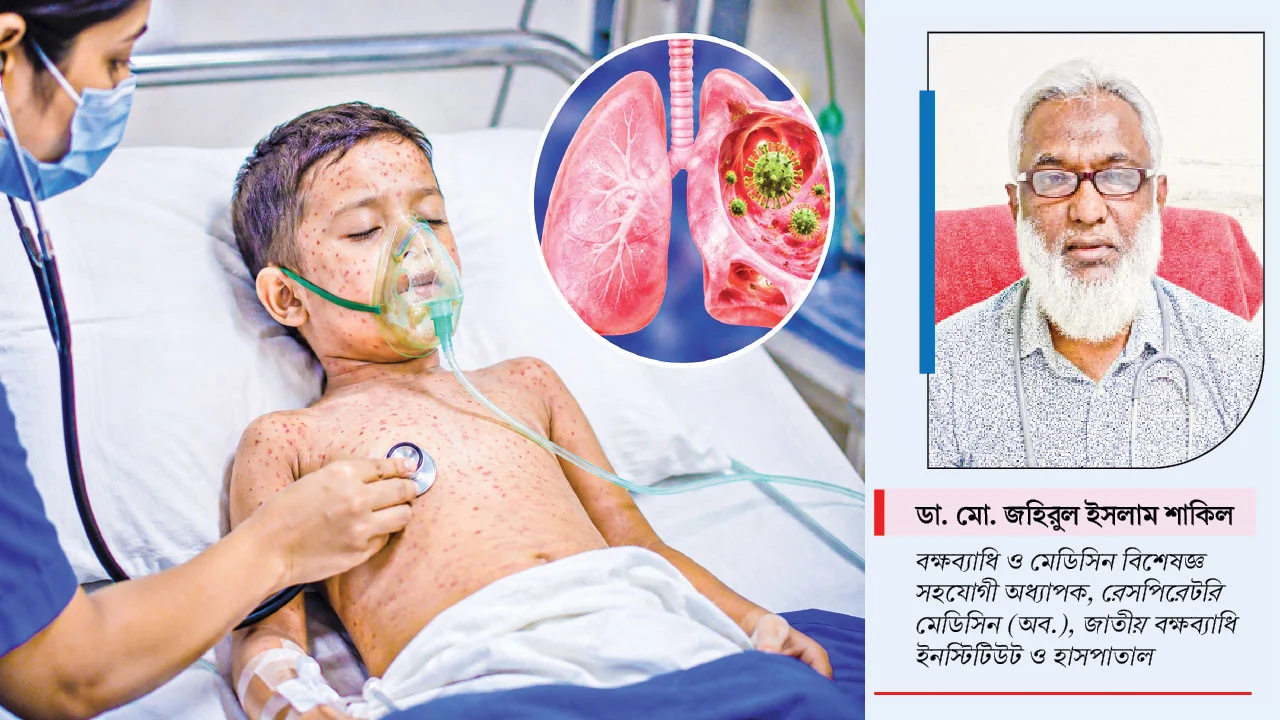
Respiratory diseases tend to increase during the monsoon season and periods of weather change. We spoke with chest disease and medicine specialist Dr. Zahirul Islam Shakil about these issues, including air pollution and chronic cough.
Question: Child deaths from measles are being attributed to pneumonia as a major complication. What is the relationship between measles and pneumonia, and why is it so deadly?
Answer: Measles is a viral disease that primarily affects children. Historically, it has been most common among those aged 9 months to 5 or 6 years. Measles causes fever, runny nose, and reddened eyes. Three to four days later, a rash appears on the body, commonly called a skin eruption. The connection to pneumonia is secondary. Those who develop measles can contract pneumonia through secondary infection. Additionally, viral diseases can cause a type of lung inflammation we call ARDS-like syndrome. When ARDS-like syndrome develops or pneumonia becomes severe, the child experiences breathing difficulty. The child’s oxygen saturation — the ability to absorb oxygen — decreases, and the child’s condition gradually deteriorates.
Question: What impact is air pollution having on lung health? How can we protect ourselves?
Answer: Air pollution causes certain lung symptoms such as cough, breathing difficulty, and can lead to long-term conditions like COPD or emphysema. This causes age-related chronic breathing difficulty; patients become breathless while walking. Breathing difficulty increases with age. We must work to prevent air pollution. Everyone needs to be aware of and avoid the factors that cause air pollution.
Question: If someone has a prolonged cough, which symptoms should prompt them to seek medical advice?
Answer: First, if a cough persists for more than three weeks, the patient should be tested for tuberculosis. Second, prolonged cough can be associated with bronchitis or what we call “cough-variant asthma” — if accompanied by breathing difficulty, the likelihood of the patient having asthma is higher.
Question: Why do respiratory diseases increase during the monsoon and weather changes?
Answer: As seasons change, the weather also changes, and air pollution occurs. Particularly in winter, when there is no rain, dust levels are higher. Pollen is present, which is also a major cause of respiratory distress. During the monsoon, rain, cold winds, and weather fluctuations increase the prevalence of various viral diseases. Infection with these diseases can significantly worsen breathing problems.
Question: What types of patients are you seeing most at this time?
Answer: Currently, we are seeing the most patients with viral infections accompanied by cold and cough symptoms. Additionally, for those with asthma and COPD, the risk of infection increases due to monsoon rains and weather changes, and disease symptoms can become more severe. We are also seeing an increase in pneumonia patients. The number of patients with pneumonia accompanying regular fever is comparatively higher at present.
বাংলায় মূল প্রতিবেদন পড়ুন · Read the original Bengali report