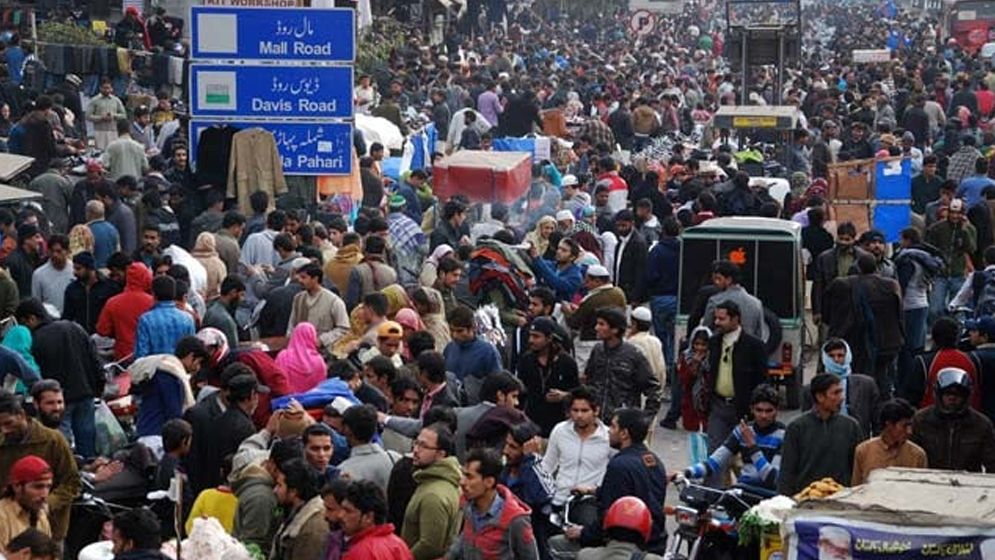
Pakistan’s rapidly growing population is no longer confined to census figures but has become a serious challenge to public health, the environment and the national economy. Experts have warned that unless urgent steps are taken on population control, sustainable urban planning, environmentally friendly green energy and the protection of natural resources, the country’s coming generations could be deprived of clean air, safe water and healthy living.
Among the countries of the region, Pakistan is one of those facing the most acute population-growth crisis. The pressure of a huge population is placing ever-greater strain on the country’s limited resources, posing a serious threat to economic development, environmental balance and public health alike. According to experts, the widening gap between the population’s needs and available resources is pushing Pakistan toward a “silent crisis.” Without well-planned population growth and long-term planning, crises of food, water, housing, healthcare, education and employment will grow even more severe in the future.
The rapid and unplanned expansion of cities is placing an extra burden on major urban centers and their surrounding areas. With housing developments springing up without proper planning, severe traffic congestion, a public-transport crisis and air pollution have reached extreme levels. At the same time, urban populations face water shortages, weak drainage and sewerage systems and an acute shortage of affordable, well-planned housing. Because urban populations are growing faster than infrastructure and civic amenities, these problems are worsening by the day.
Experts stressed that population growth is not only an economic crisis but also a serious threat to the environment and public health. Excessive vehicles, construction, waste generation and high energy demand are degrading air quality and the environment, while water shortages and weak sanitation have multiplied the risk of disease in densely populated and underserved areas.
Meanwhile, in a speech marking World Population Day, Pakistani President Asif Ali Zardari described the country’s young generation as a valuable national asset and the nation’s bright future. Investing in young people’s education, professional skills and employment opportunities was essential for sustainable development and long-term prosperity, he said, adding that this demographic potential must be turned into national prosperity and meaningful human development for Pakistan.
বাংলায় মূল প্রতিবেদন পড়ুন · Read the original Bengali report