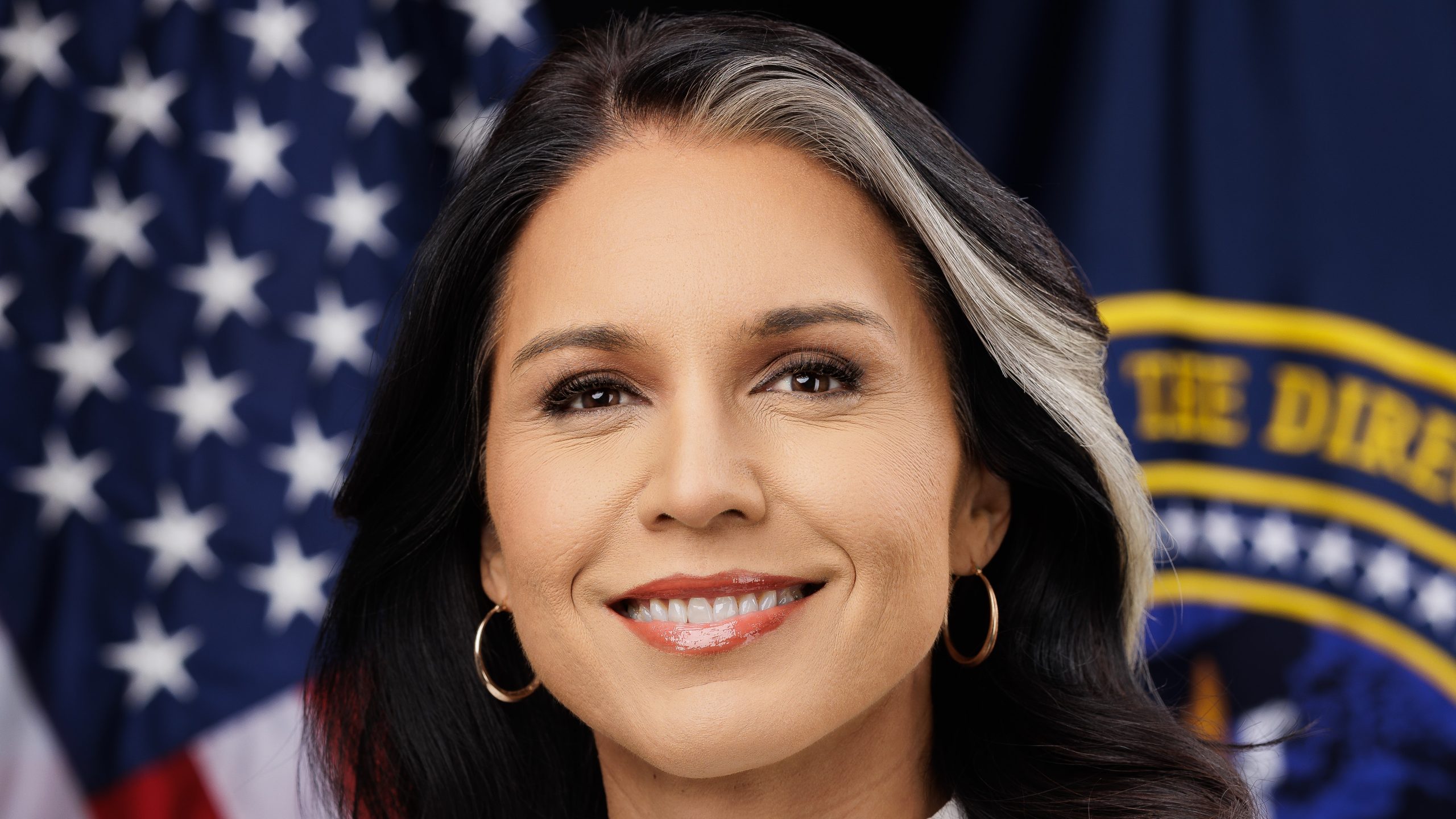
Tulsi Gabbard is stepping down from her post as U.S. National Intelligence Director. She remained loyal to Donald Trump to the end, defending his anger against political opponents. Last year she leveled serious accusations against former President Barack Obama and several top security officials, saying the Obama administration had exaggerated the issue of Russian interference in the 2016 election and had led what she called a “seditious conspiracy.” In January, Gabbard appeared at the site of an FBI raid in Georgia, where intelligence officers were searching for 2020 election ballots — although her core responsibility was supposed to be limited to overseeing foreign intelligence.
Last Friday, Gabbard submitted her resignation to Trump. She said she would step down on June 30. Her husband was recently diagnosed with cancer, and she said she made the decision to be by his side. Several news outlets, however, have reported that she was forced to resign by the White House. Last month, the British newspaper The Guardian reported that Trump had personally asked members of his cabinet about removing Gabbard from the post overseeing 18 U.S. intelligence agencies.
Gabbard was a Trump loyalist who even supported some of his conspiracy theories about past elections. But she opposed U.S. intervention abroad and regime-change wars in other countries, and that ultimately undid her. Her assessments of Iran’s nuclear program and capabilities repeatedly angered Trump. Last June, Israel launched a surprise attack on Iran, and Washington joined the war for 12 days, bombing several Iranian nuclear sites. Trump then pressed Gabbard, wanting her assessment to say that Iran was very close to building a nuclear bomb.
Last January, Trump’s national security team finalized plans to oust Venezuelan President Nicolas Maduro and kidnap him to face trial in New York.
In late February, Trump launched a new U.S.-Israeli war against Iran. Around that time, Gabbard was largely sidelined from top policymaking levels.
Joe Kent wrote in his resignation letter: “In good conscience, I cannot support this ongoing Iran war.” The letter circulated widely on social media. He added: “Iran was not an imminent threat to our country. It is clear we started this war under pressure from Israel and its influential American lobby.”
Kent’s resignation stunned the Trump administration. Gabbard, opposed to intervention in other countries, became further isolated within Trump’s circle. In the 2024 campaign, Trump and his team had presented her to war-weary Americans as a “messenger of peace.”
But after taking office for a second term, Trump abandoned that pledge. Last year he ordered the U.S. military to bomb seven countries: Yemen, Syria, Iran, Iraq, Nigeria, Somalia and Venezuela. On Feb. 28, he launched joint strikes on Iran with Israel. The conflict spread into a regional war. Tehran struck back at U.S. bases and other targets across the Middle East. Iran closed the Strait of Hormuz, through which more than one-fifth of the world’s oil and gas passes. Oil prices in the United States rose, and the global economy took a hit. On April 8, the United States and Iran agreed to a temporary ceasefire, but talks on a permanent deal have stalled. Trump has repeatedly threatened to restart the war.
Tulsi Gabbard became one of Donald Trump’s most trusted aides shortly after joining the Republican Party. File photo: Reuters
Trump bills himself as an “America First” president and built his image as an opponent of military intervention abroad. But during her tenure as one of his top advisers, Gabbard became an uncomfortable reminder to Trump, because he had started a war that has so far failed. The Iranian government, in power since the 1979 revolution, has not been toppled. The methods Trump used to launch the war against Iran echo earlier U.S. conflicts, particularly the 2003 invasion of Iraq, when George W. Bush manipulated intelligence to justify the war.
Since last June, Trump and other U.S. officials have repeatedly claimed that Iran is weeks or months away from building a nuclear bomb. In a meeting with congressional leaders last March, Trump said: “If we had not struck within two weeks, they would have gotten a nuclear weapon.”
বাংলায় মূল প্রতিবেদন পড়ুন · Read the original Bengali report