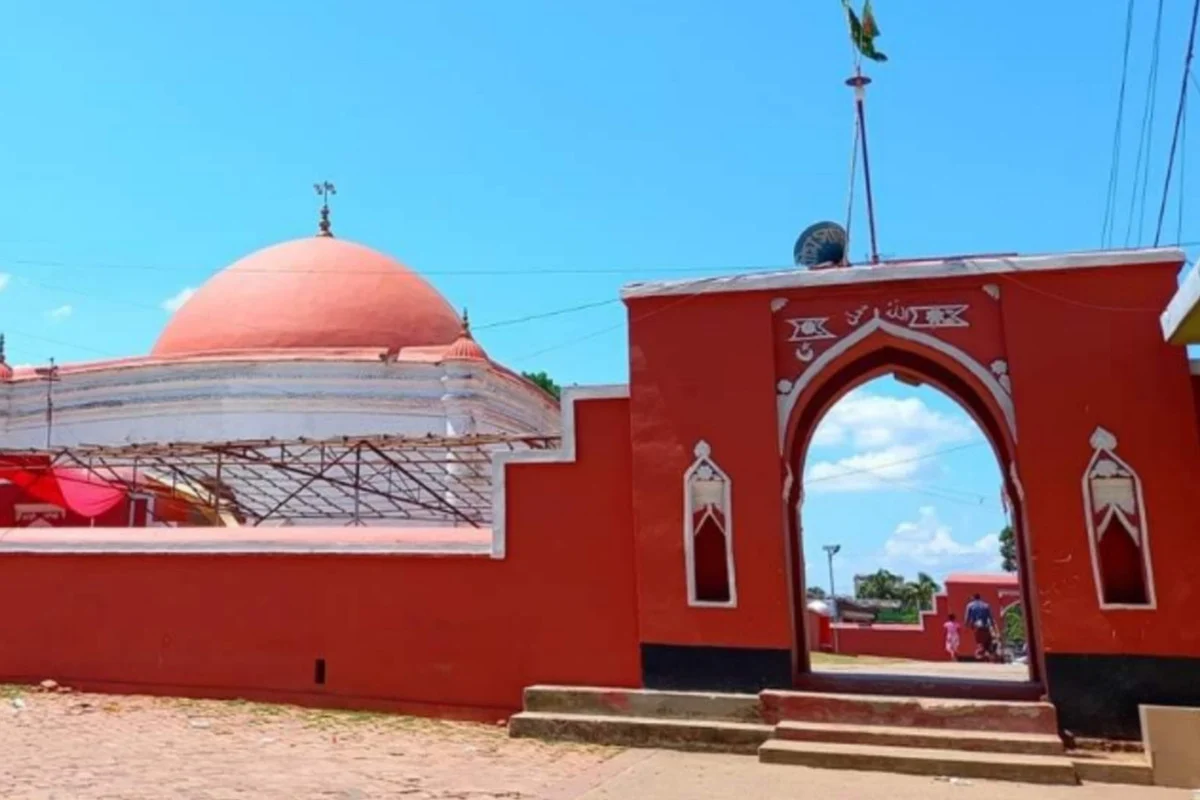
The arrival and gradual growth of Islam in the subcontinent is closely linked to the Sufi saints. Islam reached the Indian subcontinent through Sufi saints long before it arrived politically.
Even after Muslim rule was established, it was the Sufis who were the chief bearers, carriers and propagators of Islam. As a result, Sufi saints have had a deep influence on the Muslim society of the subcontinent. Brief profiles of ten influential Sufi saints of the subcontinent are given below.
1. Ali Hujwiri (rah.): A famous Sufi saint of the Indian subcontinent, his full name was Abul Hasan Ali ibn Usman Jullabi Hujwiri. He is also known as Data Saheb or Data Ganj Bakhsh. He was born in 1009 CE in Ghazni, in present-day Afghanistan, and contributed to the spread of Islam across South Asia. His book Kashful Mahjub is an important work of the Sufi tradition. He travelled to Mecca, Medina, Hijaz, Kirman and many other lands of the Muslim world in pursuit of religious knowledge, and received his spiritual training from Muhammad al-Khattali. He devoted himself to the service of Islam in Lahore, Pakistan, and died on 8 August 1072 CE, where he was buried.
2. Khwaja Moinuddin Chishti (rah.): Known as Sultanul Hind, he is considered the most influential Sufi scholar of the subcontinent. Born in 1142 CE in Sistan, Iran, he acquired religious knowledge from famous scholars of Bukhara, Samarkand and Nishapur. His spiritual master was Khwaja Usman Harun, in whose company he practised spiritual discipline for 20 years. He came to India at his master’s instruction, and through his efforts the Chishtiya order rose to become the subcontinent’s leading Sufi tradition, with countless people taking shelter under Islam. He died in 1236 CE and was buried in Ajmer, India.
3. Bahauddin Zakariya (rah.): An influential Sufi scholar and poet also known as Bahaul Haq, he established the Suhrawardiyya Sufi tradition in the subcontinent. Born in 1161 CE in Punjab, Pakistan, he saw large numbers of people embrace Islam through his efforts. He settled permanently in Multan in 1222 CE. Sultan Iltutmish conferred on him the title of Shaykhul Islam. He received spiritual training from Shihabuddin Suhrawardi, founder of the Suhrawardi order, and died in Multan in 1268 CE.
4. Khwaja Nizamuddin Auliya (rah.): A shining lamp of the Chishtiya order in the subcontinent, his full name was Sultanul Mashayekh Muhammad bin Ahmad Ali Badayuni. He was born in 1238 CE in the town of Badaun in India’s Uttar Pradesh and was an exceptionally gifted scholar. At just 20 he took bayah at the hand of Fariduddin Ganjshakar, and after a long stay in his court attained spiritual purification and khilafat. He taught religious and mystical knowledge in the Delhi region. He died on 3 April 1325 CE and was buried in Delhi.
5. Shahjalal Yemeni (rah.): His full name was Shah Muhammad Jalaluddin Mujarrad, and he was the most influential Sufi of ancient Bengal. Born in Yemen in 1271 CE, he came to the Sylhet region at the age of 32 to propagate Islam and settled there. He defeated the oppressive ruler Gour Govinda and gave the first azan in Sylhet. He was a murid and khalifa of Sayyid Ahmad Kabir Suhrawardi, a master of the Suhrawardi order. He died in 1346 CE.
6. Nur Qutbul Alam (rah.): An influential Sufi saint of the Bengal region, he was born in Hazrat Pandua in ancient Bengal. His father, Alaul Haq, was a distinguished scholar in the court of Sultan Sikandar Shah. Through his efforts, the Muslims of Bengal were saved from the oppression of Raja Ganesh, and Ganesh’s son Jadu embraced Islam. Alauddin Hussain Shah donated several villages for the running of Nur Qutbul Alam’s madrasa, mosque and khanqa. He was a Sufi and master of the Chishtiya order, and died in 1415 CE.
7. Khan Jahan Ali (rah.): An influential Sufi and ruler of the Bengal region, his titles were Ulugh Khan and Khan-i-Azam. Born in Delhi in 1369 CE, he received religious and spiritual education from the famous Delhi scholar and Sufi Shah Neyamatullah. He came to Bengal as a commander and preacher, founded a state called Khalifatabad in southern Bangladesh, and carried out much public-welfare work. He built several towns, mosques, madrasas, khanqas, sarais, highways and bridges, and dug countless ponds to relieve people’s lack of drinking water. Many signs of his development work survive to this day. He died in 1459 CE.
8. Mujaddid Alf-e-Sani (rah.): Known as Imam Rabbani, his full name was Abul Barakat Badruddin Ahmad Sirhindi. He was born in 1564 CE at Sirhind in India’s Punjab, and his father too was a distinguished scholar and master. He struggled all his life against Emperor Akbar’s Din-i-Ilahi, for which he was imprisoned for a long time. In spirituality he was a follower of the Naqshbandi order, taking bayah at the hand of the famous Delhi Sufi scholar Khwaja Baqi Billah Naqshbandi and attaining khilafat. For his extraordinary contributions to knowledge, spiritual purification and social reform, he is called Mujaddid Alf-e-Sani — the reformer of the second millennium. He died on 10 December 1624 CE.
9. Sayyid Ahmad Shahid (rah.): A revolutionary figure of the Muslim history of the Indian subcontinent, a spiritual practitioner and reformer scholar, his movement, the Tariqa-i-Muhammadiya, gave life to the subcontinent’s freedom movement. Born in 1786 in Rae Bareli, India, into a family famous for religious knowledge and leadership, he was a distinguished disciple of Shah Abdul Aziz Dehlavi. He vowed to establish khilafat to restore Muslim rule in the subcontinent, becoming an enemy of both the Sikh and British rulers. In spirituality he was chiefly a follower of the Naqshbandi order, though also connected with the Chishtiya and Qadiriya orders. He was martyred on 6 May 1831 CE on the historic plain of Balakot in a battle with the Sikhs.
10. Haji Imdadullah Muhajir Makki (rah.): An influential scholar, Sufi saint and pioneer of the subcontinent’s freedom movement, he was born in the Nanauta area of Saharanpur, India, in 1817 CE. He was a disciple of Shah Muhammad Ishaq and a khalifa of Miyanji Nur Muhammad Jhanjhanwi, a distinguished master of the Chishtiya order. During the Sepoy Mutiny of 1857 he led the Battle of Shamli against the British. Many influential scholars of the subcontinent were his murids, among them Rashid Ahmad Gangohi, Qasim Nanautawi and Ashraf Ali Thanvi. After the upheaval of 1857 he migrated permanently to Mecca, where he died in 1899 CE.
May Allah cool all their graves. Amin.
বাংলায় মূল প্রতিবেদন পড়ুন · Read the original Bengali report