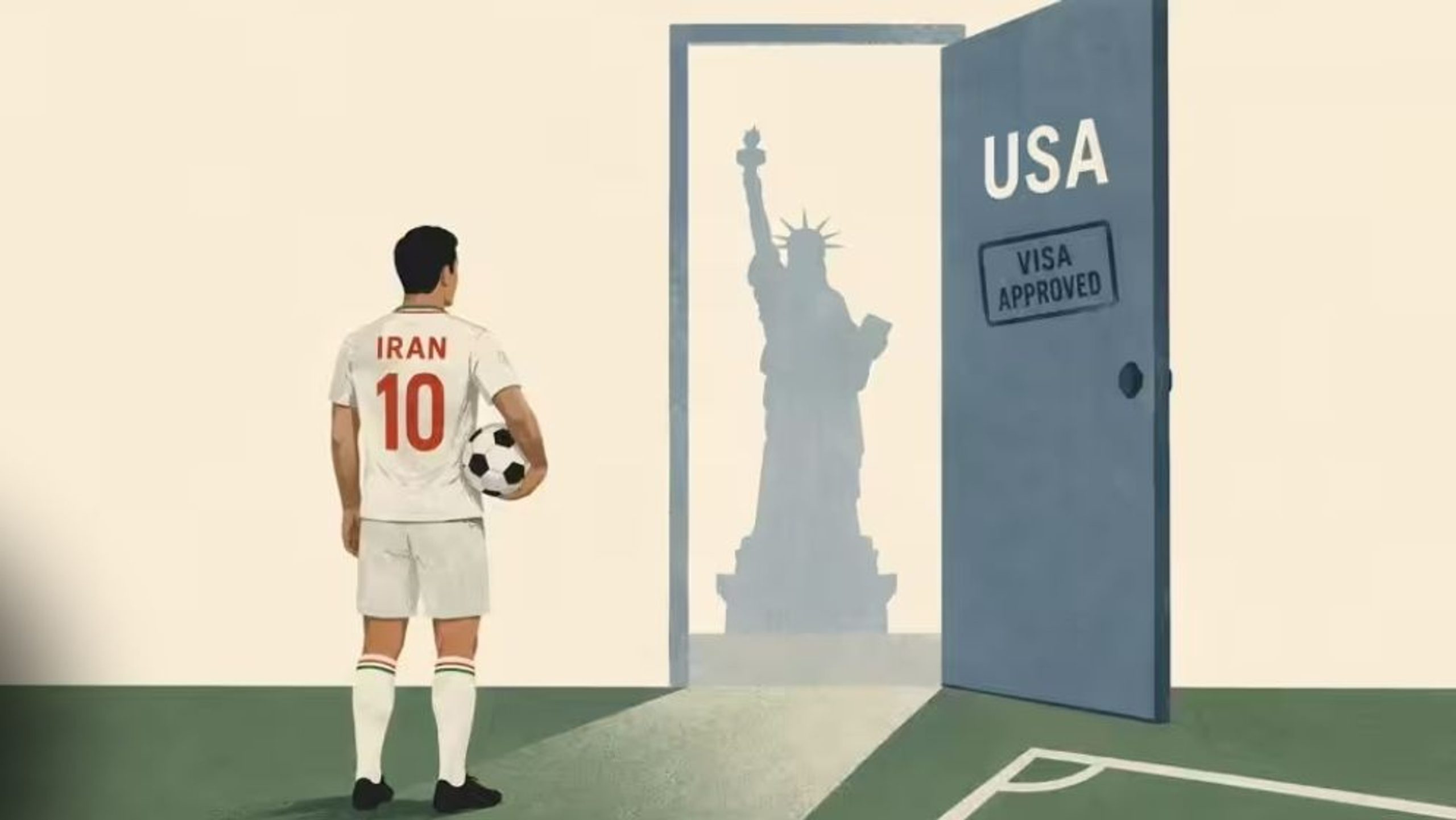
Amid an ongoing war and extreme diplomatic tension, the players of Iran’s national football team have received US visas just 10 days before their first match, against New Zealand, in Los Angeles on 15 June. The information was confirmed citing a White House official. Iran’s ambassador to Mexico, Abolfazl Pasandideh, had earlier said the squad’s players still had not received US visas, but the White House official said the visas were granted on Thursday (4 June) night. US ambassador to Turkey Tom Barrack confirmed the news in a message on the social-media platform X (formerly Twitter), thanking the US embassy in Ankara. However, Iran’s semi-official news agency Fars News said that, while the players had been given visas, the US administration had not yet issued visas for some of the team’s technical and administrative staff; the Iran Football Federation has not yet given an official statement on this.
The ongoing war between the United States and Iran has turned this World Cup into a stage for a geopolitical contest. For the first time since the World Cup began in 1930, a host country is set to welcome a state with which it is directly at war. Because of visa complications and to keep the team’s stay in the US as limited as possible, Tehran moved its camp from Arizona to Tijuana, Mexico, at the last moment, with the team due to reach Tijuana early on Sunday (7 June). Iran will begin their group-stage matches against New Zealand in Los Angeles on 15 June, with Belgium and Egypt their next opponents in the same group.
Pasandideh said the United States had never formally said it did not want the Iranian team on its soil, but US Secretary of State Marco Rubio made clear that Washington would not allow anyone linked to Iran’s Islamic Revolutionary Guard Corps (IRGC) to be included in the World Cup delegation. Because of this restriction, former IRGC commander and Iran Football Federation president Mehdi Taj was not allowed to attend the World Cup draw in Washington last December. Tehran sees the decision to take part despite being at war as a message of peace; Ambassador Pasandideh said Iran’s participation even on “enemy soil” proves it wants peace. Peace talks between the two countries are moving very slowly, and despite continuing strikes and counter-strikes, both sides are trying to reach an interim agreement, political analysts believe.
বাংলায় মূল প্রতিবেদন পড়ুন · Read the original Bengali report