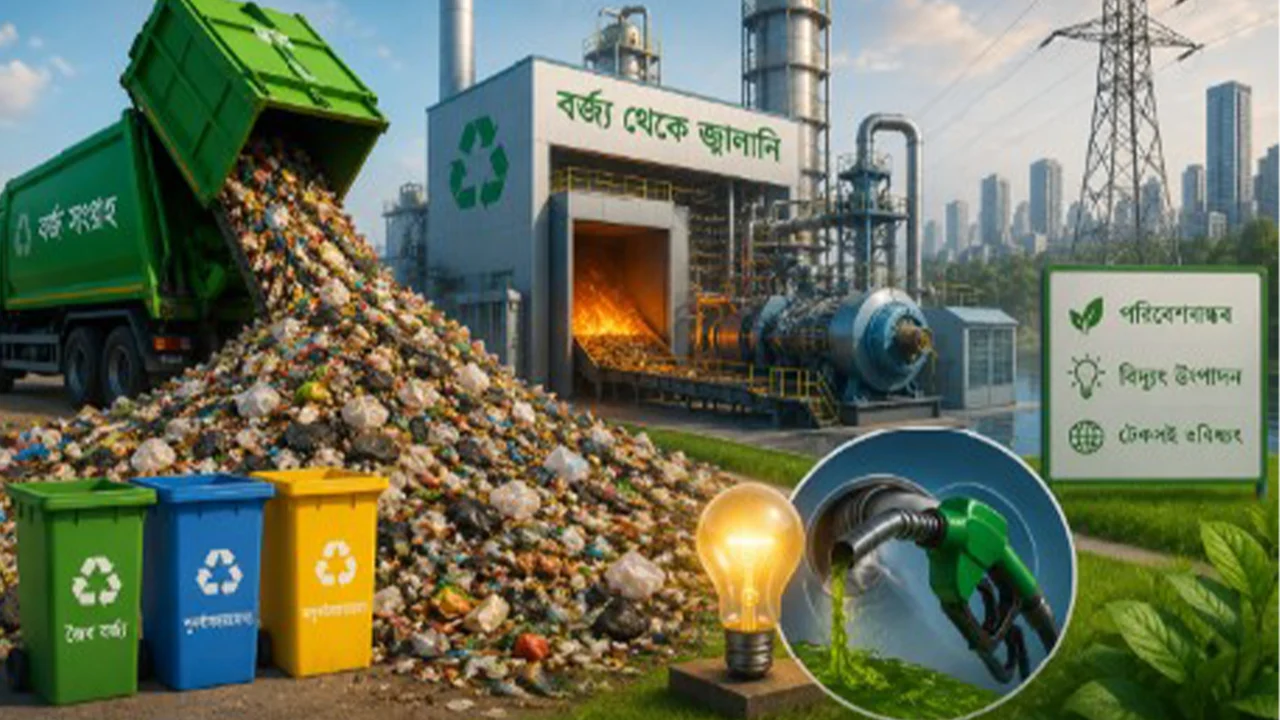
Population growth, rapid urbanization, and industrialization are generating massive volumes of waste across Bangladesh every day. From Dhaka to cities and municipal areas across the country, thousands of tons of household, commercial, and industrial waste accumulate daily. Most of it is dumped in open spaces, causing pollution, waterlogging, and public health hazards.
At the same time, demand for electricity and fuel continues to rise. In this context, waste-to-energy technology is gaining attention in Bangladesh as a potential solution that could simultaneously reduce waste and create new fuel sources.
Experts say that with proper planning and the use of modern technology, waste can be treated not as a problem but as a valuable resource, contributing to both environmental protection and energy security.
How waste becomes fuel
Waste-to-energy technology encompasses several processes. Incineration burns waste to generate heat and electricity. Anaerobic digestion converts organic waste — food waste, livestock manure, and crop residues — into biogas that can be used for cooking, electricity generation, and industrial applications. Other processes convert waste into liquid or gaseous fuels. These technologies are already in successful use in many countries.
Bangladesh’s potential
Waste management is a major challenge in Dhaka, Chattogram, Rajshahi, Khulna, and other cities. Experts say a large portion of this waste could be used for energy production. Biogas production from livestock waste has already proven successful in some rural areas. Urban waste-to-energy projects could simultaneously reduce waste volumes and create new fuel sources.
Environmental benefits
Open dumping of waste creates air, soil, and water pollution. Methane generated from waste dumps is a more potent greenhouse gas than carbon dioxide. Converting waste to energy in a planned manner could significantly reduce these harmful effects and lower carbon emissions.
Economic potential
Waste-to-energy production could create new industries and employment in waste collection, sorting, processing, and power generation. It would also reduce pressure on imported fossil fuels.
Challenges
Adequate waste segregation and collection systems are still lacking. Organic and inorganic waste is often mixed, making processing difficult. Modern technology requires significant capital investment, skilled personnel, and long-term planning.
Experts say success depends largely on public awareness. Families, institutions, and industries must be encouraged to separate waste at the source. Coordinated efforts from local government, environmental experts, and the private sector are essential.
বাংলায় মূল প্রতিবেদন পড়ুন · Read the original Bengali report