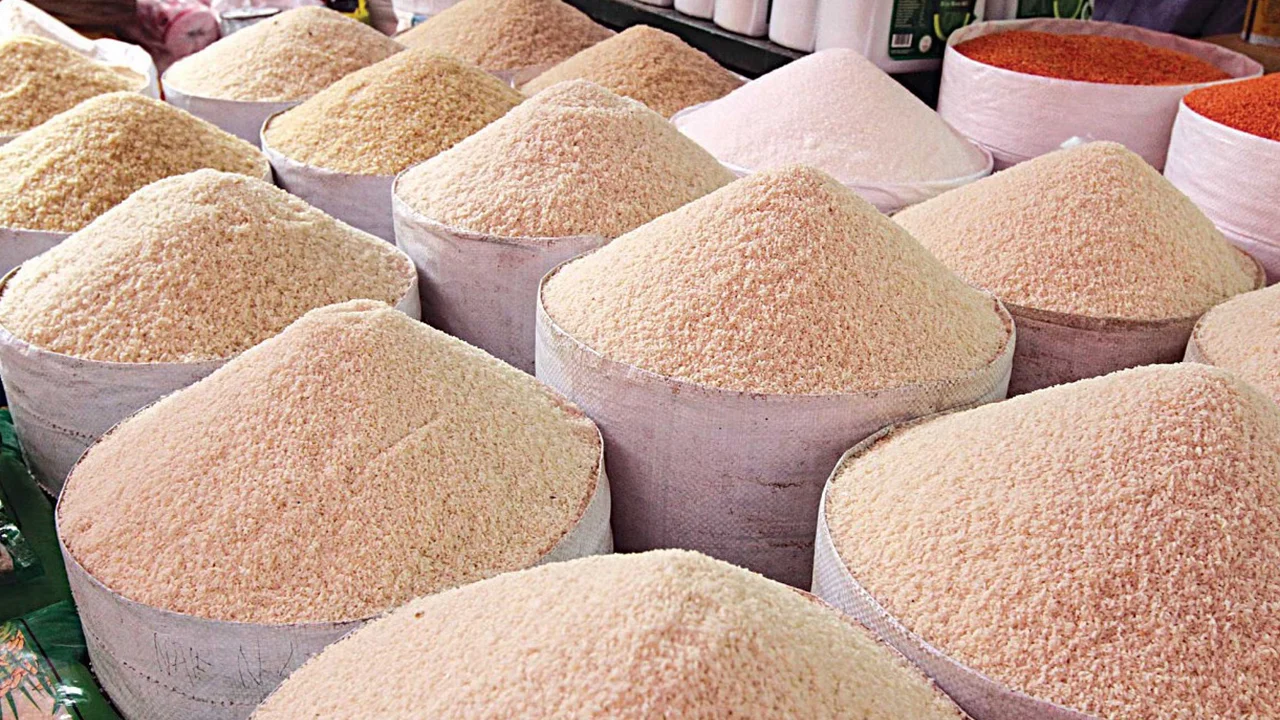
Although the government claims rice supply in the market is normal and prices fairly stable, buyers and sellers say prices have risen — leaving unease among ordinary people. Compared with before Eid, the prices of most goods in the capital’s markets, including vegetables, chicken and eggs, have fallen, but the prices of several items, including rice, flour and pulses, have risen.
Among spices, the prices of onion, garlic and ginger are stable, but turmeric and chilli powder have risen. While the prices of all kinds of vegetables are trending down, the price of potato has risen over the week. Fish prices, too, are somewhat on the rise.
Although rice and other essentials are officially said to be stable, ordinary buyers in retail markets are still complaining of higher prices. In their view, this volatility in prices is putting pressure on the lives of low-income people. Those concerned, however, hope the market will become more normal if the government maintains strict monitoring and a strong stock position.
This picture emerged after visits yesterday, Thursday, to several markets in the capital — including Karwan Bazar, Badamtoli, Naya Bazar and Boubazar in Keraniganj — and conversations with buyers and sellers in the suburbs. The TCB’s daily market price list yesterday also noted a rise in rice prices.
Amjad Hossain of Messrs Islam Rice Agency in Islampur’s Badamtoli told Amar Desh that, just as big corporate houses had competed to buy up paddy from the market after last year’s boro season, they had created a similar situation again, raising the price of Minicat rice by Tk 300 to Tk 400 compared with before Eid. Now, he said, they were claiming paddy supply was low and prices high, so rice prices were rising — and this had also affected the retail market.
Moin Uddin of Haji Ismail Rice Agency in Karwan Bazar’s Kitchen Market told Amar Desh that the price of Minicat rice had risen Tk 100-150 a sack, Najirshail Tk 150-200, and BR-28 (Atash) Tk 100. The biggest rise, he said, was in polao (aromatic) rice — about Tk 900 a sack.
Shawon of Noakhali Rice Traders in the same market told Amar Desh that, compared with before Eid, BR-28 had risen Tk 3-4 per kg, Minicat Tk 4-5, Najirshail Tk 5-10 and polao rice Tk 25-30.
Reporting the increase, traders including those at Janata Rice Agency, the largest in the Tejgaon area, and several others said the companies had raised rice prices a week before Eid, ahead of the budget announcement. Prices had stabilised after the rise, they said.
Robin Gomez, a buyer from the Farmgate area who had come to shop at Karwan Bazar, expressed anger, saying he could not find the reality of the ministers’ words in the market. The prices of all kinds of rice were up, he said; after the price of polao rice rose by more than Tk 25 a kg following Eid, it was being claimed that prices had not risen.
Meanwhile, after inspecting the Badamtoli wholesale market and the Naya Bazar retail market on Wednesday, Commerce Minister Khondkar Abdul Muktadir told reporters there was no major instability in rice prices. “I have not seen any significant change in rice prices at the wholesale or retail level,” he said. “In some cases there may be a Tk 1-2 variation by quality, which is a normal market process.”
The minister also said some mill owners had tried to raise prices by up to Tk 100 a sack to destabilise the market, but the move had had little effect and prices had since come back down. Assuring on market monitoring and the supply system, Food State Minister Md Abdul Bari said, “The country’s food-grain stock is satisfactory. There are currently about 20 lakh tonnes of food grain in government warehouses, which is above our emergency target.”
The state minister added that the government was monitoring the market regularly and increasing the government stock by procuring paddy and rice, so there was no reason to panic over rice supply. He said the government was ready to intervene in the market quickly if needed.
Meanwhile, the proposed budget for the 2026-27 financial year has proposed cutting taxes on at least 60 essential items, including rice, pulses, oil and onion. The budget gives top priority to controlling inflation and improving the food-supply system. The government hopes these steps will keep essential prices within ordinary people’s reach and maintain long-term market stability.
Besides rice, the price of flour has also risen about Tk 5 a kg, with a 2-kg packet of atta now selling at Tk 120 and maida at Tk 140. Sugar has risen Tk 5 to Tk 110, local masur dal Tk 20 to Tk 170, chhola Tk 10 to Tk 95, khesari and boot dal Tk 10 to Tk 100, local mug dal Tk 10 to Tk 160, and coarse mug dal Tk 20 to Tk 110, while turmeric and chilli powder have risen Tk 100 to Tk 350 and Tk 450. Although soybean oil prices rose before Eid, supply is still not steady, said Imam Uddin Bablu, a grocer at Karwan Bazar. A tour of the kitchen market yesterday showed that the prices of some vegetables had fallen by more than half compared with before Eid. Though prices vary somewhat by market and area, most vegetables are now within Tk 50. The biggest drop was in raw papaya: the papaya that cost Tk 100 before Eid is now available at Tk 20-30. Green chilli has also fallen to Tk 60-80. Among vegetables, however, potato has risen Tk 5 a kg and is now selling at Tk 25 a kg.
The fall in vegetable prices has also affected egg and chicken prices. Broiler chicken now sells at Tk 150, sonali chicken at Tk 220-240 and layer chicken at Tk 350. Egg prices are now at their lowest, selling at Tk 110-120 a dozen yesterday, though prices are a little higher in neighbourhood shops.
While vegetable, egg and chicken prices have fallen, fish prices are up Tk 20-40 a kg depending on type, said fish trader Abdul Kader. He said that if it rains during the monsoon, fish supply could increase and prices fall in a few days.
বাংলায় মূল প্রতিবেদন পড়ুন · Read the original Bengali report