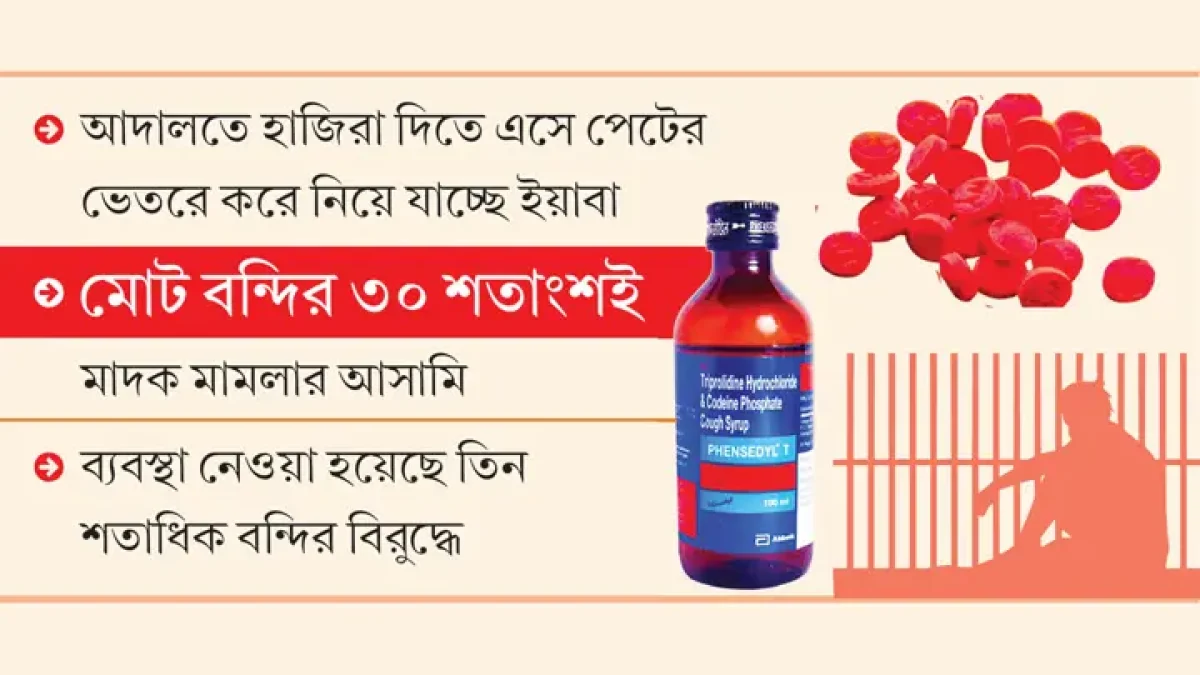
A network of traffickers is moving yaba tablets into Chattogram Central Jail through prisoners and other carriers, according to former inmates, alleged couriers and prison officials interviewed by Amar Desh.
Officials said traffickers increasingly package 50 to 100 tablets into small capsules that carriers swallow or conceal in their bodies. A ruptured capsule could kill the carrier, they warned.
The jail held 7,700 prisoners on October 31 and averaged about 7,000 a month during the first 10 months of the year. About 35% were accused in drug cases, according to jail figures. Officials described about 15% as dealers and the remainder as users or people accused of drug-related offenses; many were Rohingya.
Yaba sells for Tk 120 to Tk 150 a tablet outside but more than Tk 200 inside the jail, former inmates said.
Alleged delivery system
Five recently released prisoners and two people described as involved in supplying drugs said guards once controlled much of the trade. After staffing changes following the July uprising, they alleged that outside dealers and imprisoned associates took greater control.
One defendant from Karnaphuli, speaking anonymously, said a trafficking group linked to Anwara, Karnaphuli and Patiya arranged his bail in the past but now used his court appearances to supply the jail.
He alleged that people handed him capsules containing 50 to 80 tablets at court. He swallowed smaller capsules and concealed larger ones before returning to prison, then passed them to designated recipients after excretion.
Another alleged courier from Sandwip said outside groups sometimes arranged the arrest of their own carriers on minor charges, then delivered capsules with food in police custody. He said a carrier could transport about 400 tablets in five or six capsules and might take two or three days to expel them.
Former prisoners Abdur Rahman of Lalkhan Bazar and Alam Sheikh said yaba sales were an open secret. They alleged tablets sold for Tk 200 to Tk 220 or were exchanged for cigarettes, while some payments moved through prisoner account cards.
They described a three-part structure: carriers brought tablets inside, another group sold them and outside associates handled money. Some prison guards allegedly helped with payments for commissions.
Prison seizures
Jailer Syed Shah Sharif said attempts to carry yaba had increased over the past year. Authorities seized 44 major consignments from January through October, recovering 15,550 tablets from 311 capsules.
Cases were filed against 44 alleged traffickers, including three women. Staff also found two or three smaller consignments of 20 to 30 tablets on many days, he said.
Sharif said searches had increased. New prisoners or those returning from court could be kept under separate observation for up to two days when staff noticed suspicious behavior.
Deputy Inspector General of Prisons Saghir Mia said the jail's capacity was 2,249 but it held more than 7,000 prisoners on average. The concentration of dealers, users and both Bangladeshi and foreign prisoners sustained demand, he said.
He said authorities had proposed separate prisons for drug defendants and Rohingya prisoners. Until capacity expanded, staff were relying on searches and temporary observation. Cumilla jail had begun separating drug-case prisoners and was seeing benefits, he said.
The claims made by anonymous prisoners and alleged couriers could not be independently verified.