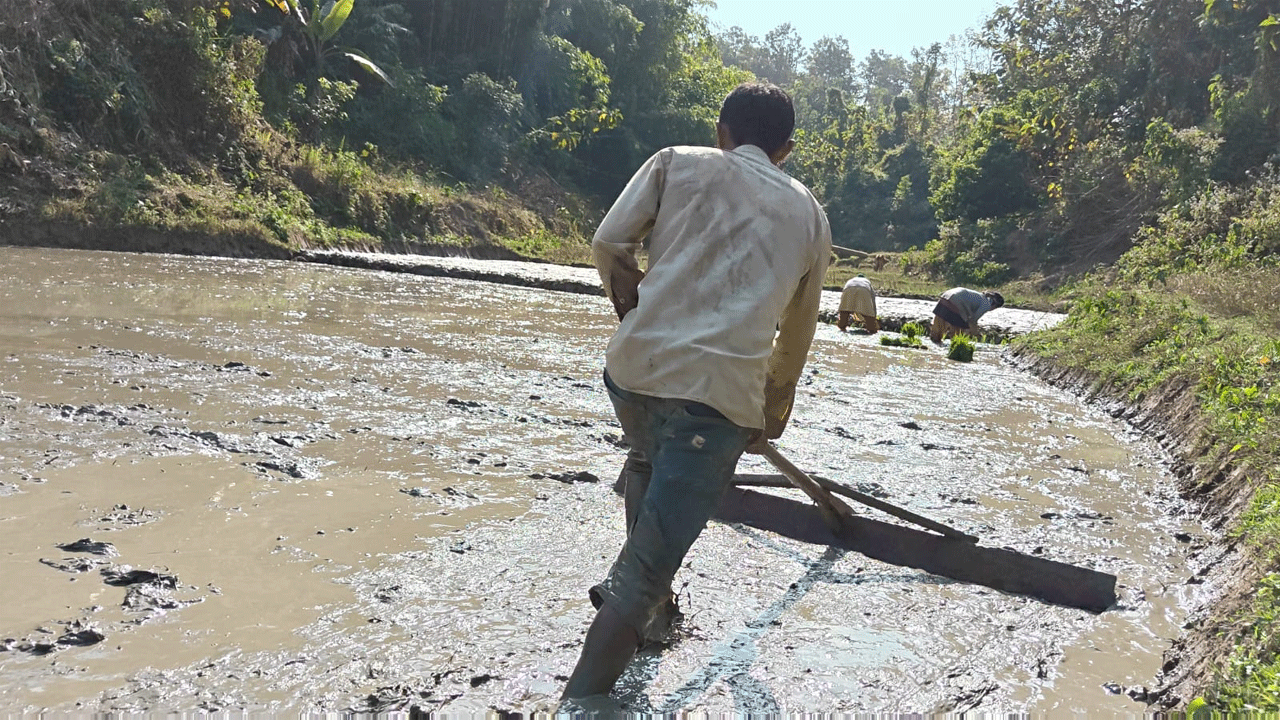
Thousands of farmers in Longadu upazila of Rangamati fear severe losses because Kaptai Lake has not receded in time for cultivation. Boro rice, mustard, watermelon and other seasonal crops are at risk, and many farmers suffered under similar conditions last year.
Kaptai Lake has a maximum capacity of 109 feet mean sea level, while its danger level is 108 feet. Spillway gates were opened when the water reached 105.51 feet in September. As the level later fell, shoals began emerging and farmers prepared for a new growing season.
Continuous rain and runoff from the hills raised the lake by about one foot last week, however, submerging seedbeds in several areas and renewing uncertainty over cultivation.
Farmers had expected the lake to recede further so they could prepare land and seedbeds without disruption. Instead, the rising water is destroying seedbeds and could disrupt the entire season unless it falls quickly.
Watermelon growers in Sonargaon and Dipurmukh said they had borrowed money to begin cultivation. Some rented land for Tk 200,000 to Tk 300,000, while others took Tk 100,000 to Tk 200,000 in advances from wholesalers.
The farmers said the rising water had left them desperate as their seedbeds were damaged. They demanded that the lake be lowered by at least five more feet, warning that they could lose their investments and be left with heavy debts.
Longadu Upazila Agriculture Officer Wasif Rahman said many farmers were harmed by Kaptai Lake's water last year. They would again face serious trouble unless the water fell within the next few days, he said.
Many farmers had already been unable to prepare mustard, Boro rice and other seedbeds, Rahman said. He said the water should be lowered quickly in farmers' interests and that senior officials had been informed.
Karnaphuli Hydroelectric Power Station Manager Engineer Mahmud Hasan said lowering the lake was no longer under his control and that it would continue to fall at its existing rate. He said the lake stood at 100 feet mean sea level, compared with 106 feet at the same time last year.
Rangamati Deputy Commissioner Nazma Ashrafi said the water would recede quickly. She said she had just learned that rain caused the increase and that prompt measures would be taken.
Farmers warned that a delay would severely disrupt this season's crops, hurting both their households and the local agricultural economy. They called for effective action that takes the growing season and their investments into account.