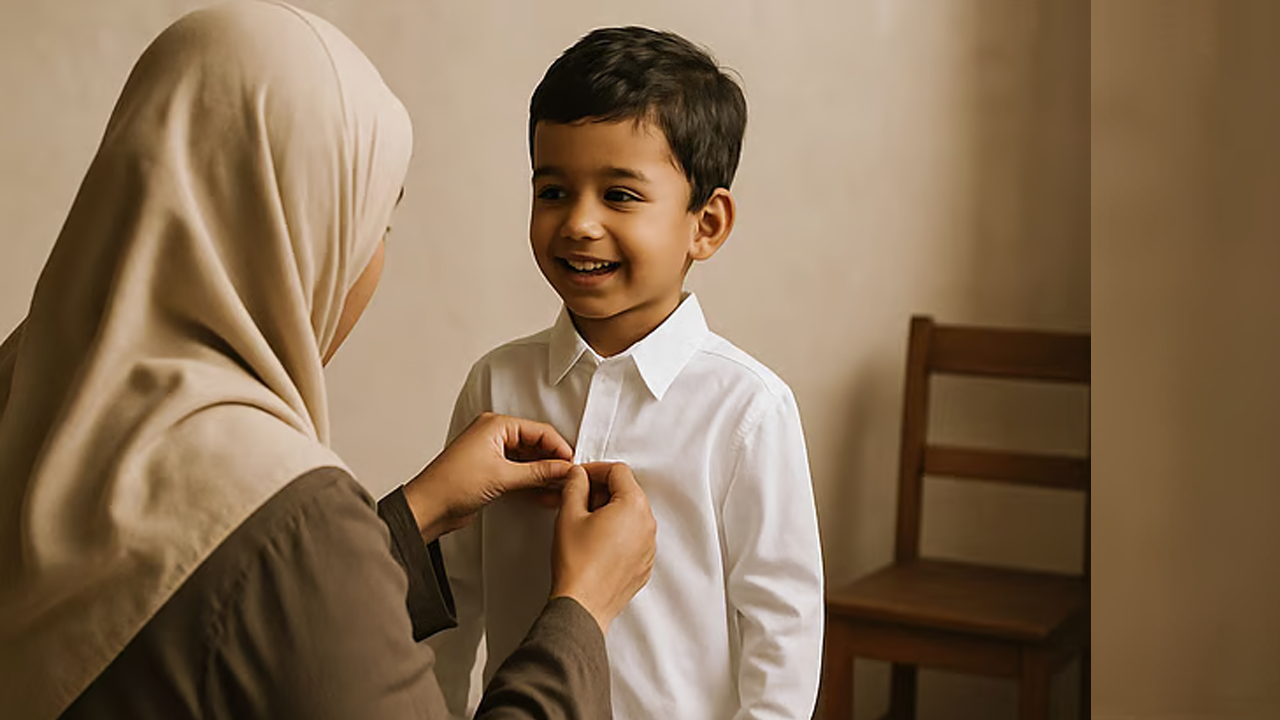
Before donating clothes a child has outgrown, parents should determine whether the garments belong to the child or were provided only for use. Islamic rules on property rights differ depending on ownership.
Mufti Jawad Taher, a mufti and hadith teacher at Jamia Babus Salam in Dhaka's airport area, explained the issue in the Islamic guidance portal Muslim Bangla.
He said clothes normally become the child's property when parents buy or make them with the intention of transferring ownership. Clothes given to a child by relatives or others are also generally the child's property.
If such clothes still have meaningful use or financial value after being outgrown, parents may donate them to a poor person only while preserving their value for the child.
If the garments are effectively worthless or unusable, donating them does not destroy a significant financial right.
When parents retain ownership at the time of purchase and give clothes only for the child's use, the garments remain the parents' property. They may then donate them after the child grows or the clothes become too small.
A fiqh text says a person who makes or buys clothes for a child has no right to give them to someone else, unless it was made clear at the time that the clothes were provided only for use. (Radd al-Muhtar: 5/689)
Parents are responsible for a child's maintenance and necessary expenses, but meeting that duty does not turn the child's property into the parents' property. If the child owns assets, necessary expenses may also be paid from those assets.
When old clothes have negligible value, that fact may be considered, and giving them to poor people is better than discarding them. If they retain significant value, that value should be preserved for the child.